Everything You Need to Know About Birds of Sri Lanka 2027 | 460+ Species, 35 Endemics & Birding Guide
The Complete Guide to the Birds of Sri Lanka: 460+ Species, 35 Endemics & Where to See Them Complete guide to the birds of Sri Lanka: 460+ recorded species, 35 endemics, bird families from ducks to buntings, best birding sites and when to visit. Introduction: Sri Lanka’s Remarkable Birdlife Sri Lanka is a tropical …
The Complete Guide to the Birds of Sri Lanka: 460+ Species, 35 Endemics & Where to See Them
Complete guide to the birds of Sri Lanka: 460+ recorded species, 35 endemics, bird families from ducks to buntings, best birding sites and when to visit.
Introduction: Sri Lanka’s Remarkable Birdlife
Sri Lanka is a tropical island situated close to the southern tip of India. For its size, its birdlife is extraordinarily rich — more than 460 species have been recorded on the island. In addition to the many resident birds, a considerable number of migratory species winter in the country to escape their northern breeding grounds.
A total of 35 bird species are confirmed as endemic to Sri Lanka. The latest addition is the Sri Lanka shama, previously considered a subspecies of the white-rumped shama. The other resident species are also found on the nearby Indian mainland, but over 80 have developed distinct Sri Lankan subspecies. Some of these subspecies differ markedly in plumage from their Indian relatives. Of the 35 endemic species, 26 are globally threatened.
Bird distribution in Sri Lanka is largely determined by its climatic zones:
-
Dry Zone: The largest of the three zones, covering more than half the island, with a prolonged dry and hot period and only one monsoon (the northeast monsoon from October to January).
-
Wet Zone: Located in the southwestern quarter, with two monsoons, high humidity and the few remaining rainforests.
-
Central Hill Zone: Rises to over 2,450 metres (8,040 ft) and has a cool temperate climate.
Most of the 35 endemic species are confined to the wet and hill zones, with only a few extending into the dry zone. This guide walks through every bird family recorded in Sri Lanka — from ducks to buntings — and explains where and when to see them.

Part 1: The Bird Families of Sri Lanka
The following list follows An Illustrated Guide to the Birds of Sri Lanka (2010) by Sarath Kotagama and Gamini Ratnavira, with updates from the Ceylon Bird Club’s List of Sri Lankan Birds, which follows AviList global taxonomy.
Key tags: (A) Accidental · (E) Endemic · (I) Introduced
1. Ducks, Geese, and Waterfowl (Anatidae)
Ducks and duck-like waterfowl with webbed feet, flattened bills and water-shedding feathers.
Species include: Fulvous whistling duck (A), Lesser whistling duck, Cotton pygmy goose, Bar-headed goose (A), Greylag goose (A), Knob-billed duck (A), Tufted duck (A), Garganey, Northern shoveler, Gadwall (A), Eurasian wigeon, Indian spot-billed duck, Northern pintail, Eurasian teal.
2. Pheasants, Grouse, and Allies (Phasianidae)
Plump terrestrial birds with broad, relatively short wings.
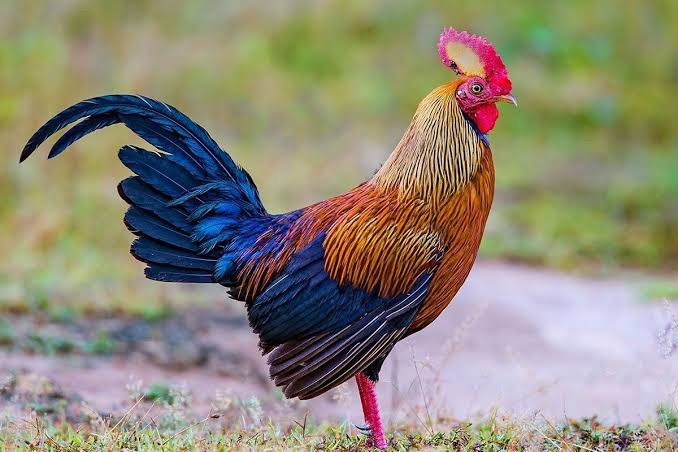
Species include: Indian peafowl, Sri Lanka spurfowl (E), Sri Lanka junglefowl (E), Grey francolin, Painted francolin, King quail, Rain quail (A), Jungle bush quail.
3. Flamingos (Phoenicopteridae)
Gregarious wading birds, 1–1.5 m tall, filter-feeding on shellfish and algae.
Species: Lesser flamingo (A, Near Threatened), Greater flamingo.
4. Grebes (Podicipedidae)
Small to medium diving birds with lobed toes.
Species: Little grebe (resident).
5. Cuckoos (Cuculidae)
Variable-sized birds with slender bodies and long tails; many are brood parasites.
Species include: Green-billed coucal (E, Vulnerable), Greater coucal, Sirkeer malkoha, Red-faced malkoha (E, Vulnerable), Blue-faced malkoha, Chestnut-winged cuckoo, Jacobin cuckoo, Asian koel, Asian emerald cuckoo (A), Banded bay cuckoo, Grey-bellied cuckoo, Fork-tailed drongo-cuckoo, Common hawk-cuckoo, Lesser cuckoo, Indian cuckoo, Common cuckoo.
6. Pigeons and Doves (Columbidae)
Stout-bodied birds with short necks and slender bills with a fleshy cere.
Species include: Spotted dove, Red collared dove (A), Oriental turtle dove, Eurasian collared dove, Sri Lanka woodpigeon (E, Vulnerable), Pale-capped pigeon (A, Vulnerable), Rock dove (resident + introduced), Common emerald dove, Orange-breasted green pigeon, Sri Lanka green pigeon (E), Yellow-footed green pigeon, Green imperial pigeon.
7. Rails, Gallinules, and Coots (Rallidae)
Shy, secretive birds of dense vegetation near water.
Species include: Brown-cheeked rail (A), Corn crake (A), Slaty-breasted rail, Common moorhen, Eurasian coot, Grey-headed swamphen, Watercock, White-breasted waterhen, Slaty-legged crake, Ruddy-breasted crake, Baillon’s crake.
8. Stone-curlews (Burhinidae)
Tropical waders with strong bills, large yellow eyes and cryptic plumage.
Species: Great stone-curlew, Indian stone-curlew.
9. Stilts and Avocets (Recurvirostridae)
Large wading birds with long legs and long bills.
Species: Pied avocet, Black-winged stilt.
10. Oystercatchers (Haematopodidae)
Large, noisy plover-like birds with strong bills for opening molluscs.
Species: Eurasian oystercatcher (Near Threatened).
11. Plovers and Lapwings (Charadriidae)
Small to medium birds with compact bodies and long pointed wings.
Species include: Grey plover, Pacific golden plover, Common ringed plover, Little ringed plover, Yellow-wattled lapwing, Grey-headed lapwing (A), Red-wattled lapwing, Sociable lapwing (A, Critically Endangered), Caspian plover (A), Oriental plover (A), Tibetan sand plover, Greater sand plover, Kentish plover.
12. Painted-snipes (Rostratulidae)
Short-legged, long-billed, brightly coloured birds.
Species: Greater painted-snipe.
13. Jacanas (Jacanidae)
Tropical waders with huge feet and claws for walking on floating vegetation.
Species: Pheasant-tailed jacana.
14. Sandpipers and Allies (Scolopacidae)
A large, diverse family of shorebirds eating invertebrates from mud.
Species include: Eurasian whimbrel, Eurasian curlew (NT), Bar-tailed godwit (NT), Black-tailed godwit (NT), Asian dowitcher (A, NT), Jack snipe (A), Eurasian woodcock, Wood snipe (A, Vulnerable), Great snipe (A, NT), Swinhoe’s snipe (A), Pin-tailed snipe, Common snipe, Terek sandpiper, Common sandpiper, Red-necked phalarope, Green sandpiper, Marsh sandpiper, Wood sandpiper, Common redshank, Spotted redshank (A), Common greenshank, Nordmann’s greenshank (A, Endangered), Ruddy turnstone, Red knot (NT), Great knot (Endangered), Ruff, Sharp-tailed sandpiper (A), Broad-billed sandpiper, Curlew sandpiper (NT), Spoon-billed sandpiper (A, Critically Endangered), Red-necked stint (A, NT), Temminck’s stint, Long-toed stint, Buff-breasted sandpiper (A, NT), Sanderling, Dunlin (A), Pectoral sandpiper (A), Little stint.
15. Buttonquail (Turnicidae)
Small, drab running birds resembling true quails; females are brighter.
Species: Barred buttonquail, Common buttonquail (A).
16. Crab-plover (Dromadidae)
A wader resembling a plover with very long grey legs and a heavy black bill.
Species: Crab-plover.
17. Pratincoles and Coursers (Glareolidae)
Waders with short legs and long pointed wings (pratincoles) or long legs and down-curved bills (coursers).
Species: Indian courser, Small pratincole, Oriental pratincole, Collared pratincole.
18. Skuas (Stercorariidae)
Medium to large seabirds, often with white wing markings.
Species: Arctic skua (A), Long-tailed skua (A), Pomarine skua, South polar skua (A), Brown skua.
19. Gulls, Terns, and Skimmers (Laridae)
Medium to large seabirds; terns often dive for fish.
Species include: Brown noddy, Lesser noddy, Sooty tern, Bridled tern, Little tern, Saunders’s tern, Caspian tern, Gull-billed tern, Whiskered tern, White-winged tern, Black tern, Sandwich tern, Great crested tern, Lesser crested tern, Common tern, Black-naped tern, Roseate tern, Slender-billed gull, Black-headed gull, Brown-headed gull, Pallas’s gull, Sooty gull, Lesser black-backed gull.
20. Tropicbirds (Phaethontidae)
Slender white tropical seabirds with exceptionally long central tail feathers.
Species: Red-billed tropicbird, White-tailed tropicbird.
21. Southern Storm Petrels (Oceanitidae)
Small seabirds with fluttering, bat-like flight.
Species: Wilson’s storm petrel, White-faced storm petrel, Black-bellied storm petrel (A).
22. Northern Storm Petrels (Hydrobatidae)
Small seabirds coming ashore only to breed.
Species: Swinhoe’s storm petrel (A, NT).
23. Shearwaters and Petrels (Procellariidae)
Medium-sized seabirds with united nostrils and long outer primary.
Species include: Cape petrel (A), Bulwer’s petrel (A), Jouanin’s petrel (A, NT), Streaked shearwater (A, NT), Wedge-tailed shearwater, Short-tailed shearwater (A), Sooty shearwater (A, NT), Flesh-footed shearwater (NT), Barau’s petrel (A, Endangered).
24. Storks (Ciconiidae)
Large, long-legged, long-necked wading birds; virtually mute.
Species: Asian openbill, Lesser adjutant (Vulnerable), Painted stork (NT), Black-necked stork (NT), Black stork (A), White stork (A), Asian woolly-necked stork (Vulnerable).
25. Frigatebirds (Fregatidae)
Large tropical seabirds with long wings and deeply forked tails; essentially aerial.
Species: Lesser frigatebird (A), Christmas Island frigatebird (A, Critically Endangered), Great frigatebird (A).
26. Boobies and Gannets (Sulidae)
Medium to large coastal seabirds that plunge-dive for fish.
Species: Red-footed booby, Brown booby, Masked booby.
27. Anhingas (Anhingidae)
“Snake-birds” with long thin necks; plumage permeable, so they dry wings after diving.
Species: Oriental darter (NT).
28. Cormorants and Shags (Phalacrocoracidae)
Medium to large coastal fish-eating seabirds.
Species: Little cormorant, Great cormorant, Indian cormorant.
29. Ibises and Spoonbills (Threskiornithidae)
Large terrestrial and wading birds with long broad wings.
Species: Glossy ibis, Eurasian spoonbill, Black-headed ibis (NT).
30. Pelicans (Pelecanidae)
Large water birds with a distinctive pouch under the beak.
Species: Spot-billed pelican (NT).
31. Herons, Egrets, and Bitterns (Ardeidae)
Medium to large wading birds; bitterns are shorter-necked and more wary.
Species include: Great bittern (A), Black bittern, Cinnamon bittern, Schrenck’s bittern (A), Yellow bittern, Malayan night heron, Western reef heron, Little egret, Black-crowned night heron, Little heron, Indian pond heron, Chinese pond heron (A), Great egret, Intermediate egret, Eastern cattle egret, Purple heron, Goliath heron (A), Grey heron.
32. Nightjars and Allies (Caprimulgidae)
Medium-sized nocturnal birds with long wings and cryptic plumage.
Species: Great eared nightjar (A), Jungle nightjar, Jerdon’s nightjar, Indian nightjar.
33. Frogmouths (Podargidae)
Nocturnal birds with large flattened hooked bills and huge frog-like gapes.
Species: Sri Lanka frogmouth (resident).
34. Treeswifts (Hemiprocnidae)
Crested swifts with long forked tails and softer plumage.
Species: Crested treeswift.
35. Swifts (Apodidae)
Small birds that spend most of their lives flying.
Species: Brown-backed needletail, Asian palm swift, Alpine swift, Pacific swift (A), Little swift, Indian swiftlet.
36. Barn Owls (Tytonidae)
Medium to large owls with heart-shaped faces.
Species: Sri Lanka bay owl, Eastern barn owl.
37. Owls (Strigidae)
Small to large solitary nocturnal birds of prey.
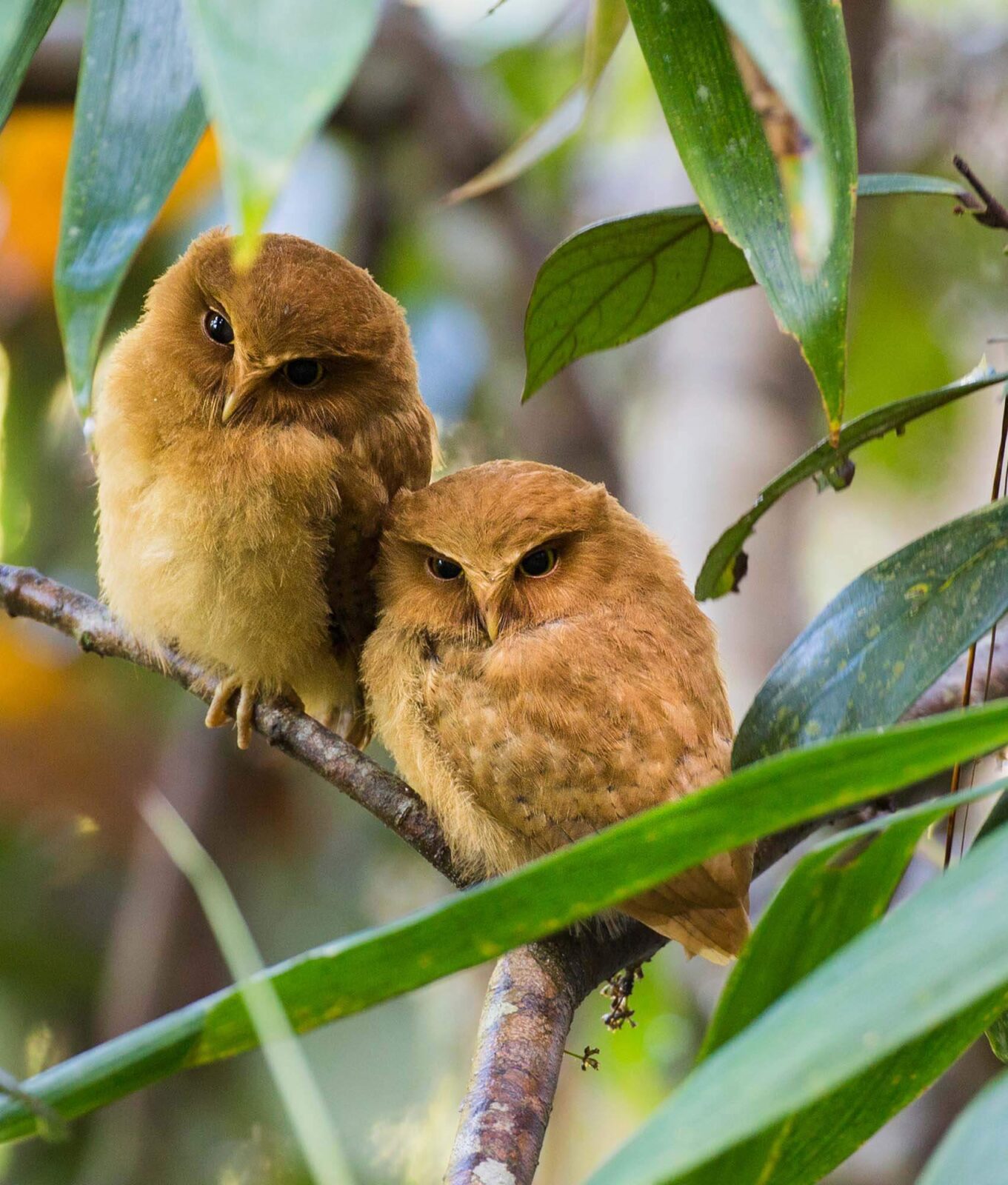
Species include: Brown boobook, Jungle owlet, Chestnut-backed owlet (E), Serendib scops owl (E, Endangered), Indian scops owl, Oriental scops owl, Short-eared owl (vagrant), Brown fish owl, Spot-bellied eagle-owl, Brown wood owl.
38. Osprey (Pandionidae)
A medium-large fish-eating raptor with worldwide distribution.
Species: Osprey.
39. Hawks, Eagles, and Kites (Accipitridae)
Powerful hooked beaks, strong legs and keen eyesight.
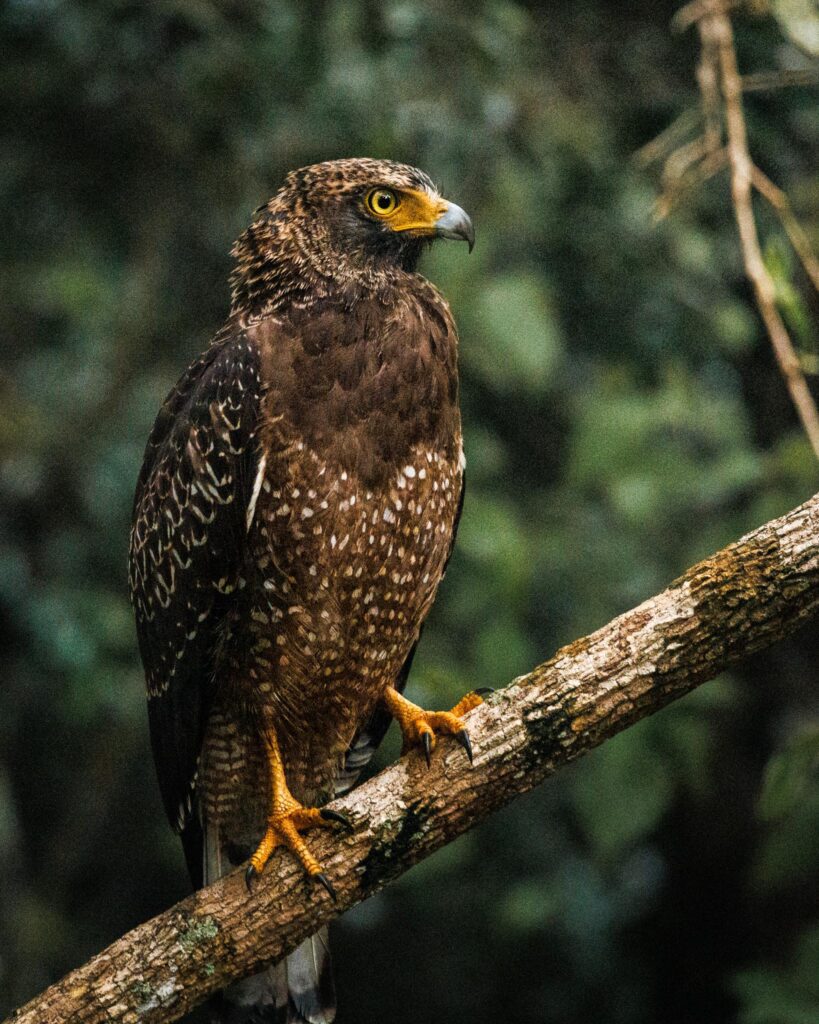
Species include: Black-winged kite, Egyptian vulture (A, Endangered), Jerdon’s baza, Black baza, European honey buzzard (A), Crested honey buzzard, Crested serpent eagle, Legge’s hawk-eagle, Changeable hawk-eagle, Rufous-bellied eagle, Black eagle, Greater spotted eagle (A, Vulnerable), Booted eagle, Bonelli’s eagle (A), Crested goshawk, Besra, Shikra, Eurasian sparrowhawk (A), Pallid harrier (NT), Montagu’s harrier, Pied harrier (A), Western marsh harrier, Brahminy kite, Black kite, White-bellied sea eagle, Grey-headed fish eagle, Common buzzard, Long-legged buzzard (A).
40. Trogons (Trogonidae)
Tropical woodland birds with soft, often colourful feathers and distinctive male/female plumage.
Species: Malabar trogon.
41. Hoopoes (Upupidae)
Black, white and orangey-pink birds with a large erectile crest.
Species: Eurasian hoopoe.
42. Hornbills (Bucerotidae)
Birds with cow’s-horn-shaped bills, sometimes with a casque.
Species: Sri Lanka grey hornbill (E), Malabar pied hornbill.
43. Rollers (Coraciidae)
Crow-sized, colourful birds related to kingfishers and bee-eaters.
Species: Dollarbird, Indian roller, European roller (A).
44. Bee-eaters (Meropidae)
Richly coloured, slender birds with long down-turned bills.
Species: Chestnut-headed bee-eater, Asian green bee-eater, European bee-eater (vagrant), Blue-tailed bee-eater.
45. Kingfishers (Alcedinidae)
Medium-sized birds with large heads, long pointed bills and stubby tails.
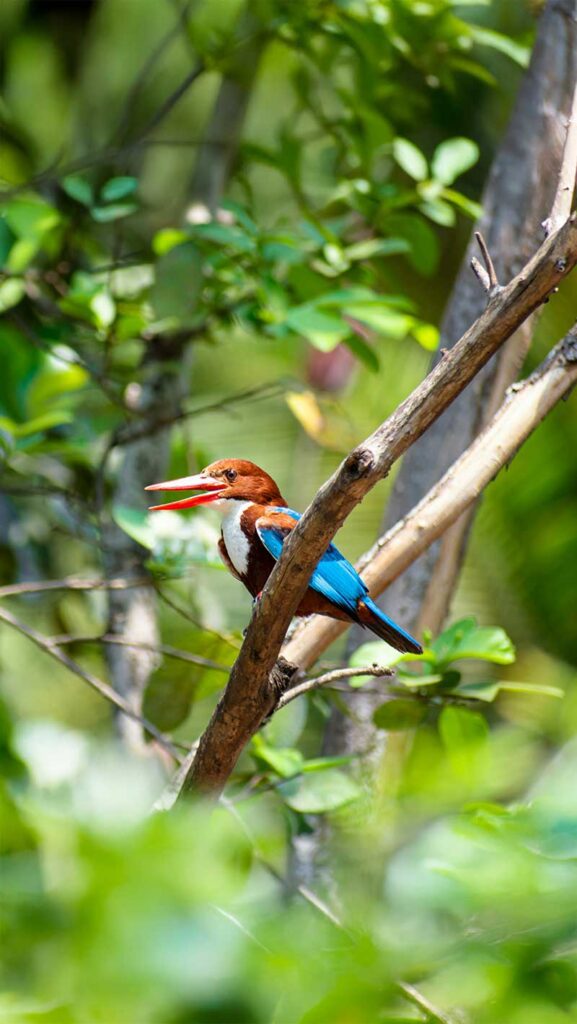
Species: Blue-eared kingfisher, Common kingfisher, Black-backed dwarf kingfisher, Pied kingfisher, Stork-billed kingfisher, Black-capped kingfisher, White-throated kingfisher.
46. Asian Barbets (Megalaimidae)
Plump birds with short necks, large heads and bristle-fringed bills.
Species: Crimson-fronted barbet (E), Coppersmith barbet, Brown-headed barbet, Yellow-fronted barbet (E).
47. Woodpeckers (Picidae)
Birds with chisel-like beaks, stiff tails and long tongues.
Species include: Eurasian wryneck (A), Rufous woodpecker, Black-rumped flameback, Red-backed flameback (E), Lesser yellownape, Streak-throated woodpecker, Crimson-backed flameback (E), White-naped woodpecker, Brown-capped pygmy woodpecker, Yellow-crowned woodpecker.
48. Falcons (Falconidae)
Diurnal raptors that kill with their beaks rather than talons.
Species: Lesser kestrel (A), Common kestrel, Amur falcon (A), Oriental hobby (A), Eurasian hobby (A), Red-necked falcon (A, NT), Peregrine falcon (including Shaheen and Eastern peregrine).
49. Old World Parrots (Psittaculidae)
Strong curved bills, strong legs and clawed zygodactyl feet.
Species: Alexandrine parakeet (NT), Rose-ringed parakeet, Plum-headed parakeet, Layard’s parakeet (E), Sri Lanka hanging parrot (E).
50. Pittas (Pittidae)
Stocky, brightly coloured birds of wet forest floors.
Species: Indian pitta (migrant).
51. Cuckooshrikes (Campephagidae)
Small to medium passerines, predominantly greyish.
Species: Small minivet, Scarlet (orange) minivet, Indian cuckooshrike, Black-headed cuckooshrike.
52. Woodswallows and Allies (Artamidae)
Soft-plumaged, sombre-coloured, agile flyers.
Species: Ashy woodswallow.
53. Ioras (Aegithinidae)
Bulbul-like birds of open forest; males brightly plumaged.
Species: Common iora, Marshall’s iora.
54. Vangas, Helmetshrikes, and Allies (Vangidae)
Medium-sized, often shrike-like birds.
Species: Bar-winged flycatcher-shrike, Sri Lanka woodshrike (E).
55. Old World Orioles (Oriolidae)
Colourful passerine birds.
Species: Black-hooded oriole, Indian golden oriole, Eurasian golden oriole (A), Black-naped oriole (A).
56. Fantails (Rhipiduridae)
Small insectivorous aerial feeders.
Species: White-browed fantail.
57. Drongos (Dicruridae)
Mostly black or dark grey with long forked tails.
Species: Sri Lanka drongo (E), Greater racket-tailed drongo, White-bellied drongo, Ashy drongo, Black drongo.
58. Monarch Flycatchers (Monarchidae)
Small to medium insectivorous passerines hunting by flycatching.
Species: Black-naped monarch, Indian paradise flycatcher (resident and migrant, including Ceylon and Himalayan forms).
59. Shrikes (Laniidae)
Passerines known for impaling prey on thorns.
Species: Great grey shrike (A), Bay-backed shrike (A), Long-tailed shrike, Brown shrike.
60. Crows, Jays, and Magpies (Corvidae)
Above-average-sized passerines, some highly intelligent.
Species: Sri Lanka blue magpie (E, Vulnerable), House crow, Indian jungle crow.
61. Fairy Flycatchers (Stenostiridae)
Small family found mostly in Africa, a few in tropical Asia.
Species: Grey-headed canary-flycatcher.
62. Tits, Chickadees, and Titmice (Paridae)
Small stocky woodland birds with short stout bills.
Species: Cinereous tit.
63. Larks (Alaudidae)
Small terrestrial birds with extravagant songs and display flights.
Species: Ashy-crowned sparrow-lark, Jerdon’s bushlark, Oriental skylark, Mongolian short-toed lark (A).
64. Cisticolas and Allies (Cisticolidae)
Very small, drab brown or grey warblers of open country.
Species: Common tailorbird (highland and lowland forms), Grey-breasted prinia, Jungle prinia, Ashy prinia, Plain prinia, Zitting cisticola.
65. Reed Warblers and Allies (Acrocephalidae)
Medium to large warblers of open woodland, reedbeds and tall grass.
Species: Booted warbler (A), Sykes’s warbler (A), Black-browed reed warbler (A), Blyth’s reed warbler, Clamorous reed warbler.
66. Grassbirds and Allies (Locustellidae)
Small insectivorous songbirds with long pointed tails.
Species: Pallas’s grasshopper warbler, Lanceolated warbler (A), Common grasshopper warbler (A), Broad-tailed grassbird (A, Vulnerable), Sri Lanka bush warbler (E, NT).
67. Swallows (Hirundinidae)
Aerial feeders with slender streamlined bodies and long pointed wings.
Species: Sand martin, Dusky crag martin (A), Hill swallow, Wire-tailed swallow (A), Barn swallow, Western house martin (A), Sri Lanka swallow (E), Eastern red-rumped swallow, Streak-throated swallow (A).
68. Leaf Warblers (Phylloscopidae)
Small insectivorous birds, often green above and yellow below.
Species: Dusky warbler (A), Green warbler, Greenish warbler (A), Large-billed leaf warbler, Western crowned warbler (A).
69. Bulbuls (Pycnonotidae)
Medium-sized songbirds, most drab olive-brown to black.
Species: Black-capped bulbul (E), White-browed bulbul, Yellow-eared bulbul (E, NT), Red-vented bulbul, Yellow-browed bulbul, Square-tailed (Sri Lanka black) bulbul.
70. Sylviid Warblers and Allies (Sylviidae)
Small insectivorous passerines.
Species: Lesser whitethroat.
71. Parrotbills and Allies (Paradoxornithidae)
Small insectivorous and seed-eating passerines.
Species: Yellow-eyed babbler.
72. White-eyes, Yuhinas, and Allies (Zosteropidae)
Small birds, many with a white ring around each eye.
Species: Sri Lanka white-eye (E), Indian white-eye.
73. Tree-babblers, Scimitar-babblers, and Allies (Timaliidae)
Diverse in size and colour, with soft fluffy plumage.
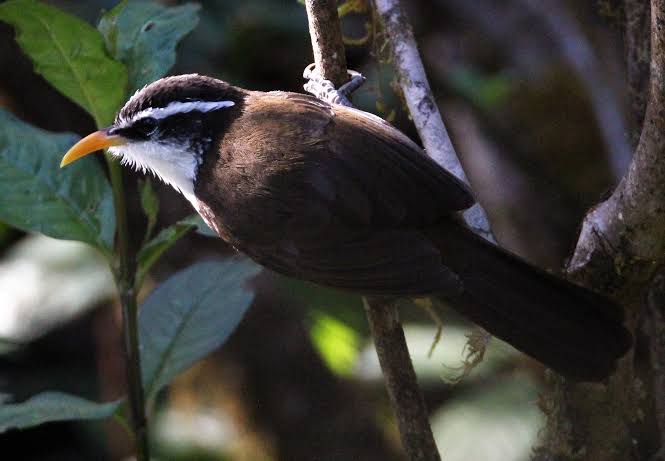
Species: Tawny-bellied babbler, Dark-fronted babbler (dry and wet zone forms), Sri Lanka scimitar babbler (E).
74. Ground Babblers and Allies (Pellorneidae)
Small to medium songbirds with soft fluffy plumage.
Species: Brown-capped babbler (E).
75. Laughingthrushes and Allies (Leiothrichidae)
Diverse in size and colour, mostly brown or greyish.
Species: Orange-billed babbler (E, NT), Yellow-billed babbler, Ashy-headed laughingthrush (E, Vulnerable).
76. Nuthatches (Sittidae)
Small woodland birds that can climb down trees head-first.
Species: Velvet-fronted nuthatch.
77. Starlings (Sturnidae)
Small to medium passerines, typically dark with a metallic sheen.
Species: Sri Lanka myna (E, NT), Southern hill myna, Common starling (A), Rosy starling, Daurian starling (A), Indian pied starling (A), White-faced starling (E, Vulnerable), Brahminy starling, Chestnut-tailed starling (A), Common myna.
78. Thrushes and Allies (Turdidae)
Plump, soft-plumaged insectivores or omnivores, often feeding on the ground.
Species: Sri Lanka thrush (E, NT), Pied thrush, Spot-winged thrush (E, NT), Orange-headed thrush, Indian blackbird, Eyebrowed thrush (A).
79. Old World Flycatchers (Muscicapidae)
Large group of small arboreal insectivores.
Species include: Asian brown flycatcher, Brown-breasted flycatcher, Spotted flycatcher (A), Rufous-tailed scrub robin (A), Indian robin, Oriental magpie-robin, Sri Lanka shama (E), White-bellied blue flycatcher (A), Blue-throated flycatcher, Hill blue flycatcher (A), Tickell’s blue flycatcher, Blue-and-white flycatcher (A), Dull-blue flycatcher (E, NT), Indian blue robin (migrant), Bluethroat (A), Sri Lanka whistling thrush (E, Endangered), Yellow-rumped flycatcher (A), Black-and-orange flycatcher (A, NT), Slaty-blue flycatcher (A), Kashmir flycatcher (Vulnerable), Red-breasted flycatcher (A), Common rock thrush (A), Blue rock thrush, Whinchat (A), Siberian stonechat (A), Pied bushchat, Northern wheatear (A), Isabelline wheatear (A), Desert wheatear (A), Pied wheatear (A).
80. Flowerpeckers (Dicaeidae)
Very small, stout, often brightly coloured birds with tubular tongues.
Species: Thick-billed flowerpecker, White-throated flowerpecker (E, NT), Pale-billed flowerpecker.
81. Sunbirds and Spiderhunters (Nectariniidae)
Very small passerines feeding largely on nectar.
Species: Purple-rumped sunbird, Crimson-backed sunbird (A), Purple sunbird, Loten’s sunbird.
82. Fairy-bluebirds (Irenidae)
Bulbul-like birds of open forest; males dark-blue, females duller green.
Species: Asian fairy-bluebird (A).
83. Leafbirds (Chloropseidae)
Small bulbul-like birds; males brightly plumaged in greens and yellows.
Species: Jerdon’s leafbird, Golden-fronted leafbird.
84. Weavers and Allies (Ploceidae)
Seed-eating birds with rounded conical bills.
Species: Streaked weaver, Baya weaver.
85. Waxbills and Allies (Estrildidae)
Small, gregarious, often colonial seed eaters.
Species: Red avadavat (A), Indian silverbill, White-rumped munia, Black-throated munia, Scaly-breasted munia, Tricoloured munia, Chestnut munia (A), Java sparrow (I).
86. Old World Sparrows (Passeridae)
Small, plump, brown or grey birds with short powerful beaks.
Species: House sparrow, Eurasian tree sparrow (A), Yellow-throated sparrow (A).
87. Wagtails and Pipits (Motacillidae)
Slender, ground-feeding insectivores of open country.
Species: Forest wagtail, Grey wagtail, Western yellow wagtail, Eastern yellow wagtail (A), Citrine wagtail (A), White-browed wagtail (A), White wagtail, Richard’s pipit, Paddyfield pipit, Blyth’s pipit, Tawny pipit (A), Olive-backed pipit (A), Red-throated pipit (A).
88. Finches, Euphonias, and Allies (Fringillidae)
Seed-eating passerines with strong conical beaks.
Species: Common rosefinch (A).
89. Old World Buntings (Emberizidae)
Seed-eating birds with distinctively shaped bills and head patterns.
Species: Black-headed bunting (A), Red-headed bunting (A), Grey-necked bunting (A).
Part 2: The 35 Endemic Birds of Sri Lanka
Sri Lanka’s 35 endemic species are its most prized birds. Of these, 26 are globally threatened, making conservation critical.
Endemic species highlighted in the list above:
-
Sri Lanka spurfowl
-
Sri Lanka junglefowl
-
Green-billed coucal
-
Red-faced malkoha
-
Sri Lanka woodpigeon
-
Sri Lanka green pigeon
-
Chestnut-backed owlet
-
Serendib scops owl
-
Sri Lanka grey hornbill
-
Crimson-fronted barbet
-
Yellow-fronted barbet
-
Red-backed flameback
-
Crimson-backed flameback
-
Layard’s parakeet
-
Sri Lanka hanging parrot
-
Sri Lanka woodshrike
-
Sri Lanka drongo
-
Sri Lanka blue magpie
-
Sri Lanka swallow
-
Sri Lanka bush warbler
-
Black-capped bulbul
-
Yellow-eared bulbul
-
Sri Lanka white-eye
-
Sri Lanka scimitar babbler
-
Brown-capped babbler
-
Orange-billed babbler
-
Ashy-headed laughingthrush
-
Sri Lanka myna
-
White-faced starling
-
Sri Lanka thrush
-
Spot-winged thrush
-
Sri Lanka shama
-
Dull-blue flycatcher
-
Sri Lanka whistling thrush
-
White-throated flowerpecker
Most endemics are confined to the wet zone and central hills, with a few extending into the dry zone.
Part 3: Where to See Birds in Sri Lanka
Bird distribution is shaped by the three climatic zones. Match your birding sites to your target species:
Wet Zone Rainforests (Best for Endemics)
-
Sinharaja Forest Reserve — the premier rainforest for endemic species
-
Kitulgala Makandawa Rain Forest — lowland endemics and river birding
-
Kanneliya Rain Forest — lowland rainforest complex
Central Hills (Best for Highland Endemics)
-
Horton Plains National Park — highland plateau at 2,100–2,300 m
-
Knuckles Forest Reserve — montane endemics and trekking
-
Peak Wilderness Sanctuary — cloud forest species
Wetlands (Best for Waterbirds and Migrants)
-
Bundala National Park — flamingos, herons, storks
-
Kumana National Park — nesting and breeding grounds
-
Anawilundawa Bird Sanctuary — wetland waterbirds
-
Kalametiya Bird Sanctuary — lagoon birding
-
Talangama Wetland — city birding near Colombo
-
Mannar Island — migratory waders and flamingos
National Parks (Mixed Birding and Wildlife)
-
Yala National Park — raptors and waterbirds
-
Wilpattu National Park — forest and waterbirds
-
Udawalawe National Park — raptors and waterbirds
-
Minneriya, Kaudulla, Gal Oya, Wasgamuwa, Lunugamwehera — tank and dry-zone birding
-
Sigiriya Sanctuary — forest birds around the rock fortress
Part 4: Best Time to Visit for Birding
-
December to April: Best for migratory birds and the south and west coasts. Ideal for Bundala and Mannar.
-
May to September: Best for the east coast and wetlands. Ideal for Kumana.
-
Year-round: Rainforests and the highlands are good all year for endemic species.
The northeast monsoon (October to January) shapes the dry zone, while the wet zone receives two monsoons.
Frequently Asked Questions (FAQ)
1. How many bird species are there in Sri Lanka?
More than 460 species have been recorded in Sri Lanka, including 35 confirmed endemics.
2. How many endemic birds does Sri Lanka have?
Sri Lanka has 35 confirmed endemic species, of which 26 are globally threatened. The latest addition is the Sri Lanka shama.
3. What is the newest endemic bird of Sri Lanka?
The Sri Lanka shama, previously considered a subspecies of the white-rumped shama, is the latest species confirmed as endemic.
4. Where can I see Sri Lanka’s endemic birds?
Most endemics are confined to the wet zone and central hills — especially Sinharaja, Horton Plains, Knuckles and Kitulgala.
5. What are the three climatic zones of Sri Lanka?
The dry zone (largest, over half the island), the wet zone (southwest, two monsoons, rainforests) and the central hill zone (over 2,450 m, cool temperate).
6. When is the best time for bird watching in Sri Lanka?
December to April is best for migratory birds. Rainforests and the highlands are good year-round for endemics.
7. Which bird families are found in Sri Lanka?
Sri Lanka has recorded birds from 89 families, from ducks and pheasants to sunbirds, flowerpeckers and buntings.
8. Are there flamingos in Sri Lanka?
Yes — the Greater flamingo is regularly recorded, and the Lesser flamingo occurs as an accidental visitor (Near Threatened).
9. What is the largest bird family recorded in Sri Lanka?
The Scolopacidae (sandpipers and allies) and Accipitridae (hawks, eagles and kites) are among the largest families, each with dozens of recorded species.
10. Do you offer bird watching tours in Sri Lanka?
Yes. Rediscover Journeys designs bird watching tours from 7 to 28 days with private guides, boutique hotels and tailor-made routes.
Plan Your Birding Journey with Rediscover Journeys
Ready to plan? Contact Rediscover Journeys — we design bird watching tours in Sri Lanka with private guides, boutique hotels and tailor-made routes.
Speak to our team: +94 77 791 1276 (Rasith Gunaratna) · +94 77 887 8723 (Lakshan Surekha) · +94 11 226 0407 (Office) · [email protected]
Explore more:
Contact Us Today!
Ready to plan your dream journey in Sri Lanka? Let us help you craft the perfect itinerary for a truly memorable experience.
Contact Rediscover Sri Lanka to explore our tailor-made journeys, private tours and authentic Sri Lankan experiences.
Begin a ConversationReviews and Recommendations.
Don't just take our word for it! Check out these incredible reviews from past travellers.
Read about other travellers' experiences and explore reviews of our parent company.
Read ReviewsDiscover feedback from travellers who have experienced Rediscover Journeys and explored Sri Lanka with our team.
Read ReviewsBook Your Adventure.
Ready to experience Sri Lanka beyond the usual tourist trail? Let us create a private journey around your interests, pace and travel style.
Ready to Rediscover Sri Lanka?
Plan your trip with Rediscover Sri Lanka and create unforgettable memories at some of the island's most extraordinary places.
Visit Rediscover Sri Lanka to start planning your journey.
Curate Your JourneyEverything you need to know about travelling in Sri Lanka.
Sri Lanka is a year-round destination, with the best time to visit depending on the regions you plan to explore. The west and south coasts are generally best from December to April, while the east coast is ideal from May to September. The central highlands offer cooler weather and scenic landscapes throughout much of the year.
A journey of 7 to 14 days allows you to experience many of Sri Lanka’s highlights at a comfortable pace. You can combine ancient cultural sites, wildlife safaris, scenic train journeys, tea country, and tropical beaches. A longer stay gives you more time to discover hidden gems and enjoy meaningful local experiences.
Sri Lanka offers a remarkable variety of destinations, from the ancient cities of Sigiriya and Polonnaruwa to the misty hills of Ella and Nuwara Eliya. Wildlife enthusiasts can explore Yala and Udawalawe National Parks, while the southern coast offers beautiful beaches and historic Galle Fort. The best places to visit depend on your interests, travel dates, and preferred pace.
Absolutely. Sri Lanka is home to diverse ecosystems, national parks, rainforests, wetlands, and mountain landscapes. Visitors can look for elephants, leopards, and a wide variety of birdlife on guided wildlife safaris, explore lush nature trails, or discover marine life along the coast. Responsible travel and following local wildlife guidelines help protect these natural environments.
Travellers can discover centuries-old temples, ancient kingdoms, traditional arts and crafts, vibrant festivals, and the island’s rich culinary heritage. Experiences may include visiting local markets, learning about traditional cooking, exploring historic landmarks, or meeting local communities. These encounters offer a deeper understanding of Sri Lanka’s traditions, people, and way of life.
Before travelling, consider the seasonal weather, regional travel times, local customs, appropriate clothing for religious sites, and entry requirements for your nationality. Sri Lanka’s landscapes and road conditions can make journeys longer than expected, so allowing time between destinations is worthwhile. Planning ahead helps you enjoy a more comfortable and rewarding experience.
The official currency is the Sri Lankan Rupee (LKR). Cards are accepted at many hotels, restaurants, and larger businesses, while cash is useful for local shops, markets, and smaller establishments. It is helpful to carry some local currency and check current exchange rates before your trip.
Yes. Sri Lanka offers experiences for a wide range of travellers, including families, couples, solo explorers, and groups of friends. Families can enjoy wildlife safaris, cultural discoveries, and relaxed beach stays, while couples may prefer scenic retreats, boutique hotels, and private experiences. An itinerary tailored to your interests can help create a more enjoyable journey.