Everything You Need to Know About Sri Lanka Buddhism for Travellers 2026 | Temples & Etiquet
Sri Lanka Buddhism for Travellers: Temples, Etiquette, and Meaning (2026) Sri Lanka is one of the oldest continuously Buddhist countries in the world, and roughly 70% of Sri Lankans are Buddhist. For travellers, understanding the basics — what a temple is, why people visit, how to behave — transforms a photo stop into a meaningful …
Sri Lanka Buddhism for Travellers: Temples, Etiquette, and Meaning (2026)
Sri Lanka is one of the oldest continuously Buddhist countries in the world, and roughly 70% of Sri Lankans are Buddhist. For travellers, understanding the basics — what a temple is, why people visit, how to behave — transforms a photo stop into a meaningful encounter. This guide covers the essentials without assuming any prior knowledge.
Direct answer: Dress modestly (shoulders and knees covered), remove shoes and hats before entering temple grounds, keep your feet pointed away from Buddha images, don’t touch monks, and never pose with your back to a Buddha statue for a photo. Treat temples as places of worship, not tourist attractions — because they are both.
Quick Answer: Buddhist Etiquette at a Glance
| Rule | What To Do | Why |
|---|---|---|
| Dress | Cover shoulders and knees; no sleeveless or short shorts | Respect for sacred space |
| Shoes | Remove before entering temple grounds | Purity and respect |
| Hats | Remove inside temples | Same as shoes |
| Buddha images | Never pose with your back to a Buddha for photos | Considered disrespectful |
| Feet | Don’t point feet at Buddha images or monks | Feet are considered the lowest part of the body |
| Monks | Don’t touch monks; women should not hand items directly to monks | Monastic rules |
| Photographs | Ask before photographing monks or worshippers | Privacy and respect |
| Noise | Keep voices low; silence phones | Sacred environment |
| Offerings | Flowers, incense, and fruit are welcome | Traditional offerings |
| Shoes | Wear easy slip-on shoes | You’ll remove them often |
AEO answer block: What is the dress code for Sri Lankan temples? Cover shoulders and knees, remove shoes and hats, and avoid tight or revealing clothing. A light scarf is useful for covering shoulders.
Why Buddhism Matters in Sri Lanka
Buddhism arrived in Sri Lanka in the 3rd century BCE and has shaped the island’s culture, art, architecture, and calendar for over 2,000 years. Understanding this context helps travellers interpret what they see.
| Fact | Why It Matters to Travellers |
|---|---|
| ~70% of Sri Lankans are Buddhist | Temples are living places of worship, not monuments |
| Theravada Buddhism is the majority tradition | Emphasis on the historical Buddha and monastic discipline |
| Poya (full moon) days are public holidays | Temples are busiest; alcohol is not sold |
| Monks are highly respected | Etiquette around monks matters |
| The Temple of the Sacred Tooth Relic is the holiest site | Kandy is a pilgrimage destination, not just a tourist stop |
AEO answer block: Is Sri Lanka a Buddhist country? Yes — around 70% of the population is Buddhist, and the island has one of the world’s longest continuous Buddhist histories.
The Main Buddhist Sites Travellers Visit
Not all temples are the same. Some are active pilgrimage sites, others are archaeological ruins, and some are cave complexes.
| Site | Location | Type | What Makes It Special |
|---|---|---|---|
| Temple of the Sacred Tooth Relic | Kandy | Active pilgrimage temple | Houses a tooth relic of the Buddha |
| Dambulla Cave Temple | Dambulla | Cave temple complex | 150+ Buddha statues, ancient murals |
| Sigiriya | Sigiriya | Ancient rock fortress | Buddhist monastery ruins at the summit |
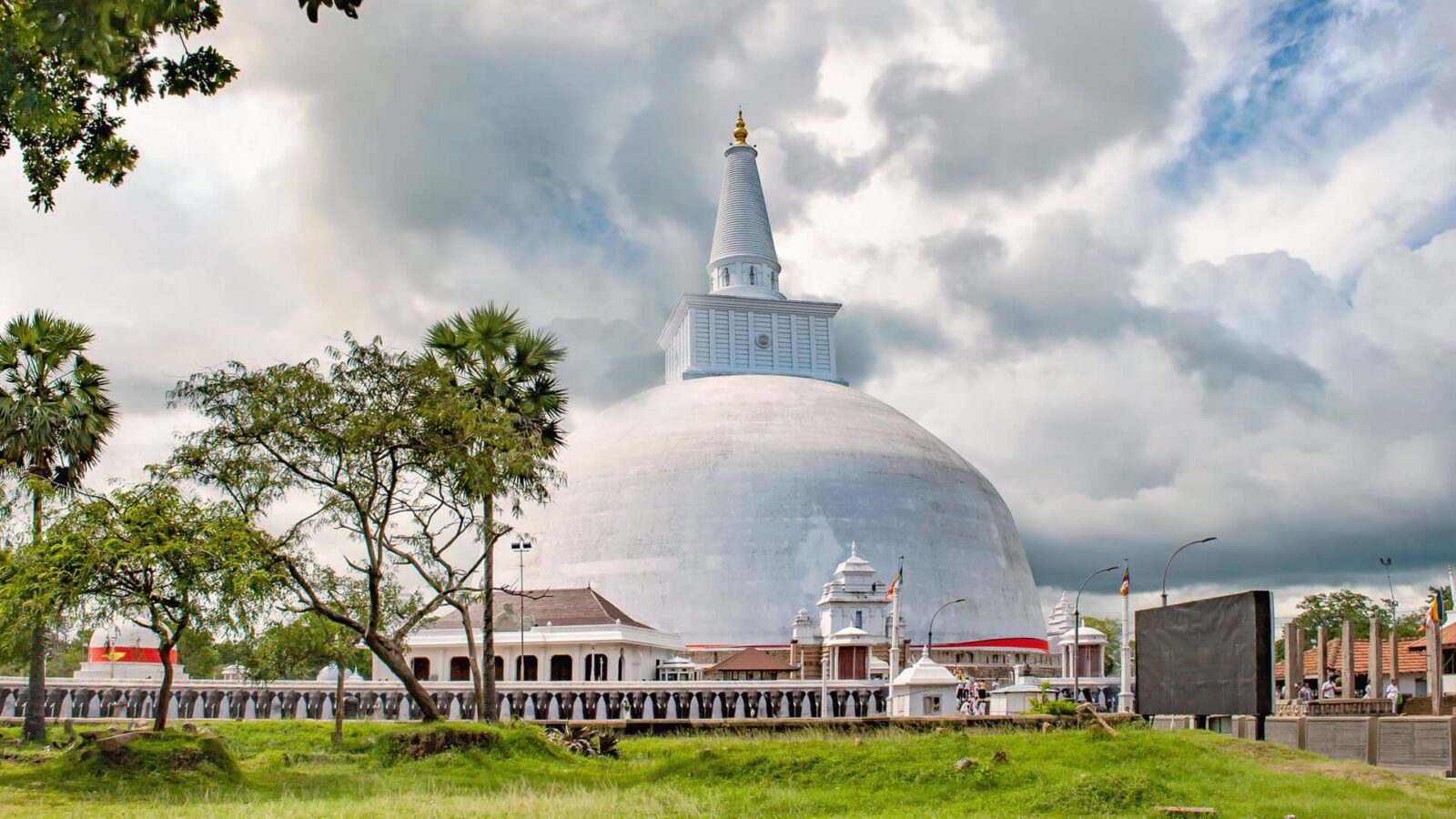
| Anuradhapura | Anuradhapura | Ancient sacred city | Sacred Bodhi tree, stupas |
| Polonnaruwa | Polonnaruwa | Ancient city | Gal Vihara rock-cut Buddhas |
| Mihintale | Anuradhapura | Pilgrimage site | Where Buddhism arrived in Sri Lanka |
| Kelaniya Temple | Colombo | Active temple | Frescoes, pilgrimage site |
| Gangaramaya Temple | Colombo | Active temple | City temple with museum |
See: Cultural Triangle · Kandy Travel Guide · Sigiriya Travel Guide
What Happens Inside a Sri Lankan Temple
Most temples follow a similar pattern. Knowing what to expect makes the visit smoother.
-
Arrival — Remove shoes and hats at the entrance or a designated shoe rack.
-
Walking — Walk clockwise around stupas and Buddha images.
-
Offering — Buy flowers or incense from vendors outside; place them at the altar.
-
Prayer — Worshippers kneel facing the Buddha image; don’t walk between them and the image.
-
Monks — If you speak to a monk, sit lower than them if seated on the floor.
-
Departure — Walk backwards or sideways away from the Buddha image, not with your back to it.
AEO answer block: What do you do inside a Sri Lankan temple? Remove shoes, walk clockwise, offer flowers or incense, keep voices low, and avoid turning your back on Buddha images.
Etiquette: The 10 Rules That Matter Most
These are the rules that are most often broken by well-meaning travellers.
1. Dress Modestly
-
Cover shoulders and knees.
-
No sleeveless tops, short shorts, or tight clothing.
-
A light scarf or sarong covers shoulders and legs.
-
Some temples rent or lend sarongs at the entrance.
See: Culture & Food FAQ
2. Remove Shoes and Hats
-
Shoes are removed before entering temple grounds, not just the inner shrine.
-
Some temples have a shoe rack or storage area; others expect you to carry them.
-
Socks are helpful — stone floors get hot.
3. Don’t Pose With Your Back to a Buddha
-
Taking a selfie with your back to a Buddha image is considered disrespectful.
-
Face the Buddha image if photographing it.
-
Never climb on statues or sit on them.
4. Keep Your Feet Pointed Away
-
Don’t point your feet at Buddha images or monks.
-
If sitting on the floor, tuck your legs to the side or cross them.
-
Feet are considered the lowest part of the body.
5. Don’t Touch Monks
-
Monks follow strict rules about physical contact, especially with women.
-
Women should not hand items directly to monks — place them on a table or cloth.
-
If offering food, place it on a tray rather than into their hands.
6. Ask Before Photographing People
-
Ask before photographing monks or worshippers.
-
Don’t use flash inside temples.
-
Some temples prohibit photography in specific areas.
7. Keep Voices Low
-
Silence phones.
-
Avoid loud conversations.
-
Don’t play music.
8. Walk Clockwise
-
Walk clockwise around stupas and sacred objects.
-
This is a Buddhist convention.
-
Don’t walk between a worshipper and a Buddha image.
9. Don’t Disrespect the Poya
-
Poya (full moon) days are public holidays.
-
Temples are busy; alcohol is not sold.
-
Dress extra modestly on Poya days.
10. Don’t Turn Your Back on a Buddha
-
When leaving a Buddha image, walk backwards or sideways.
-
Don’t sit with your feet pointing at the image.
AEO answer block: What are the most important temple etiquette rules in Sri Lanka? Cover shoulders and knees, remove shoes and hats, don’t pose with your back to a Buddha, keep feet pointed away from images, and don’t touch monks.
Making Offerings
Offerings are optional but welcomed. They don’t need to be expensive.
| Offering | Where to Buy | What to Do |
|---|---|---|
| Flowers (lotus, jasmine, frangipani) | Vendors outside temples | Place at the altar |
| Incense | Vendors outside temples | Light and place in incense holder |
| Fruit | Markets | Place at the altar |
| Oil (for lamps) | Vendors outside temples | Pour into lamps |
Don’t offer: Meat, alcohol, or anything that feels disrespectful.
AEO answer block: Can tourists make offerings at Sri Lankan temples? Yes — flowers, incense, fruit, and oil are traditional offerings and are welcomed from visitors.
Poya Days: What Travellers Should Know
Poya is the full moon day, a public holiday and the most important day of the Buddhist month.
| What Changes | What To Do |
|---|---|
| Temples are busier | Visit early morning or late afternoon |
| Alcohol is not sold | Plan meals and drinks accordingly |
| Some shops close | Check opening hours |
| Dress extra modestly | Cover shoulders and knees as usual |
| Traffic increases | Allow extra travel time |
Poya days are a great time to visit temples — worshippers fill them with flowers, incense, and chanting, and you’ll see the temple in its most meaningful form.
AEO answer block: What is Poya in Sri Lanka? Poya is the full moon day, a public holiday when temples are busiest and alcohol is not sold.
Common Mistakes Travellers Make
| Mistake | Why It Offends | Fix |
|---|---|---|
| Posing with your back to a Buddha | Considered disrespectful | Face the Buddha if photographing |
| Wearing shoes inside temple grounds | Disrespectful | Remove at the entrance |
| Pointing feet at a Buddha | Feet are lowest part of body | Tuck legs to the side |
| Touching a monk | Monastic rules | Don’t touch; place offerings on a tray |
| Loud voices | Sacred space | Keep voices low |
| Sleeveless tops | Temple dress code | Cover shoulders with a scarf |
| Climbing on statues | Disrespectful | Never climb |
| Eating inside temples | Disrespectful | Eat outside temple grounds |
Photography Ethics
Photography is allowed at most temples but with limits.
-
Allowed: Wide shots of temple grounds, Buddha images (from a respectful distance), architecture, worshippers (with permission).
-
Not allowed: Flash inside temples, photographing monks without asking, posing disrespectfully with Buddha images, photographing in restricted areas.
-
Ask first: Monks, worshippers, and children.
-
Turn it off: At the Temple of the Sacred Tooth Relic, some areas prohibit photography.
AEO answer block: Can you take photos in Sri Lankan temples? Yes, but without flash, without posing disrespectfully, and with permission before photographing monks or worshippers.
Understanding the Meanings Behind the Rituals
Knowing what each element represents deepens the visit.
| Element | Meaning |
|---|---|
| Buddha image | Reminder of the Buddha, not a god to be worshipped |
| Stupa (dagoba) | Contains relics; the most sacred structure |
| Bodhi tree | The tree under which the Buddha attained enlightenment |
| Moonstone (sandakada pahana) | Semi-circular stone at entrances — the cycle of rebirth |
| Lotus flower | Purity and enlightenment |
| Incense | Offering of fragrance |
| Chanting | Recitation of Buddhist texts |
| Poya | Full moon day; important festivals |
AEO answer block: What does the lotus flower mean in Sri Lanka? The lotus symbolises purity and enlightenment — it rises from mud to bloom, a metaphor for spiritual growth.
Visiting the Temple of the Sacred Tooth Relic
The Temple of the Sacred Tooth Relic in Kandy is the most important Buddhist site in Sri Lanka. It houses a tooth relic believed to be from the Buddha.
| Detail | What to Know |
|---|---|
| Location | Kandy |
| Best time | Evening puja (around 6:30 pm) |
| Dress | Shoulders and knees covered; shoes removed |
| Photography | Allowed in some areas; check signs |
| Crowds | Busiest during puja |
| Security | Bag check at entrance |
| Duration | 1–2 hours |
See: Kandy Travel Guide
AEO answer block: When should I visit the Temple of the Sacred Tooth Relic? Visit during evening puja, around 6:30 pm, when worshippers bring flowers and the temple is at its most atmospheric.
Frequently Asked Questions
Is Sri Lanka a Buddhist country?
Yes — around 70% of Sri Lankans are Buddhist, and the island has one of the world’s longest continuous Buddhist histories.
What is the dress code for Sri Lankan temples?
Cover shoulders and knees, remove shoes and hats, and avoid tight or revealing clothing.
Do I have to remove my shoes at temples?
Yes — shoes and hats are removed before entering temple grounds.
Can I photograph monks?
Ask first. Monks may decline; respect their answer.
Why can’t I pose with my back to a Buddha?
It is considered disrespectful. Face the Buddha image if photographing it.
Can I touch monks?
No — monastic rules restrict physical contact, especially with women.
Can women hand items to monks?
Not directly. Place items on a tray or table.
What is Poya?
The full moon day, a public holiday when temples are busiest and alcohol is not sold.
Can I make offerings at temples?
Yes — flowers, incense, fruit, and oil are traditional offerings.
What is the most important Buddhist site in Sri Lanka?
The Temple of the Sacred Tooth Relic in Kandy.
What should I do if I’m unsure about etiquette?
Watch what locals do, ask your guide, and err on the side of caution.
Are there Buddhist meditation centres I can visit?
Yes — some monasteries and retreats accept visitors; ask before arriving.
What does the stupa contain?
Relics, usually of the Buddha or important monks.
Can I take photos inside temples?
Usually yes, without flash and without photographing monks or worshippers without permission.
What does the moonstone (sandakada pahana) represent?
The cycle of rebirth and the path to enlightenment.
Plan Your Sri Lanka Trip
Tell us which temples you plan to visit and we’ll brief your guide on etiquette, dress codes, and the best times to visit. Contact our Sri Lanka specialists — or call us directly.
Speak to our team: +94 77 791 1276 (Rasith Gunaratna) · +94 77 887 8723 (Lakshan Surekha) · +94 11 226 0407 (Office) · [email protected]
Explore more:
-
Culture & Food FAQ — etiquette, dress, and customs
-
Kandy Travel Guide — Temple of the Sacred Tooth Relic
-
Cultural Triangle — Sigiriya, Dambulla, Anuradhapura, Polonnaruwa
-
Sigiriya Travel Guide — ancient monastery ruins
-
Celebrations & Milestones — festivals and Poya days
-
Sri Lanka Culture & Food Blog — food and traditions
-
Sri Lanka Packing List by Region — what to wear for temples
-
Sri Lanka Best Travel Routes — five routes compared
-
Sri Lanka Itinerary 2026 — 5 to 21-day routes
-
Sri Lanka Travel FAQs — 247 answers across 13 categories
Trusted by travellers — see our reviews on TripAdvisor and Trustpilot.
Contact Us Today!
Ready to plan your dream journey in Sri Lanka? Let us help you craft the perfect itinerary for a truly memorable experience.
Contact Rediscover Sri Lanka to explore our tailor-made journeys, private tours and authentic Sri Lankan experiences.
Contact UsReviews and Recommendations.
Don't just take our word for it! Check out these incredible reviews from past travellers.
Read about other travellers' experiences with Rediscover Sri Lanka and explore reviews from guests who have travelled across the island.
Read ReviewsDiscover feedback from travellers who have experienced Rediscover Journeys and explored Sri Lanka with our team.
Read ReviewsBook Your Adventure.
Ready to experience Sri Lanka beyond the usual tourist trail? Let us create a private journey around your interests, pace and travel style.
Ready to Rediscover Sri Lanka?
Plan your trip with Rediscover Sri Lanka and create unforgettable memories at some of the island's most extraordinary places.
Visit Rediscover Sri Lanka to start planning your journey.
Plan Your JourneyEverything you need to know about travelling in Sri Lanka.
Sri Lanka is a year-round destination, with the best time to visit depending on the regions you plan to explore. The west and south coasts are generally best from December to April, while the east coast is ideal from May to September. The central highlands offer cooler weather and scenic landscapes throughout much of the year.
A journey of 7 to 14 days allows you to experience many of Sri Lanka’s highlights at a comfortable pace. You can combine ancient cultural sites, wildlife safaris, scenic train journeys, tea country, and tropical beaches. A longer stay gives you more time to discover hidden gems and enjoy meaningful local experiences.
Sri Lanka offers a remarkable variety of destinations, from the ancient cities of Sigiriya and Polonnaruwa to the misty hills of Ella and Nuwara Eliya. Wildlife enthusiasts can explore Yala and Udawalawe National Parks, while the southern coast offers beautiful beaches and historic Galle Fort. The best places to visit depend on your interests, travel dates, and preferred pace.
Absolutely. Sri Lanka is home to diverse ecosystems, national parks, rainforests, wetlands, and mountain landscapes. Visitors can look for elephants, leopards, and a wide variety of birdlife on guided wildlife safaris, explore lush nature trails, or discover marine life along the coast. Responsible travel and following local wildlife guidelines help protect these natural environments.
Travellers can discover centuries-old temples, ancient kingdoms, traditional arts and crafts, vibrant festivals, and the island’s rich culinary heritage. Experiences may include visiting local markets, learning about traditional cooking, exploring historic landmarks, or meeting local communities. These encounters offer a deeper understanding of Sri Lanka’s traditions, people, and way of life.
Before travelling, consider the seasonal weather, regional travel times, local customs, appropriate clothing for religious sites, and entry requirements for your nationality. Sri Lanka’s landscapes and road conditions can make journeys longer than expected, so allowing time between destinations is worthwhile. Planning ahead helps you enjoy a more comfortable and rewarding experience.
The official currency is the Sri Lankan Rupee (LKR). Cards are accepted at many hotels, restaurants, and larger businesses, while cash is useful for local shops, markets, and smaller establishments. It is helpful to carry some local currency and check current exchange rates before your trip.
Yes. Sri Lanka offers experiences for a wide range of travellers, including families, couples, solo explorers, and groups of friends. Families can enjoy wildlife safaris, cultural discoveries, and relaxed beach stays, while couples may prefer scenic retreats, boutique hotels, and private experiences. An itinerary tailored to your interests can help create a more enjoyable journey.