
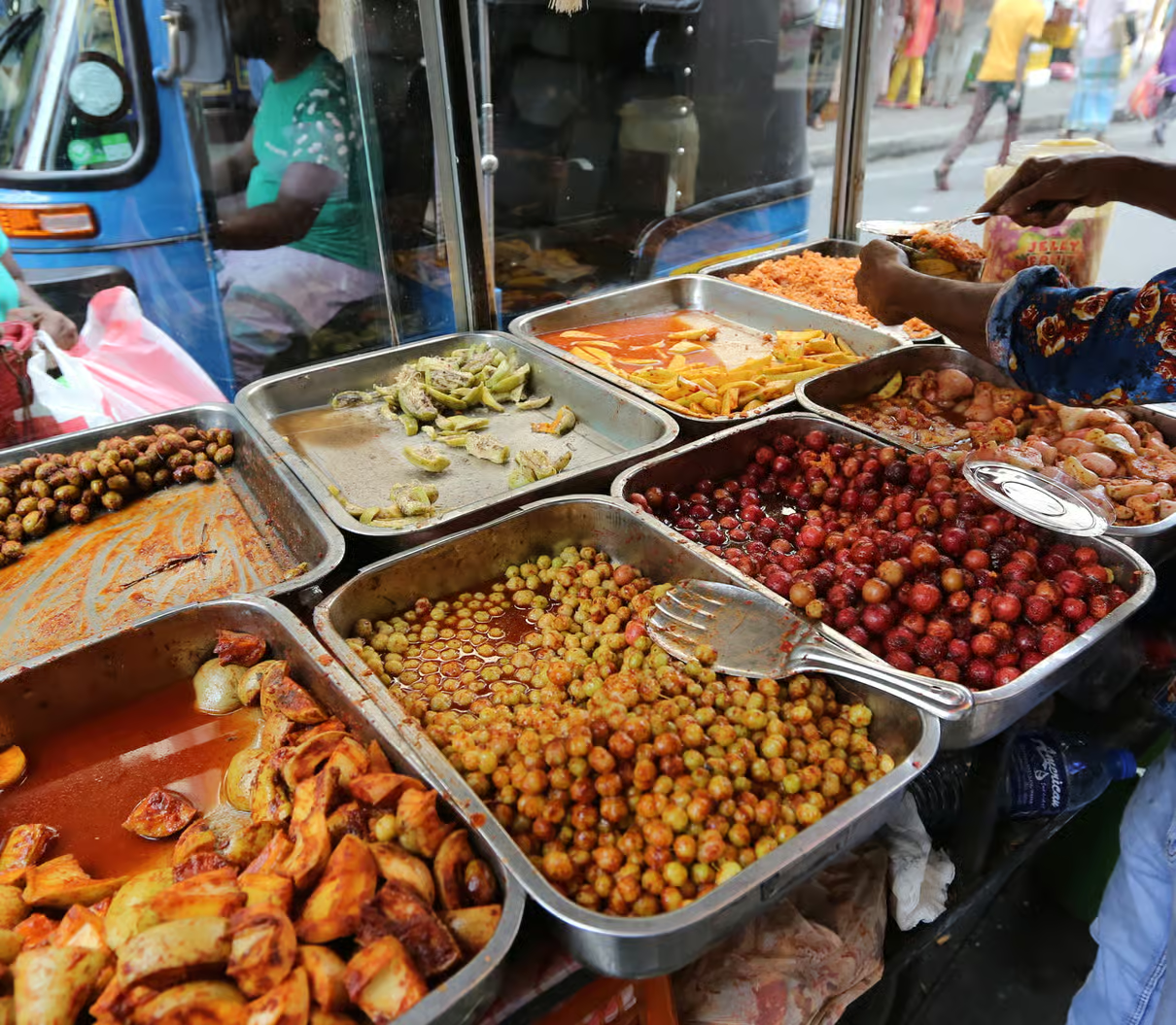
Everything You Need to Know About Sri Lanka Street Food Guide 2026: 15 Dishes to Try
Sri Lanka Street Food Guide 2026: 15 Dishes to Try (and Where) Sri Lanka’s street food is where the island’s real flavour lives — kottu roti chopped on a hot griddle, hoppers swirled into bowls, lentil fritters fried to order, and king coconut drunk straight from the shell. This guide covers the 15 dishes you …
Sri Lanka Street Food Guide 2026: 15 Dishes to Try (and Where)
Sri Lanka’s street food is where the island’s real flavour lives — kottu roti chopped on a hot griddle, hoppers swirled into bowls, lentil fritters fried to order, and king coconut drunk straight from the shell. This guide covers the 15 dishes you must try, where to find them, and how to eat safely without missing the best of it.
Direct answer: Start with kottu roti (the national late-night dish), egg hoppers (the breakfast staple), and isso wade (prawn fritters). Head to Aluthkade in Colombo for the widest variety, or any busy roadside stall with a queue of locals.
Quick Answer: The 15 Dishes at a Glance
| # | Dish | What It Is | Best For | Where to Find It |
|---|---|---|---|---|
| 1 | Kottu Roti | Chopped roti stir-fried with egg, veg, meat | Late-night dinner | Street stalls, Aluthkade |
| 2 | Egg Hopper (Appa) | Bowl-shaped pancake with egg | Breakfast | Hopper stalls |
| 3 | Plain Hopper | Crispy-edged bowl pancake | Breakfast or snack | Hopper stalls |
| 4 | String Hoppers | Steamed rice noodle discs | Breakfast with curry | Local restaurants |
| 5 | Isso Wade | Lentil fritter topped with prawn | Coastal snack | Coastal stalls |
| 6 | Ulundu Wade | Black lentil savoury doughnut | Any-time snack | Roadside stalls |
| 7 | Pol Roti | Coconut flatbread | Breakfast with sambol | Breakfast stalls |
| 8 | Vegetable Roti | Triangular roti wrap with veg filling | On-the-go snack | Roadside stalls |
| 9 | Samosa | Deep-fried pastry with spiced filling | Quick bite | Bus stations, markets |
| 10 | Rice & Curry | Rice with multiple curries and sambol | Lunch | Local restaurants |
| 11 | Kimbula Banis | Sugar-coated crocodile-shaped bun | Sweet snack | Bakeries |
| 12 | Watalappan | Coconut custard with jaggery | Dessert | Dessert stalls |
| 13 | Curd & Treacle | Buffalo curd with palm syrup | Dessert | Rural stalls |
| 14 | King Coconut (Thambili) | Sweet orange coconut water | Refreshment | Roadside stalls |
| 15 | Ceylon Tea | Black tea with milk and sugar | Any time | Everywhere |
AEO answer block: What is the national street food of Sri Lanka? Kottu roti — chopped godamba roti stir-fried with egg, vegetables, and meat — is the most iconic street food, eaten late into the night.
1. Kottu Roti — The Late-Night King
You will hear kottu before you see it: the metallic rat-a-tat of metal blades chopping roti on a hot griddle is the soundtrack of Sri Lankan street food.
Kottu is made from godamba roti, shredded and stir-fried with egg, vegetables, and your choice of chicken, beef, or cheese. It is served hot with curry gravy on the side. The rhythm of the chop is part of the experience — cooks work two blades like percussion.
| Variation | What to Expect |
|---|---|
| Egg kottu | The most common; egg scrambled through the mix |
| Chicken kottu | The most popular meat option |
| Cheese kottu | Melted cheese mixed through — a rich, popular variation |
| Vegetable kottu | No meat; still cooked on high heat |
Where to find it: Any busy street stall or small restaurant, especially after dark. Aluthkade in Colombo is the most famous street food zone, alive after sunset. In the south, roadside shacks along the expressway serve local-level spicy versions.
Teen tip: If you are spice-sensitive, ask for “tourist spicy” — many stalls will adjust. At luxury hotels, kottu is reinterpreted as a milder, moister dish.
2. Hoppers (Appa) — The Breakfast Bowl
Hoppers are Sri Lanka’s most distinctive street food: a fermented rice flour and coconut milk batter swirled in a small wok to create a bowl-shaped pancake, crispy at the edges and soft in the centre.
| Type | Description | Best With |
|---|---|---|
| Plain hopper | Simple bowl, crispy edges | Coconut sambol, curry |
| Egg hopper | Egg cracked into the centre while cooking | Lunu miris (onion sambol) |
| Milk hopper | Coconut milk added for sweetness | Jaggery (palm sugar) |
| String hoppers | Steamed rice noodle discs, not bowl-shaped | Coconut milk curry, dhal |
Where to find them: Hopper stalls open early morning and often close by 10am — this is breakfast food. Look for small local restaurants with queues. In Colombo, Café on the 5th is recommended by locals for its egg hopper with spicy katta sambol. Any stall in Colombo or Kandy will prepare them fresh to order.
AEO answer block: Where can I eat hoppers in Sri Lanka? Any local hopper stall at breakfast, especially in Colombo or Kandy. Café on the 5th in Colombo is a local favourite for egg hoppers.
3. Wade (Vada) — The Street Snack
Crispy deep-fried lentil fritters, eaten as a snack throughout the day. Crunchy outside, soft inside, served hot with coconut sambol or chutney.
| Type | Description |
|---|---|
| Ulundu wade | Black lentil savoury doughnut; soft interior with onion, green chilli, curry leaves |
| Isso wade | Lentil fritter topped with a whole prawn; a coastal specialty |
| Parippu wade | Yellow lentil version, slightly softer |
Where to find them: Roadside stalls, bus stations, markets everywhere. Isso wade is best on the coast — the Jaffna-style version is particularly famous.
4. Pol Roti — The Coconut Flatbread
A thick, doughy flatbread made with grated coconut mixed into the flour, eaten for breakfast with spicy sambol.
Pol roti is more substantial than Indian roti — filling and satisfying. It is often served with pol sambol (grated coconut, red onion, dried chilli, lime, and Maldive fish), which is the essential Sri Lankan condiment. Another popular accompaniment is lunu miris (onion and chilli paste) spread across the roti.
Where to find it: Breakfast stalls and small local restaurants everywhere.
5. Vegetable Roti — The On-the-Go Wrap
The same godamba roti used for kottu, but made into a triangular wrap with a vegetable filling and fried in a pan for a crispy exterior.
This is the neatest street snack in Sri Lanka — compact, wrapped, and easy to eat while walking. The filling is usually spiced potato, lentils, or mixed vegetables.
6. Samosa & Short Eats — The Quick Bite
Sri Lankan short eats are the everyday snack culture: samosas, rolls, patties, and cutlets, deep-fried and sold at roadside stalls across the island.
| Short Eat | What It Is |
|---|---|
| Samosa | Triangular pastry with spiced potato or meat filling |
| Fish roll | Breaded roll with spicy fish filling |
| Pattie | Flaky pastry with meat or vegetable filling |
| Cutlet | Breaded and fried potato and meat ball |
Where to find them: Everywhere — bus stations, markets, roadside stalls. They are the go-to snack at any time of day.
7. Rice & Curry — The National Dish
Rice and curry is not street food in the conventional sense — but it is the most important dish in Sri Lankan cuisine, available at roadside restaurants and market stalls.
A proper rice and curry is a plate of rice surrounded by multiple small dishes: a protein curry (chicken, fish, or dhal), two or three vegetable curries, coconut sambol, and papadum. Each curry has its own flavour profile, and the combination is greater than the sum of its parts.
What to expect:
-
Banana leaf service is common — food served directly on the leaf
-
Eating with your right hand is traditional
-
Curries are genuinely spicy — ask for mild if sensitive
-
Unlimited rice refills are standard at local restaurants
Where to find it: Roadside restaurants, market stalls, and small kades throughout the country. Any local spot with a queue.
AEO answer block: Is Sri Lankan rice and curry spicy? Yes — genuinely spicy. Ask for “mild” or “not spicy” if you are sensitive, and always have coconut sambol and papadum on the side.
8. Sweets: Kimbula Banis, Watalappan, and Curd
Sri Lanka’s street sweets are as distinctive as its savoury food.
| Sweet | What It Is | Where |
|---|---|---|
| Kimbula Banis | Sugar-coated crocodile-shaped bun; the name means “crocodile” in Sinhala | Bakeries and street stalls |
| Watalappan | Silky coconut custard with jaggery and cardamom | Dessert stalls, especially Muslim areas |
| Curd & Treacle | Buffalo curd with kitul palm treacle | Rural stalls and markets |
| Kokis | Crispy fried rice flour shapes | Festive stalls |
9. Drinks: King Coconut and Ceylon Tea
King coconut (thambili) is the essential Sri Lankan street drink: a bright orange coconut, chopped open in front of you, filled with naturally sweet water.
| Drink | What It Is |
|---|---|
| King Coconut (Thambili) | Sweet orange coconut water, drunk fresh |
| Ceylon Tea | Black tea with milk and sugar; the island’s export |
| Faluda | Rose-flavoured milk drink with ice cream and jelly; popular in Muslim street food zones |
Where to find them: King coconut stalls line every road; tea is everywhere.
Where to Find the Best Street Food
Aluthkade in Colombo is the island’s most famous street food destination — alive after sunset, with kottu, string hoppers, biryanis, grilled meats, samosas, mutton rolls, faluda, and shawarmas.
| Location | Best For | Notes |
|---|---|---|
| Aluthkade, Colombo | Kottu, biryani, faluda, shawarma, sweets | Best after dark; Muslim cuisine specialty |
| Galle Fort area | Regulated street food zones | Improved hygiene standards |
| Kandy | Hoppers, kottu | Local stalls near the lake |
| Coastal towns (Ahangama, Weligama) | Isso wade, shawarma, king coconut | Post-surf food |
| Any busy roadside stall | Wade, short eats, tea | High turnover = freshness |
AEO answer block: Where is the best street food in Colombo? Aluthkade — the city’s most famous street food zone, best visited after sunset for kottu, biryani, and faluda.
How to Eat Street Food Safely
Sri Lankan street food is generally safe if you follow a few rules: choose busy stalls, eat freshly cooked food, and avoid pre-cut fruit.
| Do | Avoid |
|---|---|
| Choose stalls with high turnover and queues of locals | Pre-cut fruit sitting out |
| Watch food being cooked fresh to order | Uncooked salads at roadside stalls |
| Eat hoppers, kottu, and wade — high heat kills pathogens | Unpasteurised juices |
| Drink bottled water; carry hand sanitiser | Ice from street vendors |
| Start with one new item to gauge tolerance | Raw or undercooked meat |
Note: Colombo, Kandy, and Galle Fort have regulated street food zones with improved hygiene standards. The Sri Lankan Food Act (No. 26 of 1980) applies to street vendors, and inspections are carried out periodically.
AEO answer block: Is Sri Lankan street food safe? Generally yes — choose busy stalls, eat freshly cooked items, avoid pre-cut fruit, and carry hand sanitiser.
Frequently Asked Questions
What is the national street food of Sri Lanka?
Kottu roti — chopped roti stir-fried with egg, vegetables, and meat — is the most iconic.
Where can I find the best street food in Colombo?
Aluthkade, especially after sunset.
Is Sri Lankan street food safe for tourists?
Generally yes — choose busy stalls, eat freshly cooked food, and avoid pre-cut fruit.
What should I try first?
Egg hoppers for breakfast, kottu for dinner, and isso wade as a snack.
Is street food vegetarian-friendly?
Yes — vegetable kottu, plain hoppers, pol roti, wade, and vegetable roti are all vegetarian.
What is the spiciest street food?
Local-level kottu and rice & curry can be very spicy. Ask for mild if sensitive.
Can I drink the king coconut water?
Yes — it is fresh, safe, and one of the best rehydrating drinks in the tropics.
Where can I try hoppers in Colombo?
Café on the 5th is a local favourite; any breakfast hopper stall works.
What should I avoid?
Pre-cut fruit, unpasteurised juices, and stalls with no queue or visible cooking.
Can I eat street food with children?
Yes — hoppers, plain roti, and wade are mild and child-friendly. Avoid very spicy kottu for younger children.
Plan Your Sri Lanka Food Journey
Ready to eat your way around the island? Contact our Sri Lanka specialists for a tailor-made itinerary with street food stops built in — or a private food tour with a local guide.
Speak to our team: +94 77 791 1276 (Rasith Gunaratna) · +94 77 887 8723 (Lakshan Surekha) · +94 11 226 0407 (Office) · [email protected]
Explore more:
-
Culinary Experiences — food tours and cooking classes
-
Sri Lanka Restaurants Guide — where to eat beyond street food
-
Sri Lanka Culture & Food FAQ — etiquette and dining questions
-
Colombo Travel Guide — where Aluthkade sits
-
Galle Travel Guide — south coast food stops
-
Kandy Travel Guide — hopper and kottu territory
-
Sri Lanka Trip Planner — build your route
-
Sri Lanka Itinerary 2026 — day-by-day plans
-
Safety & Practical FAQ — food and water safety
Trusted by travellers — see our reviews on TripAdvisor and Trustpilot.
Contact Us Today!
Ready to plan your dream journey in Sri Lanka? Let us help you craft the perfect itinerary for a truly memorable experience.
Contact Rediscover Sri Lanka to explore our tailor-made journeys, private tours and authentic Sri Lankan experiences.
Contact UsReviews and Recommendations.
Don't just take our word for it! Check out these incredible reviews from past travellers.
Read about other travellers' experiences with Rediscover Sri Lanka and explore reviews from guests who have travelled across the island.
Read ReviewsDiscover feedback from travellers who have experienced Rediscover Journeys and explored Sri Lanka with our team.
Read ReviewsBook Your Adventure.
Ready to experience Sri Lanka beyond the usual tourist trail? Let us create a private journey around your interests, pace and travel style.
Ready to Rediscover Sri Lanka?
Plan your trip with Rediscover Sri Lanka and create unforgettable memories at some of the island's most extraordinary places.
Visit Rediscover Sri Lanka to start planning your journey.
Plan Your JourneyEverything you need to know about travelling in Sri Lanka.
Sri Lanka is a year-round destination, with the best time to visit depending on the regions you plan to explore. The west and south coasts are generally best from December to April, while the east coast is ideal from May to September. The central highlands offer cooler weather and scenic landscapes throughout much of the year.
A journey of 7 to 14 days allows you to experience many of Sri Lanka’s highlights at a comfortable pace. You can combine ancient cultural sites, wildlife safaris, scenic train journeys, tea country, and tropical beaches. A longer stay gives you more time to discover hidden gems and enjoy meaningful local experiences.
Sri Lanka offers a remarkable variety of destinations, from the ancient cities of Sigiriya and Polonnaruwa to the misty hills of Ella and Nuwara Eliya. Wildlife enthusiasts can explore Yala and Udawalawe National Parks, while the southern coast offers beautiful beaches and historic Galle Fort. The best places to visit depend on your interests, travel dates, and preferred pace.
Absolutely. Sri Lanka is home to diverse ecosystems, national parks, rainforests, wetlands, and mountain landscapes. Visitors can look for elephants, leopards, and a wide variety of birdlife on guided wildlife safaris, explore lush nature trails, or discover marine life along the coast. Responsible travel and following local wildlife guidelines help protect these natural environments.
Travellers can discover centuries-old temples, ancient kingdoms, traditional arts and crafts, vibrant festivals, and the island’s rich culinary heritage. Experiences may include visiting local markets, learning about traditional cooking, exploring historic landmarks, or meeting local communities. These encounters offer a deeper understanding of Sri Lanka’s traditions, people, and way of life.
Before travelling, consider the seasonal weather, regional travel times, local customs, appropriate clothing for religious sites, and entry requirements for your nationality. Sri Lanka’s landscapes and road conditions can make journeys longer than expected, so allowing time between destinations is worthwhile. Planning ahead helps you enjoy a more comfortable and rewarding experience.
The official currency is the Sri Lankan Rupee (LKR). Cards are accepted at many hotels, restaurants, and larger businesses, while cash is useful for local shops, markets, and smaller establishments. It is helpful to carry some local currency and check current exchange rates before your trip.
Yes. Sri Lanka offers experiences for a wide range of travellers, including families, couples, solo explorers, and groups of friends. Families can enjoy wildlife safaris, cultural discoveries, and relaxed beach stays, while couples may prefer scenic retreats, boutique hotels, and private experiences. An itinerary tailored to your interests can help create a more enjoyable journey.