Everything You Need to Know About Sigiriya: What to Expect, When to Go, and How to Climb the Lion Rock
Sigiriya: What to Expect, When to Go, and How to Climb the Lion Rock The photograph you have seen — a vast column of granite rising from flat jungle, the summit cut flat as a table by some ancient hand — does not prepare you for the reality of Sigiriya. At distance, the scale registers. …
Sigiriya: What to Expect, When to Go, and How to Climb the Lion Rock
The photograph you have seen — a vast column of granite rising from flat jungle, the summit cut flat as a table by some ancient hand — does not prepare you for the reality of Sigiriya. At distance, the scale registers. Up close, it overwhelms.
The Lion Rock is not a hill. It is not a large hill. It is a monolith — 200 metres of sheer granite, topped by the ruined palace of a 5th-century Sri Lankan king who chose this place because nothing else would prove the point he needed to prove.
It is one of the great ancient sites in the world. This guide tells you how to do it properly.
The Story Behind the Rock
In 477 CE, a prince named Kassapa murdered his father, King Dhatusena, and seized the throne from its rightful heir. Knowing his half-brother Moggallana would return from India to reclaim the kingdom, Kassapa chose the most defensible position in Sri Lanka — the summit of this massive granite outcrop — and built an extraordinary palace on top of it.
For eighteen years, Sigiriya served as the royal capital. Kassapa created formal pleasure gardens at the base, decorated the cliff face with frescoes of celestial maidens, and carved the palace entrance in the form of an enormous lion. Only the paws remain today.
When Moggallana finally returned with an army, Kassapa descended from his fortress to meet him in open battle. He lost. After Kassapa’s death, Buddhist monks occupied the rock as a monastery for centuries.
UNESCO declared Sigiriya a World Heritage Site in 1982. It is, by visitor numbers, the most visited single site in Sri Lanka.
The Climb, Level by Level
The ascent takes between 45 minutes and two hours depending on fitness and how long you linger at each level. It is not a technical climb — there are staircases and handrails throughout — but it is steep in sections and demanding in the heat.
Level 1 — The Water Gardens
The approach from the ticket gate passes through a formal garden of fountains and symmetrical pools. These are among the best-preserved pleasure gardens of the ancient world. Most visitors rush through them to reach the rock. Don’t. In the early morning, with the light low and the park quiet, the gardens alone justify the journey.
Level 2 — The Frescoes & the Mirror Wall
A covered spiral staircase built into the cliff face leads to a sheltered alcove where twenty-two of the original frescoes survive. The painted figures — semi-divine women in elaborate jewellery, expressions entirely at ease — are extraordinary works of 5th-century art. Photography is not permitted inside the fresco shelter.
Below the alcove, a polished granite wall known as the Mirror Wall once allowed Kassapa to see his reflection as he walked. It is now covered in inscriptions from ancient visitors — some dating to the 8th century, making them among the earliest surviving examples of Sinhala poetry.
Level 3 — The Lion’s Paws
Two enormous lion’s paws carved from brick flank the final staircase to the summit. The lion’s head and body collapsed long ago. Walking between the paws and up the exposed staircases — with the jungle canopy 150 metres below on both sides — is the most dramatic moment of the entire ascent.
Level 4 — The Summit
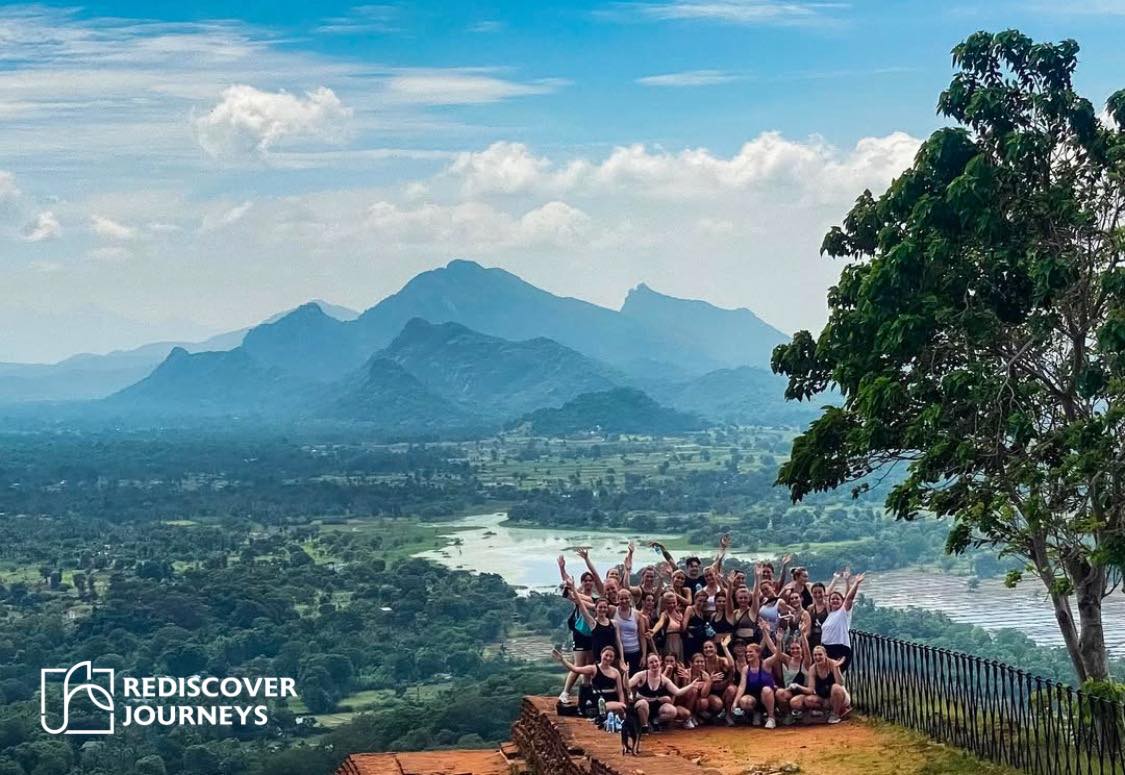
The summit plateau covers about 1.6 hectares. The ruins of the palace foundations, the throne rock, the rainwater swimming pool cut directly into the granite — all that remains of Kassapa’s ambition. The view in every direction is extraordinary: the flat forested plain of the Cultural Triangle, distant hills, morning mist still sitting in the lower ground.
When to Go
Best time of day
Gates open at 7:00 AM. Begin your climb by 7:30 AM at the latest. By 10:00 AM the combination of heat and visitor numbers makes the experience significantly less enjoyable. The summit at 8:30 AM in the cool morning air is an entirely different place from the summit at 11:00 AM with dozens of tour groups arriving.
Best months
January to April, and July to September. The monsoon months (October to December in the northwest; May to July on the southwest) bring heavy rain, making the rock face slippery and the views unreliable.
Avoid
Public holidays and Sri Lankan school holidays, when domestic visitor numbers peak sharply.
Practical Information
| Entry fee | USD 30 for foreign visitors (2024/2025). Included in the Cultural Triangle round ticket. |
| Opening hours | 7:00 AM – 5:30 PM daily |
| Distance from Colombo | 170 km (approx. 3.5 hours by car) |
| Distance from Kandy | 87 km (approx. 2 hours by car) |
| What to wear | Shoulders and knees covered. Grip shoes. Sun hat. Water. |
| Drones | Not permitted |
| Photography | Permitted everywhere except the fresco shelter |
Do This the Evening Before: Pidurangala
One kilometre north of Sigiriya stands Pidurangala — a slightly smaller rock that most visitors never visit, because they don’t know it exists.
From the top of Pidurangala, you see Sigiriya itself framed against the Cultural Triangle plains. The best view of the Lion Rock on the island. The climb takes thirty minutes. There are no foreign entry fees in the traditional sense — a small donation to the temple at the base is customary. The crowds are a fraction of Sigiriya’s.
Go to Pidurangala at sunset, the evening before you climb Sigiriya. Seeing the full scale of the Lion Rock from outside, in the golden hour light, makes the climb the following morning entirely different. This is the sequence every repeat visitor recommends.
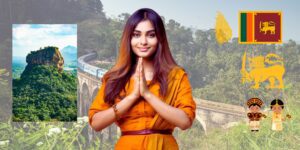
Book Your Dream Getaway to Sri Lanka Today!
Contact Us Today!
Ready to plan your dream group tour in Sri Lanka? Let us help you craft the perfect itinerary for a truly magical experience.
👉 Contact Rediscover Sri Lankanow to explore our Sri Lanka group tour packages, designed for families, solo travelers, and adventure seekers alike.
Reviews and Recommendations
Don’t just take our word for it! Check out these incredible reviews from past travelers:
- Tripadvisor: Read about other travelers’ experiences on Tripadvisor, where Rediscover Sri Lanka has garnered rave reviews for its safe and well-organized tours.
- Trustpilot: Visit Trustpilot for more real-life testimonials from travelers who have fallen in love with Sri Lanka’s beauty and hospitality.
Contact Us Today!
Ready to plan your dream journey in Sri Lanka? Let us help you craft the perfect itinerary for a truly memorable experience.
Contact Rediscover Sri Lanka to explore our tailor-made journeys, private tours and authentic Sri Lankan experiences.
Contact UsReviews and Recommendations.
Don't just take our word for it! Check out these incredible reviews from past travelers.
Read about other travelers' experiences with Rediscover Sri Lanka and explore reviews from guests who have travelled across the island.
Read ReviewsDiscover feedback from travelers who have experienced Rediscover Journeys and explored Sri Lanka with our team.
Read ReviewsBook Your Adventure.
Ready to experience Sri Lanka beyond the usual tourist trail? Let us create a private journey around your interests, pace and travel style.
Ready to Rediscover Sri Lanka?
Plan your trip with Rediscover Sri Lanka and create unforgettable memories at some of the island's most extraordinary places.
Visit Rediscover Sri Lanka to start planning your journey.
Plan Your JourneyEverything you need to know about traveling in Sri Lanka.
Sri Lanka is a year-round destination, but the best time depends on which part of the island you plan to explore. The west and south coasts are generally best from December to April, while the east coast is ideal from May to September.
Around 7 to 14 days is a good amount of time to experience Sri Lanka's highlights without rushing. A longer journey allows more time for wildlife, beaches, cultural sites, scenic train journeys and the hill country.
Most international travellers need travel authorisation or a visa to enter Sri Lanka, depending on their nationality and purpose of travel. Travellers should check the latest requirements through official Sri Lankan government channels before travelling.
Sri Lanka is a popular destination for international travellers. As with any destination, visitors should take normal precautions, look after their belongings, use reputable transport and follow local advice.
The official currency is the Sri Lankan Rupee (LKR). Your budget depends on accommodation, transportation, dining, activities and travel style. Sri Lanka offers everything from budget-friendly experiences to premium hotels and tailor-made luxury travel.