
Your Sri Lanka Solo Adventure Awaits
Meet like-minded travelers · Explore ancient wonders · Create unforgettable memories
The Complete Guide to Sri Lanka’s Scenic Train Journeys
The Complete Guide to Sri Lanka’s Scenic Train Journeys
There is a moment, somewhere between Ambewela and Ella, when the train rounds a slow curve and the entire Hill Country opens up in front of you a cascade of green tea terraces falling into morning mist, the track hanging impossibly above the valley. You grip the open doorway. Nobody says anything. There is nothing to say.
Sri Lanka’s mountain railway is one of the great train journeys of the world. Not because of its speed or its comfort it is neither fast nor plush but because of what it moves through. This guide covers every scenic route worth knowing, the exact timetables you need, how to book the right seat, and how to make the most of a journey that has turned first-time visitors into lifelong Sri Lanka devotees.
Why Sri Lanka’s Train Network Matters
The Sri Lanka Railways network was built by the British in the 19th century, primarily to move Ceylon tea from the highlands to the port at Colombo. What they left behind, somewhat accidentally, is one of the most beautiful rail networks in Asia.
The trains are old. The timetable is approximate. The toilets are best avoided. But none of that matters when you are sitting in an open doorway 1,200 metres above sea level, watching a tea picker balance her basket in the distance. The journey is the destination. That phrase is overused. In Sri Lanka, on these trains, it is simply true.
The Routes Worth Knowing
1. The Pekoe Trail Railway Ambewela to Badulla (and Back)
Distance: 62km
Duration: approximately 2 hours 40 minutes
Best for: Tea country scenery, the Pekoe Trail hiking experience, uncrowded carriages
Highlight stations: Haputale, Demodara (the famous loop), Ella, Badulla
This is the route serious travellers are talking about and the one that most visitors miss entirely because they disembark at Ella and turn around. The Ambewela to Badulla section passes through the most dramatic and least crowded stretch of the entire Sri Lanka rail network.
Ambewela sits at nearly 1,900 metres above sea level one of the highest railway stations in Asia. The journey descends through cloud forest, past the extraordinary Demodara Loop (where the track crosses itself via a spiral tunnel to manage the steep descent), through Ella, and down into the valley town of Badulla. The scenery is extraordinary throughout.
This train also serves as the access route for the Pekoe Trail Sri Lanka’s premier long-distance tea country walking trail, which follows the ridgelines through estate country between Nuwara Eliya and Ella. Hikers use the railway to stage their sections and return to base.
Ambewela → Badulla: Full Timetable
Two departures daily. Both run the full route from Ambewela to Badulla.
| Station | Morning Train | Afternoon Train |
|---|---|---|
| Ambewela | 9:30 AM | 3:00 PM |
| Pattipola | 9:37 AM | 3:07 PM |
| Ohiya | 9:52 AM | 3:22 PM |
| Idalgashinna | 10:11 AM | 3:41 PM |
| Haputale | 10:27 AM | 3:57 PM |
| Diyatalawa | 10:39 AM | 4:09 PM |
| Bandarawela | 10:54 AM | 4:24 PM |
| Kinigama | 11:00 AM | 4:30 PM |
| Heel Oya | 11:09 AM | 4:39 PM |
| Kithal Ella | 11:18 AM | 4:48 PM |
| Ella | 11:25 AM | 4:55 PM |
| Demodara | 11:40 AM | 5:10 PM |
| Uduwara | 11:53 AM | 5:23 PM |
| Haliela | 12:01 PM | 5:31 PM |
| Badulla | 12:16 PM | 5:46 PM |
Badulla → Ambewela: Full Timetable
Two departures daily in the return direction.
| Station | Morning Train | Afternoon Train |
|---|---|---|
| Badulla | 9:00 AM | 3:00 PM |
| Haliela | 9:15 AM | 3:15 PM |
| Uduwara | 9:23 AM | 3:23 PM |
| Demodara | 9:36 AM | 3:36 PM |
| Ella | 9:50 AM | 3:50 PM |
| Kithal Ella | 9:58 AM | 3:58 PM |
| Heel Oya | 10:07 AM | 4:07 PM |
| Kinigama | 10:16 AM | 4:16 PM |
| Bandarawela | 10:21 AM | 4:21 PM |
| Diyatalawa | 10:36 AM | 4:37 PM |
| Haputale | 10:49 AM | 4:49 PM |
| Idalgashinna | 11:05 AM | 5:05 PM |
| Ohiya | 11:24 AM | 5:24 PM |
| Pattipola | 11:39 AM | 5:39 PM |
| Ambewela | 11:47 AM | 5:47 PM |
Planning tip: The morning train from Badulla (9:00 AM) arrives in Ella at 9:50 AM ideal if you want to spend a morning in Ella and continue up to the high country by afternoon. The morning train from Ambewela (9:30 AM) reaches Ella at 11:25 AM, giving you the rest of the day in Ella after a high-altitude start.
The afternoon trains are worth considering for the light quality the late afternoon sun on the tea terraces between Haputale and Ella is extraordinary.
2. Kandy to Ella (via Nanu Oya / Nuwara Eliya) The Classic
Distance: 177km
Duration: 7–9 hours
Best section: Hatton to Ella
Trains to book: Intercity Express 1005 (Kandy to Badulla) or connect at Nanu Oya
This is the route everyone talks about, and the reputation is entirely deserved. The train climbs slowly through rubber plantations and coconut palms before entering tea country proper. By the time you pass Hatton gateway to Adam’s Peak the world outside the window has changed entirely. Rolling green hills, colonial-era stations, waterfalls glimpsed between tunnels.
Book a seat in the Observation Saloon for the best experience. These carriages have rear-facing glass viewing areas and a small bar. Book months in advance demand is high from December to April.
Best seat: Right side of the train travelling Kandy to Ella. Left side returning.
3. Colombo to Kandy The Gateway
Distance: 121km
Duration: 2.5–3 hours
Best for: Arriving travellers, a dignified introduction to the island
The train pulls out of Colombo Fort station a grand colonial building worth arriving early to admire and climbs steadily into the mountains. The paddy fields and fishing villages of the western lowlands give way, slowly, to the greener hills around Kandy. First class intercity is the booking to make.
4. Colombo to Galle The Coastal Line
Distance: 116km
Duration: 2–2.5 hours
Best section: Bentota to Hikkaduwa
The southern coastal railway runs along a narrow strip of land between the Indian Ocean and a series of lagoons and lakes. At points the track is so close to the sea that spray reaches the windows. It is the most cinematic opening sequence for any beach holiday.
The journey is best taken in the morning heading south, when the light hits the water from the east. The station at Hikkaduwa is a five-minute walk from the beach. In Galle, the station sits at the edge of the famous Dutch fort.
5. Ella to Badulla The Overlooked Finale
Duration: approximately 50 minutes
Best for: Uncrowded scenery, the Demodara Loop
Most travellers get off at Ella and reverse course. The smartest ones continue. The section between Ella and Badulla passes through the Demodara Loop an extraordinary feat of engineering where the track spirals into a tunnel and emerges beneath itself and some of the most dramatic gorge scenery on the entire network. Almost nobody else is in the carriage.
See the full timetable in the Ambewela–Badulla section above. Ella departs for Badulla at 11:25 AM and 4:55 PM.
How to Book the Right Tickets
Online: The official Sri Lanka Railways website (eticket.railway.gov.lk) allows advance booking for intercity trains. Do this for the Kandy–Ella route months ahead.
At the station: Second and third class tickets can be bought at any station on the day. The system is basic but functional.
Through a local specialist: For a seamless experience reserved seats, luggage handling, a private driver at the other end, accommodation at each station town booking through a local travel specialist is worth every extra rupee. This is how private travellers do it properly.
What Nobody Tells You
The schedule is a suggestion. Sri Lanka’s trains run late. Not always, and not by hours but 20 to 40 minutes is common. Build flexibility into your day.
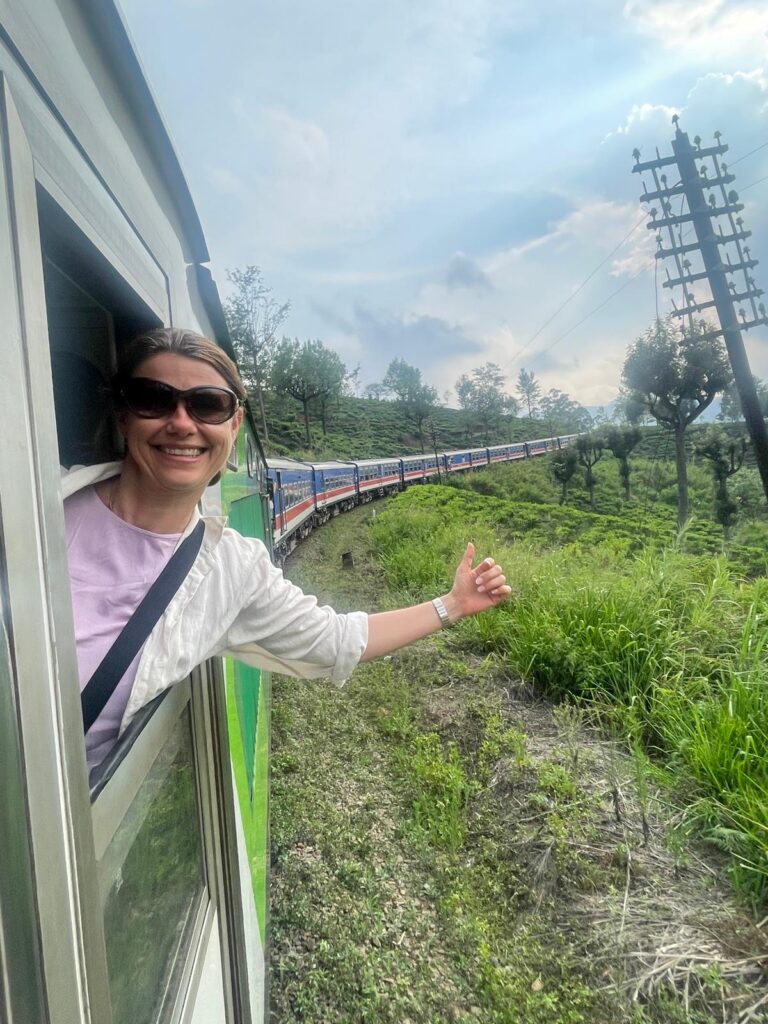
The open doorway is the best seat. The doors between carriages are often left open, and standing in the doorway is entirely normal encouraged, even. This is where the best photographs come from. Hold on. Lean slightly out. Breathe.
Wednesday is the wrong day. The Ambewela–Badulla service does not operate on Wednesdays. Plan your Hill Country itinerary around this if this route is central to your journey.
Dawn departures are worth the alarm. The early morning train from Badulla (9:00 AM) passes through the Ella section as the mist burns off the valley. The light is extraordinary and the crowds have not arrived yet.
Ambewela and Pattipola are worth a stop. These high-altitude stations cold, cloud-wrapped, surrounded by mountain pasture that looks more like Scotland than the tropics are among the most surprising places in Sri Lanka. If you have time, build a night in Haputale or Ohiya into your itinerary and watch the clouds roll in from the valley.
The Pekoe Trail Connection
The Ambewela–Badulla railway is the backbone of the Pekoe Trail Sri Lanka’s 300km long-distance walking trail through the tea country. Hikers use the train to access and exit each section: walk a ridge, catch the afternoon train, return to your guesthouse, repeat.
If you are considering combining walking and the train journey, the morning departures from both ends (9:30 AM from Ambewela, 9:00 AM from Badulla) give the most practical hiking windows. The stations at Haputale, Bandarawela, and Ella are all well-served by guesthouses and small hotels.
Building Your Train Journey Into a Private Itinerary
The train journey works best when it is part of a considered itinerary arriving somewhere, staying a night or two, moving on. The natural Hill Country arc is:
Kandy → Nanu Oya (for Nuwara Eliya) → Ambewela → Haputale → Ella → Badulla
Not all in one day. Each station deserves time. The ideal approach builds the railway as the spine of the journey, with private transport covering sections where trains are impractical reaching Horton Plains from Ohiya, for example, or crossing to the south coast from Ella.
A well-designed Hill Country journey of five to seven days, anchored by the train and supplemented by a private vehicle, covers some of the most extraordinary scenery in Asia at a pace that actually allows you to experience it.
Book Your Dream Getaway to Sri Lanka Today!
Contact Us Today!
Ready to plan your dream group tour in Sri Lanka? Let us help you craft the perfect itinerary for a truly magical experience.
👉 Contact Rediscover Sri Lankanow to explore our Sri Lanka group tour packages, designed for families, solo travelers, and adventure seekers alike.
Reviews and Recommendations
Don’t just take our word for it! Check out these incredible reviews from past travelers:
- Tripadvisor: Read about other travelers’ experiences on Tripadvisor, where Rediscover Sri Lanka has garnered rave reviews for its safe and well-organized tours.
- Trustpilot: Visit Trustpilot for more real-life testimonials from travelers who have fallen in love with Sri Lanka’s beauty and hospitality.
Book Your Adventure
Ready to experience this coastal paradise? Plan your trip with Rediscover Journeys and create unforgettable memories at Hiriketiya Beach.
📩 Visit: Rediscover Journeys to book now.
Contact Us Today!
Ready to plan your dream group tour in Sri Lanka? Let us help you craft the perfect itinerary for a truly magical experience.
👉 Contact Rediscover Journeys now to explore our Sri Lanka group tour packages, designed for families, solo travelers, and adventure seekers alike.
Reviews and Recommendations
Don't just take our word for it! Check out these incredible reviews from past travelers:
Read about other travelers' experiences on TripAdvisor, where Rediscover Journeys has garnered rave reviews for its safe and well-organized tours.
Read ReviewsVisit Trustpilot for more real-life testimonials from travelers who have fallen in love with Sri Lanka's beauty and hospitality.
Read ReviewsExplore Related Topics

Frequently Asked Questions
Everything you need to know about traveling in Sri Lanka