
Your Sri Lanka Solo Adventure Awaits
Meet like-minded travelers · Explore ancient wonders · Create unforgettable memories
Complete Guide to Sri Lanka Wildlife Tours 2026 – Best National Parks & Safari Experiences
Complete Guide to Sri Lanka Wildlife Tours 2026 – Best National Parks & Safari Experiences
Rediscover Journeys – Sri Lanka Boutique Tour Operator
TripAdvisor Travelers‘ Choice Award 2025
Sri Lanka, often called the “Pearl of the Indian Ocean,” is one of the best wildlife destinations in Asia. Despite its modest size, this island nation boasts an incredible diversity of ecosystems from dry woodlands and lush rainforests to coastal lagoons and highland grasslands. For such a small island, Sri Lanka has an incredible diversity of wildlife and is the only country where you can see both the world’s largest land animal (elephant) and the largest marine mammal (blue whale) in the wild..
This comprehensive guide covers everything you need to know about Sri Lanka wildlife tours: the best national parks, safari experiences, marine wildlife encounters, birdwatching hotspots, the best times to visit, and essential travel tips.
📖 Table of Contents
-
Why Sri Lanka is a Top Wildlife Destination
-
Best National Parks for Wildlife Safaris
-
Yala National Park – Leopard Capital
-
Udawalawe National Park – Elephant Paradise
-
Minneriya National Park – The Elephant Gathering
-
Wilpattu National Park – Untamed Wilderness
-
Bundala National Park – Birdwatcher’s Paradise
-
-
Marine Wildlife Encounters
-
Whale Watching in Mirissa & Trincomalee
-
Snorkeling with Turtles at Polhena Reef
-
Madu River Boat Safari
-
-
Rainforest & Birdwatching Experiences
-
Sinharaja Rainforest UNESCO Biosphere Reserve
-
Kumana National Park Bird Sanctuary
-
-
Ethical Wildlife Experiences
-
Udawalawe Elephant Transit Home
-
Turtle Conservation Projects
-
-
Best Time for Wildlife Tours – Month by Month
-
Wildlife Tour Costs & Budget Guide
-
Essential Safari Tips
-
FAQs About Sri Lanka Wildlife Tours
-
Conclusion & Booking Information
🦁 1. Why Sri Lanka is a Top Wildlife Destination
Sri Lanka’s compact size roughly the same area as Ireland makes it incredibly efficient for wildlife lovers. You can experience multiple distinct ecosystems in a single trip without spending days in transit.
What makes Sri Lanka unique:
-
Highest leopard density in the world – Yala National Park holds the record.
-
Asia’s best place for wild elephants – Reliable sightings at Udawalawe year-round.
-
The world‘s largest annual elephant gathering – Over 300 elephants converge at Minneriya.
-
Both land and marine giants – Elephants AND blue whales in one country.
-
26 endemic bird species – 20 of which are found in Sinharaja Rainforest alone.
-
UNESCO World Heritage Sites – Sinharaja Rainforest and Central Highlands recognised globally.
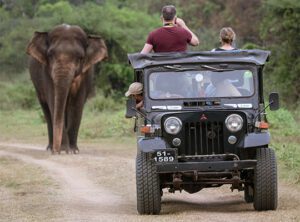
Yala National Park is a vast region of dry woodland, open grasslands and waterholes that make for superb wildlife spotting, but it’s Sri Lanka’s most visited, so don’t expect to have it to yourself. Yala is a great bet for spotting leopards, as the subspecies you may well see, Panthera pardus kotiya, is unique to Sri Lanka. Other inhabitants include an estimated 300 elephants, as well as shaggy-coated sloth bears and fox-like jackals.
🏞️ 2. Best National Parks for Wildlife Safaris
🐆 2.1 Yala National Park – The Leopard Capital
Yala is Sri Lanka’s most famous national park, celebrated for having one of the world’s highest leopard densities. Its 979 square kilometres combine forests, grasslands and lagoons, creating a haven for elephants, sloth bears, crocodiles and countless birds. Iconic sights include leopards draped over rocks and elephants crossing sandy tracks. Though popular and busier than other parks, Yala’s biodiversity and dramatic landscapes make it a must visit.
| Detail | Information |
|---|---|
| Area | 979 km² |
| Best for | Leopards, elephants, sloth bears, crocodiles |
| Best time | February–July (dry season) |
| Nearest town | Tissamaharama (~20 km) |
| Typical safari | Half-day (5–6 hours) or full-day |
Yala is divided into five blocks, with two blocks open to the public. Block 1 is the most visited area (often the busiest), whereas Block 2 is typically less crowded and can feel more relaxed. Yala also has a strong sense of place beyond wildlife there is evidence of human presence dating back to around the 2nd century BC, and you can find notable cultural sites such as Sithulpauwwa and Magul Maha Viharaya.
Safaris at dawn reveal leopards prowling through mist, while sunsets light up lagoons alive with birdlife. The park’s coastal strip, including Patanangala Beach, adds a dramatic seascape to the safari experience. Despite its popularity, Yala retains a magnetic allure. Early morning safaris bring the thrill of leopard encounters in misty light, while evenings reveal elephants silhouetted against flaming skies.
Where is Yala National Park? Yala is located in southeastern Sri Lanka, within the Southern and Uva Provinces.
What is Yala National Park famous for? It is most famous for its leopard population, boasting the highest density of leopards in the world.
How much is the entry fee for Yala National Park? Approximately $35–40 per person for foreign adults, plus jeep safari costs ($40–60 per person sharing).
🐘 2.2 Udawalawe National Park – Elephant Paradise
Udawalawe National Park is a wildlife sanctuary in Sri Lanka’s Sabaragamuwa and Uva Provinces, covering over 30,800 hectares. It is one of the most reliable elephant parks in Sri Lanka, and its open, sunlit grasslands make wildlife viewing feel calm and effortless. This is exactly why it suits travellers who prefer a gentle, comfortable safari: you spend most of the time in a jeep on established park tracks, while elephants and other wildlife often appear in wide, unobstructed spaces, especially around the park’s waterways and the Udawalawe Reservoir.
| Detail | Information |
|---|---|
| Area | 30,800+ hectares |
| Best for | Elephants (500+), water buffalo, crocodiles |
| Best time | December–May |
| Nearest town | Embilipitiya |
| Safari duration | Half-day (3–4 hours) |
Known as one of the best places in Asia to see wild elephants in their natural habitat, this park offers an authentic and peaceful wildlife experience perfect for both families and solo travelers.
Beyond elephants, Udawalawe is a strong all-rounder for a first safari, because the experience stays rewarding even without “rare” sightings. The park supports 200+ bird species and around 33 mammal species, and it’s well set up for eco-tourism-style activities such as jeep safaris, birdwatching, and gentle nature walks. Best time to visit is December to May for the smoothest roads and clearest viewing.
What makes Udawalawe special? Udawalawe is one of the only parks in Sri Lanka where elephant sightings are virtually guaranteed year-round.
What is Udawalawe National Park known for? It is renowned for its large elephant population and the Udawalawe Elephant Transit Home.
🐘 2.3 Minneriya National Park – The Elephant Gathering
Minneriya National Park is one of the best places in the country to see wild elephants, which are often present in huge numbers. Dominated by the ancient Minneriya Wewa, the park has plenty of scrub, forest and wetlands in its 88.9 sq km to also provide shelter for toque macaques, sambar deer, buffalo, crocodiles and leopards (the latter are very rarely seen, however).
| Detail | Information |
|---|---|
| Area | 88.9 km² |
| Best for | “The Gathering” – 200–400 elephants |
| Best time | May–October (peak August–September) |
| Nearest town | Habarana |
The “Gathering” is the world’s largest seasonal gathering of Asian elephants. As the dry season intensifies in August and September, and water sources elsewhere start drying up, the elephants converge at Lake Minneriya. A large, ancient reservoir, it is thought to have been built by King Mahasen during the 3rd century as part of an irrigation project. Elephant numbers can reach over 400 around September.
During the day, elephants shelter from the hot sun in the forest and scrub surrounding the lake but once the sun begins to set, they emerge to feed, drink and socialise. As different herds coalesce, this coming together offers a unique opportunity to witness the elephants’ social behaviour and group dynamics on a grand scale. The dry season, from April to October, is reckoned to be the best time to visit (as by then water in the tank has dried up, exposing grasses and shoots to grazing animals).
What is Minneriya National Park famous for? The park is world-famous for “The Gathering” of elephants.
Where is Minneriya National Park located? Minneriya is located in the North Central Province, within Sri Lanka’s Cultural Triangle near Sigiriya and Polonnaruwa.
🐻 2.4 Wilpattu National Park – Untamed Wilderness
Wilpattu is Sri Lanka’s largest and oldest national park, known for its unique “villus” (natural lakes) and more secluded leopard experience compared to Yala. Beautiful water features and a good leopard population put Wilpattu firmly on the safari-lover’s map. Free from strict timings or trails, game drives are bound to be eventful. Along the way, you could spot elephants, sloth bears, purple-faced langurs, rare barking deer, mugger crocodiles and leopards.
| Detail | Information |
|---|---|
| Area | 1,317 km² (largest in Sri Lanka) |
| Best for | Leopards, sloth bears (less crowded) |
| Best time | February–October |
| Nearest town | Anuradhapura (35 km) |
Wilpattu is famous for its “villus” natural, rain-fed lakes that dot the park’s landscape, drawing wildlife during the dry season. The park it self consists of iconic Sri Lankan Leopards and Sloth Bears along with the gentle giants, Asian Elephants specially the males who are loners. Not only the mammals, the birds with both migrants and natives (season from November to April).
The best time to visit Wilpattu National Park is from February to October. Wilpattu is much quieter than Yala, making it ideal for travellers seeking a more intimate safari experience away from large crowds.
Where is Wilpattu National Park located? Wilpattu is located in the North Western Province, about 35 km west of Anuradhapura.
What is Wilpattu National Park known for? It is known for its distinctive “villus” (natural lakes) and a less commercialised leopard safari experience.
🦩 2.5 Bundala National Park – Birdwatcher‘s Paradise
Situated in the southern region of the island, Bundala National Park has been declared a UNESCO Biosphere Reserve. It’s one of the best wildlife and birdwatching sanctuaries in Sri Lanka.
| Detail | Information |
|---|---|
| Area | 6,216 hectares |
| Best for | Flamingos, migratory birds (197 species) |
| Best time | September–March |
| Features | Four brackish lagoons, coastal dunes |
Bundala National Park is great for birdwatching and most water bird species in Sri Lanka can be found here. There are almost 200 bird species, and 58 of them are migratory. The best time to visit Bundala National Park is from September to March, as this is when the migratory birds flock to the park.
The greater flamingo is the best-known migratory bird in the area. It’s common to see large flocks of flamingos along with 10,000 shorebirds that can be seen feeding on any given day. The lagoons in the park also attract a diverse group of aquatic birds, such as ibises, pelicans, painted storks, Black-necked Storks, terns, gulls, sandpipers, snipes, teals, egrets, and spoonbills.
Bundala is also home to 32 different mammal species which includes civets, wild boars, grey and ruddy mongooses, porcupines, giant Indian palm squirrels, black-naped hares, spotted deer, wild buffalo. Also present are the endemic jackal and fishing and rusty-spotted cats.
What is Bundala National Park known for? It is a UNESCO Biosphere Reserve famous for migratory birds, especially greater flamingos from November to February.
Where is Bundala National Park located? Bundala is located in southern Sri Lanka, just 15 km from Hambantota, near Yala National Park.
🌊 3. Marine Wildlife Encounters
🐋 3.1 Whale Watching in Mirissa & Trincomalee
Sri Lanka is one of the best places in the world for whale watching. The unique geography of the island means you can see blue whales off the south coast from November to April, and again off the east coast from May to October.
Mirissa (South Coast)
-
Peak season: November to April
-
What you can see: Blue whales (70-80% chance), sperm whales, fin whales, dolphins
-
Why choose Mirissa: Mirissa is Sri Lanka’s whale-watching hub, ideal for blue whale sightings between November to April.
-
During November to April, there’s a 70-80% chance of seeing whales. Blue whales are the most common, but you might also see sperm whales, fin whales.
Trincomalee (East Coast)
-
Peak season: May to October
-
What you can see: Blue whales, sperm whales, dolphins
-
Trincomalee’s bays are ideal for whale watching from May to October, with opportunities to spot blue and sperm whales.
Mirissa Whale Watching Season 2026: Early morning cruises (6:30 AM departure recommended for calmer seas). Tours typically include breakfast, life jackets, and experienced guides.
🐢 3.2 Snorkeling with Turtles at Polhena Reef
Polhena Reef, located near Mirissa on the south coast, is a calm coral reef known for its abundant green sea turtles. The reef provides a protected environment for swimming and snorkeling, making it accessible for all skill levels including children and first-time snorkelers.
Best conditions: December–April (calm seas, excellent visibility)
🛶 3.3 Madu River Boat Safari
The Madu River in Balapitiya offers a serene boat safari through Sri Lanka’s largest coastal wetland ecosystem. This 1.5-hour boat ride takes you through the scenic river and its 35 islands, offering a glimpse of diverse mangroves and wildlife such as birds, Sri Lankan monkeys, crocodiles (rarely), and monitor lizards along the river cruise route.
What you can expect:
-
Look for monitor lizards, monkeys, crocs, and kingfishers
-
Stop at a Buddhist monastery set on an islet
-
Visit a fish pedicure spa
-
Learn how cinnamon is used in local cooking
🌿 4. Rainforest & Birdwatching Experiences
🦜 4.1 Sinharaja Rainforest UNESCO Biosphere Reserve
Sinharaja Rainforest is Sri Lanka’s last viable area of primary tropical rainforest and a UNESCO World Heritage Site. Of Sri Lanka’s 26 endemic birds, the 20 rainforest species all occur here, including the elusive Red-faced Malkoha, Green-billed Coucal and the stunning Sri Lanka Blue-Magpie.
| Detail | Information |
|---|---|
| Area | 8,864 hectares |
| Best for | Endemic birds, leopards, purple-faced langurs |
| Best time | August–September, January–April |
| Endemic birds | 20 rainforest species out of 26 total |
The Sinharaja rainforest is home to many native birds such as Loriculus beryllinus (Ceylon Hanging Parrot), Ocyceros gingalensis, Ashy-headed Laughing Thrush, Layard Parakeet, the Jungle fowl, the Spur fowl, the Ceylon Wood Pigeon, the Brown-capped Babbler, the Red-faced Malkoha are famous in this area.
Endangered birds include the Sri Lankan Pigeon, Green-billed Cod, Sri Lanka White-headed Sling, Red-faced Malkoha, Green-billed Caucasus, Sri Lanka, Sri Blue Shell Lankan and the Babbler with head ash, are endemic. In Sri Lanka it has 12 endemic mammal species; 8 species live in Sinharaja forest. Constantly you can see giant squirrel, dusky-stripped jungle squirrel, badger mongoose, endemic purple-faced leaf monkey and torque macaque.
August to September and January to April are the best times to visit Sinharaja forest. When you walk into the forest you must pay attention to leeches that can suck out human blood. But the local people have many methods to minimize leech hazards.
Sinharaja Rainforest Birdwatching: A 5-hour guided tour starting at 6:00 AM offers approximately 80% bird sighting chances and 50% wildlife chance. Possible sightings include: Sri Lanka Blue Magpie, Sri Lanka Grey Hornbill, Red-faced Malkoha, Sri Lanka Green Pigeon, Sri Lanka Junglefowl, Ashy-headed Laughingthrush, and many more.
🕊️ 4.2 Kumana National Park Bird Sanctuary
Kumana National Park, located east of Yala, is known as the largest bird sanctuary in Sri Lanka. The park covers 35,664 hectares and is home to over 255 bird species. Its wild landscape is known for its animal diversity, with over 20 tanks all over the park Kumana Wildlife Sanctuary is known to be the largest bird sanctuary in Sri Lanka.
| Detail | Information |
|---|---|
| Area | 35,664 hectares |
| Best for | Birds (255+ species), bird sanctuary |
| Best time | April–July (nesting season) |
| Location | East of Yala, near Arugam Bay |
In 1938 the Kumana Bird Sanctuary was founded within the national park, as over 255 bird species have been recorded, which is also an important bird resting and breeding ground. Between April and July, the park becomes a nesting ground for thousands of birds.
Kumana is the most important breeding and migrating ground for birds in Sri Lanka. Some rare birds found in this sanctuary are the Black-necked Stork, the Lesser Adjutant, the Eurasian Spoonbill and the Great Thick-knee.
❤️ 5. Ethical Wildlife Experiences
🐘 5.1 Udawalawe Elephant Transit Home
One of the most touching wildlife experiences in Sri Lanka is visiting the Udawalawe Elephant Transit Home, located near Udawalawe National Park. This special place allows travelers to see young elephants being cared for and prepared for life in the wild all in a natural and respectful setting. This is not a zoo and not a show.
| Detail | Information |
|---|---|
| Location | Near Udawalawe National Park |
| Purpose | Rehabilitate orphaned elephant calves for release |
| Feeding times | 9:00 AM, 12:00 PM, 3:00 PM, 6:00 PM |
| Entry fee | USD $15–20 for adults |
Home to orphaned baby elephants, the focus is on rehabilitation and release into the wild. Visitors observe from a distance. Elephants here are not ridden, trained, or forced to interact they are protected and respected. Feeding Times: 9:00 AM, 12:00 PM, 3:00 PM, 6:00 PM. Each visit lasts about 30–45 minutes.
Udawalawe is one of the most ethical and meaningful elephant experiences in Sri Lanka a must for responsible travelers.
🐢 5.2 Turtle Conservation Projects (Kosgoda)
Several turtle hatcheries along the south coast allow visitors to witness sea turtle conservation efforts up close. Visitors can see Olive Ridley, Green, Hawksbill, and Loggerhead turtles at various stages of development, from eggs to hatchlings about to be released into the ocean.
Best time to see hatchling release: Year-round, with peak nesting season from October to January.
📅 6. Best Time for Wildlife Tours – Month by Month
| Month | Yala (Leopards) | Udawalawe (Elephants) | Minneriya (Gathering) | Sinharaja (Birds) | Whale Watching |
|---|---|---|---|---|---|
| Jan | ★★★★ | ★★★★ | Limited | ★★★★ | Mirissa |
| Feb | ★★★★★ | ★★★★★ | Limited | ★★★★ | Mirissa |
| Mar | ★★★★★ | ★★★★★ | Limited | ★★★★ | Mirissa |
| Apr | ★★★★★ | ★★★★★ | Starting | ★★★ | Mirissa (late) |
| May | ★★★★★ | ★★★★ | ★★★★ | ★★ | Mirissa/Trinco |
| Jun | ★★★★★ | ★★★★ | ★★★★★ | ★★ | Trincomalee |
| Jul | ★★★★ | ★★★★ | ★★★★★ | ★★ | Trincomalee |
| Aug | ★★★★ | ★★★★ | ★★★★★ | ★★★ | Trincomalee |
| Sep | ★★★★ | ★★★★ | ★★★★ | ★★★ | Trincomalee |
| Oct | ★★★ | ★★★★ | ★★★ | ★★★ | Trincomalee (late) |
| Nov | ★★★ | ★★★★ | Limited | ★★★ | Mirissa (late) |
| Dec | ★★★★ | ★★★★ | Limited | ★★★★ | Mirissa |
Key takeaway: There is no single “best” time tailor your visit based on what you want to see. The dry season (February–July) is ideal for leopard spotting in Yala. May–October is perfect for the elephant gathering at Minneriya. November–April is best for whales in Mirissa.
Best time for wildlife safari in Sri Lanka: February to September offers the most consistent wildlife viewing across most parks.
💰 7. Wildlife Tour Costs & Budget Guide (2026)
| Park / Activity | Entry Fee (Adult) | Safari Jeep (shared) | Safari Jeep (private) |
|---|---|---|---|
| Yala National Park | ~$35–40 | ~$40–60 | ~$80–110 |
| Udawalawe National Park | ~$35–37 | ~$40–50 | ~$70–85 |
| Minneriya National Park | ~$30–35 | ~$35–45 | ~$65–80 |
| Wilpattu National Park | ~$30–35 | ~$40–55 | ~$75–90 |
| Bundala National Park | ~$30–35 | ~$35–50 | ~$65–80 |
| Whale Watching (Mirissa) | ~$50–80 | Included in tour | – |
| Sinharaja Guided Walk | ~$5 (entry) | ~$30–50 (guide) | – |
| Udawalawe Elephant Transit Home | ~$15–20 | – | – |
Tips: Sharing a jeep (2–4 people) significantly reduces per-person costs. Full-day safaris offer more time for wildlife spotting but cost approximately 1.5x half-day rates.
🧳 8. Essential Safari Tips
✅ Do’s
-
Start early – Morning safaris (5:30–6:00 AM departure) offer the best wildlife activity before the heat.
-
Wear neutral colors – Khaki, beige, olive, and brown help you blend into the environment.
-
Bring binoculars – Essential for spotting leopards in trees and birds in the canopy.
-
Pack sun protection – Sunscreen, hat, sunglasses, and light long-sleeved clothing.
-
Stay quiet – Noise scares animals away and disrupts other visitors’ experiences.
-
Carry cash – Many parks require cash payment for entry fees (USD or local currency).
❌ Don’ts
-
Don‘t stand up in the safari jeep – It can disturb animals and is dangerous.
-
Don’t feed wildlife – This disrupts natural behaviors and can harm animals.
-
Don‘t litter – Keep Sri Lanka’s national parks clean.
-
Don’t expect guaranteed leopard sightings – Wildlife is unpredictable; enjoy the entire experience.
🚗 Logistics
-
Most parks require a 4×4 safari jeep with an experienced driver/guide.
-
Half-day safaris typically last 4–6 hours (morning 5:30–10:30 AM or afternoon 2:00–6:30 PM).
-
Full-day safaris last 8–12 hours and often include breakfast and lunch.
-
Book through reputable tour operators to ensure quality vehicles and knowledgeable guides.
❓ 9. FAQs About Sri Lanka Wildlife Tours
Q1. What is the best time to see leopards in Sri Lanka?
The dry season, particularly February to July, offers the best leopard sightings in Yala National Park. Peak leopard season is May to July when water sources shrink and animals gather near waterholes.
Q2. Which national park is best for elephants in Sri Lanka?
Udawalawe for year-round guaranteed elephant sightings (500+ elephants). Minneriya for the spectacular seasonal “Gathering” (July–October, over 200–400 elephants).
Q3. What is the best time for whale watching in Mirissa?
November to April, with February–March being peak season for blue whales and sperm whales. Success rates are 70-80% during this window.
Q4. Where is the best place to see birds in Sri Lanka?
Sinharaja Rainforest for endemic rainforest birds (20 endemic species). Bundala National Park for migratory birds and greater flamingos (September–March).
Q5. What animals can I see in Wilpattu National Park?
Leopards, sloth bears, Asian elephants, purple-faced langurs, barking deer, mugger crocodiles, and diverse birdlife.
Q6. When is the elephant gathering at Minneriya National Park?
Typically from July to October, with the highest elephant numbers (over 400) usually seen in August and September.
Q7. How much does a Yala safari cost?
Entry fee ~$35–40 per adult, plus jeep safari ~$40–60 per person sharing, totaling approximately $75–100 per person for a half-day safari.
🎯 10. Conclusion & Booking Information
Sri Lanka offers an incredible diversity of wildlife experiences for travellers of all ages and interests. From the leopard-rich plains of Yala to the elephant highways of Udawalawe, from the mystical rainforests of Sinharaja to the ocean giants off Mirissa, this island nation truly deserves its reputation as one of Asia’s premier wildlife destinations.
Rediscover Journeys is your trusted partner for creating the perfect Sri Lanka wildlife tour. As a TripAdvisor Travelers‘ Choice Award 2025 winner with 35+ years of collective experience, we offer:
-
Customised safari itineraries tailored to your wildlife preferences
-
Experienced naturalist guides and drivers
-
Comfortable 4×4 safari jeeps
-
Ethical wildlife experiences (no riding elephants, no forced interactions)
-
Seamless logistics including accommodation and transfers
📞 Contact Rediscover Journeys
-
🌐 Website: https://rediscoversrilanka.com
-
📧 Contact: https://rediscoversrilanka.com/contact
24/7 Hotline (English / Japanese assistance)
-
Rasith: +94 77 791 1276
-
Lucky: +94 77 887 8723
-
Email: [email protected]
Head Office
Rediscover Journeys Private Limited
No 113, Big City, Peellawatta, Minuwangoda 11558, (WP) Sri Lanka
Book Your Dream Getaway to Sri Lanka Today!
Contact Us Today!
Ready to plan your dream group tour in Sri Lanka? Let us help you craft the perfect itinerary for a truly magical experience.
👉 Contact Rediscover Sri Lankanow to explore our Sri Lanka group tour packages, designed for families, solo travelers, and adventure seekers alike.
Reviews and Recommendations
Don’t just take our word for it! Check out these incredible reviews from past travelers:
- Tripadvisor: Read about other travelers’ experiences on Tripadvisor, where Rediscover Sri Lanka has garnered rave reviews for its safe and well-organized tours.
- Trustpilot: Visit Trustpilot for more real-life testimonials from travelers who have fallen in love with Sri Lanka’s beauty and hospitality.
Book Your Adventure
Ready to experience this coastal paradise? Plan your trip with Rediscover Journeys and create unforgettable memories at Hiriketiya Beach.
📩 Visit: Rediscover Journeys to book now.
Contact Us Today!
Ready to plan your dream group tour in Sri Lanka? Let us help you craft the perfect itinerary for a truly magical experience.
👉 Contact Rediscover Journeys now to explore our Sri Lanka group tour packages, designed for families, solo travelers, and adventure seekers alike.
Reviews and Recommendations
Don't just take our word for it! Check out these incredible reviews from past travelers:
Read about other travelers' experiences on TripAdvisor, where Rediscover Journeys has garnered rave reviews for its safe and well-organized tours.
Read ReviewsVisit Trustpilot for more real-life testimonials from travelers who have fallen in love with Sri Lanka's beauty and hospitality.
Read ReviewsExplore Related Topics

Frequently Asked Questions
Everything you need to know about traveling in Sri Lanka