

Your Sri Lanka Solo Adventure Awaits
Meet like-minded travelers · Explore ancient wonders · Create unforgettable memories
The 1869 Coffee Disaster That Gave the World Ceylon Tea
The 1869 Coffee Disaster That Gave the World Ceylon Tea
Few moments in agricultural history have had such a profound and lasting impact as the coffee blight that struck Ceylon in 1869. What began as a few orange spots on coffee leaves in a remote estate would, within a generation, destroy an entire industry, bankrupt fortunes, and inadvertently birth one of the world’s most beloved beverages. This is the story of how a fungus named “Devastating Emily” transformed a coffee empire into the global capital of tea.
The Coffee Kingdom: Ceylon’s Golden Era
By the mid-19th century, Ceylon (modern-day Sri Lanka) had established itself as a coffee powerhouse. The island’s central highlands with their elevation, climate, and fertile soils proved ideally suited for coffee cultivation. Following the annexation of the Kandyan Kingdom in 1815, British planters moved into the interior and found in coffee a crop that promised enormous returns.
The transformation was breathtaking. By the 1860s, coffee had become the backbone of the colony’s economy. Over 275,000 acres of the island’s central highlands had been cleared and planted with coffee, their emerald bushes cascading down mountain slopes in orderly rows. Estates spread across the hills of Kandy, Matale, Dimbula, and Pussellawa. Roads were driven through forest and mountain, labour was organised, and capital flowed steadily into what appeared to be a flourishing enterprise.
The numbers were staggering. In 1863, the value of coffee imported into Europe amounted to £270 million, and Sri Lanka was exporting nearly a third of that. By 1870, coffee exports reached unprecedented levels, with plantation coffee and smallholder contributions totaling over one million hundredweight. That year, Ceylon exported 118 million pounds of coffee, crowning the island as one of the world’s premier coffee producers. The island, in effect, had been remade as a coffee colony.
Pioneers like Sir Edward Barnes, who established coffee estates in the 1820s, and mercantile firms that facilitated exports to London drove this prosperity. Innovations in cultivation, techniques introduced from Jamaica, and financial support from institutions like the Oriental Bank Corporation fueled the industry’s growth.
Coffee wasn’t just an export commodity it was the foundation of Ceylon’s colonial economy. The agrarian elite had used coffee wealth to invest in bank institutions, railways, and the commercial infrastructure that was modernizing the colony. Fortunes were being made. The British planter, newly established in the interior, found in coffee a crop that seemed guaranteed to enrich anyone who planted it.
The Arrival of “Devastating Emily”
In 1869, everything changed.
Orange-coloured spots began appearing on coffee leaves at the Galloola Estate in the Madulsima district of Uva. A superintendent named Donald Reid observed unfamiliar yellowing leaves and consulted botanical authorities. The pathogen was identified by George Thwaites, the director of the Peradeniya Botanical Gardens, as Hemileia vastatrix a fungal disease that would become infamous as coffee leaf rust.
The planters gave it a grimly ironic nickname: “Devastating Emily”. Perhaps “Emily” was a corruption of Hemileia. Whatever the origin, the name proved prophetic.
The disease spread with terrifying speed. Orange pustules erupted across coffee leaves, causing them to wither and fall. Weakened plants produced fewer berries, and those they did produce were of inferior quality. The fungus was insidious, fluctuating in severity from year to year. Estates suffered heavy losses one season only to see seemingly healthy trees yield well the next, creating false hopes of recovery.
Within five years, infection had reached all coffee districts across the island. Average yields declined dramatically, falling from approximately 4.5 cwt per acre to about 2 cwt within a decade.
The science of the period suggested an East African origin for the pathogen, with spores possibly transported across the Indian Ocean by atmospheric systems. Regardless of the precise pathway, the virulence of the outbreak indicated introduction into a previously unexposed plantation ecosystem. Hemileia vastatrix, described in 1869 in eastern Africa and Ceylon, would eventually spread to all coffee cultivation areas worldwide.
A Slow-Motion Catastrophe
The collapse of coffee was neither sudden nor geographically isolated. Rather, it constituted a prolonged ecological and economic crisis that unfolded over more than twenty-five years.
Planters tried everything. They pruned infected branches, applied various treatments, even abandoned and replanting entire estates. Improved manuring regimes, altered pruning techniques, chemical applications, and shade cultivation were all pursued in attempts to mitigate the disease’s impact. Sulphur spraying, recommended by a French expert, proved ineffective. Nothing worked.
The fungus spread from estate to estate, carried by wind, rain, and the movement of workers and equipment. Occasional successes, whether genuine or coincidental, reinforced belief in eventual recovery. The irregular course of the epidemic further sustained optimism. Periods of reduced severity, localized recoveries, and survival of shaded coffee trees fostered the perception that rust might be controllable or self-limiting.
But the statistics tell a story of unrelenting devastation. After 1870, coffee exports declined steadily. By 1886, coffee exports had plummeted by eighty percent. By 1889, exports had dropped to less than 100,000 hundredweight. By this time, coffee had effectively ceased to be a viable plantation crop. Just two decades after the peak, by 1890, ninety percent of the island’s coffee cultivation lay abandoned, estates sold for a quarter of their former value. The extent of land under coffee cultivation shrank to a measly 11,392 acres by the 1900s from the peak of 275,000 acres in 1870.
Economic Ruin
The financial impact was immediate and brutal. Fortunes were lost, estates were abandoned, and many proprietors saw their livelihoods destroyed. Some estates reverted to jungle, while others were sold at drastically reduced prices, forcing owners to seek opportunities elsewhere.
The collapse extended to the mercantile and banking sectors. In 1884, the Oriental Bank Corporation, a major financier of coffee estates, failed, sending shockwaves through the colonial economy. The bank’s collapse was mitigated only by Governor Sir Arthur Gordon’s intervention, which guaranteed its paper currency to prevent further chaos. Prominent mercantile firms, such as that of the Sabonadiere family, also ceased operations in 1884.
For individual planters, the crisis was personally catastrophic. Estates that had been worth thousands of pounds sold for pittances, if they sold at all. Many proprietors went through bankruptcy court and found themselves reduced to working as superintendents on estates that had once been their own property. Families that had lived in comfortable prosperity faced financial annihilation. Of 1,700 British planters, all except 400 returned to England empty-handed.
The economic depression was so severe that the Planters’ Association proposed drastic measures, including reducing administrative provinces and merging government departments, driven by fears of financial collapse. The coffee blight didn’t just destroy crops it destroyed lives, fortunes, and dreams.
The Tea That Saved an Island
But from this catastrophic ruin emerged an industry that would define Ceylon’s identity for generations.
Tea was not entirely new to Ceylon. The British had first imported a tea plant from China to Sri Lanka in 1824 and planted it in the Peradeniya Royal Botanical Garden. Small experimental plantings had been made as early as 1842 in the Ramboda Pass. Both government and planters had shown intermittent interest, even sending a commissioner to Assam to study cultivation methods.
Yet for decades, these efforts remained tentative. Coffee was too profitable, too established, to be displaced by an unproven alternative. Tea lingered at the margins, its potential recognised but unrealised.
Then came James Taylor.
James Taylor, a Scottish planter, arrived in Ceylon in 1852 at the age of 17 and settled at the Loolecondera Estate in Galaha, Kandy. In 1867 two years before the coffee blight struck he began planting tea on a 19-acre plot using seedlings brought from Assam, India. That year marked the birth of the tea industry in Ceylon. Taylor established the first commercial plantation, laying the foundation for what would become Sri Lanka’s largest export industry for over a century.
In 1872, a fully equipped tea factory began operating on the Loolecondera Estate. In 1873, Ceylon Tea made its international debut when twenty-three pounds of tea produced by James Taylor reached London.
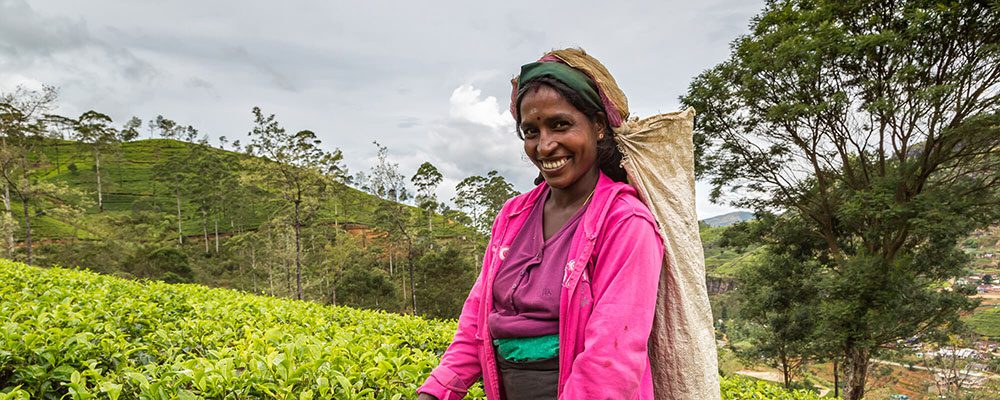
It was only when coffee failed beyond recovery that tea emerged from possibility into necessity. The transition began in earnest. By the 1870s and 1880s, it had become clear that the coffee industry, as it had been known, could not be sustained. Estates were converted, often wholesale, from coffee to tea. New areas were opened. Facing ruin, many coffee planters turned to tea and within a generation, 250,000 acres of coffee plants had been cleared and burnt out, and replanted with tea seeds, largely imported from Assam.
The shift was not merely a change of crop; it was a transformation of the entire plantation system. Coffee had been comparatively straightforward to process. Tea, by contrast, required a far more complex sequence of operations withering, rolling, fermenting, drying, and sorting. Factories were constructed, machinery was imported, and knowledge was acquired, often through trial and error.
With the development of technologies such as the Sirocco tea dryer in 1877 and the tea-rolling machine in 1880, commercial tea production became viable. In 1883, the first of many public Colombo tea auctions was held. In 1884, the Central Tea Factory was built on the Fairyland Estate (Pedro) in Nuwara Eliya. By 1899, nearly 400,000 acres of land was already under tea cultivation.
The Global Rise of Ceylon Tea
The transformation was rapid and remarkable. In 1891, Ceylon Tea was sold at the London tea auctions at an astonishing price of LKR 36.15 per lb. By 1890, the year Sir Thomas Lipton arrived to purchase tea estates, 23,000 tons of tea were exported to London’s tea auctions.
Lipton, the Scottish entrepreneur who had made his fortune in grocery, saw the potential of Ceylon tea and marketed it as an affordable, high-quality beverage for the masses. He bought tea estates, packed tea at source, and branded it with his name, offering his customers tea that was affordable and accessible.
By the close of the nineteenth century, as Henry Cave observed in his 1900 book “Golden Tips,” the tea industry of Ceylon had already become “an important item of the world’s commerce,” its rapid rise unmatched even by that of India.
James Taylor, the pioneer of the tea industry in Ceylon, died in 1892 at the age of 57. He did not live to see the full extent of the transformation he had set in motion but his legacy endures.
The Scientific Investigation
The colonial government had not been idle during the crisis. In 1880, the British government sent Harry Marshall Ward, a young English botanist, to Ceylon to investigate the coffee rust disease. Ward conducted several series of studies that confirmed the disease had destroyed the coffee plants.
His research was significant. Ward showed that fungus spores were carried by the wind and recommended growing trees between plantations to reduce this. He also strongly advised against monoculture and recommended planting different cultivars of coffee that would withstand the disease. He was able to link the collapse of the coffee crop to the Hemileia vastatrix fungus.
However, plantation owners in Ceylon had already destroyed many indigenous species on their plantations and planted a single type of coffee on almost every available acre. The fungicides of the time were neither effective, nor available in adequate amounts to make a dent against coffee rust. Ward’s trip was not completely without fruit, however. He made two significant observations that are useful in stopping the spread of plant diseases even today: plants need fungicide application before they are infected with spores. Once they’re infected, it is too late.
Ward’s work established him as one of the important figures in the field of plant pathology. The coffee-planting industry of Ceylon was destroyed and the Oriental Bank succumbed in the general ruin. Leaf disease has now extended to every coffee-growing region.
The Legacy: A Blessing in Disguise
The coffee disaster that struck Ceylon in 1869 was a tragedy for those who lived through it. Fortunes were lost, lives were shattered, and an entire industry was wiped out. Yet, from the ashes of this catastrophe rose an industry that would make Sri Lanka famous around the world.
Today, Ceylon Tea is a global brand, generating over USD 1 billion in export revenue annually and employing over 1 million citizens. In 2008, the export revenue from Ceylon Tea reached USD 1 billion. In 2011, the Sri Lanka Tea Board obtained the necessary Geographical Indications (GI) certification for Ceylon Tea, meaning that only tea produced in certified regions of the Island and meeting stringent quality norms could be marketed as “Ceylon Tea”. Sri Lanka also became the first country to be recognised as a producer of ozone-friendly tea.
The year 2017 marked the 150th year of Ceylon Tea. Since James Taylor established the first commercial plantation in 1867, the Sri Lankan tea industry has come a long way.
Very few tea drinkers today are aware of the devastating fungal disease which wiped out coffee production in Sri Lanka and heavily contributed to making Britain a nation of tea drinkers. The British consume a stunning amount of tea. And it all started with a few orange spots on coffee leaves in the Madulsima district of Uva.
Conclusion: A Toast to Resilience
The story of the 1869 coffee disaster is a testament to human resilience and the unpredictable nature of history. A single fungus, carried across the Indian Ocean, destroyed an empire built on coffee and inadvertently created an empire built on tea.
If the coffee blight had not happened, Sri Lanka would have been the Brazil of Asia. Instead, it became the world’s tea capital. The island that had been remade as a coffee colony was transformed into the heart of the global tea industry.
It is a story of devastation, adaptation, and ultimate triumph. The island’s pristine highlands, once cleared for coffee, were replanted with tea, their green bushes now cascading down mountain slopes in neat, orderly rows. The Scottish planter’s experimental tea garden sparked one of history’s most remarkable agricultural transformations.
Next time you pour yourself a cup of Ceylon tea, take a moment to remember “Devastating Emily” the fungus that destroyed an industry and gave the world a new one. It’s a story of ruin and resilience, of disaster and reinvention, of how a tiny fungus changed the course of history.
Book Your Adventure
Ready to experience this coastal paradise? Plan your trip with Rediscover Journeys and create unforgettable memories at Hiriketiya Beach.
📩 Visit: Rediscover Journeys to book now.
Contact Us Today!
Ready to plan your dream group tour in Sri Lanka? Let us help you craft the perfect itinerary for a truly magical experience.
👉 Contact Rediscover Journeys now to explore our Sri Lanka group tour packages, designed for families, solo travelers, and adventure seekers alike.
Reviews and Recommendations
Don't just take our word for it! Check out these incredible reviews from past travelers:
Read about other travelers' experiences on TripAdvisor, where Rediscover Journeys has garnered rave reviews for its safe and well-organized tours.
Read ReviewsVisit Trustpilot for more real-life testimonials from travelers who have fallen in love with Sri Lanka's beauty and hospitality.
Read ReviewsExplore Related Topics

Frequently Asked Questions
Everything you need to know about traveling in Sri Lanka