
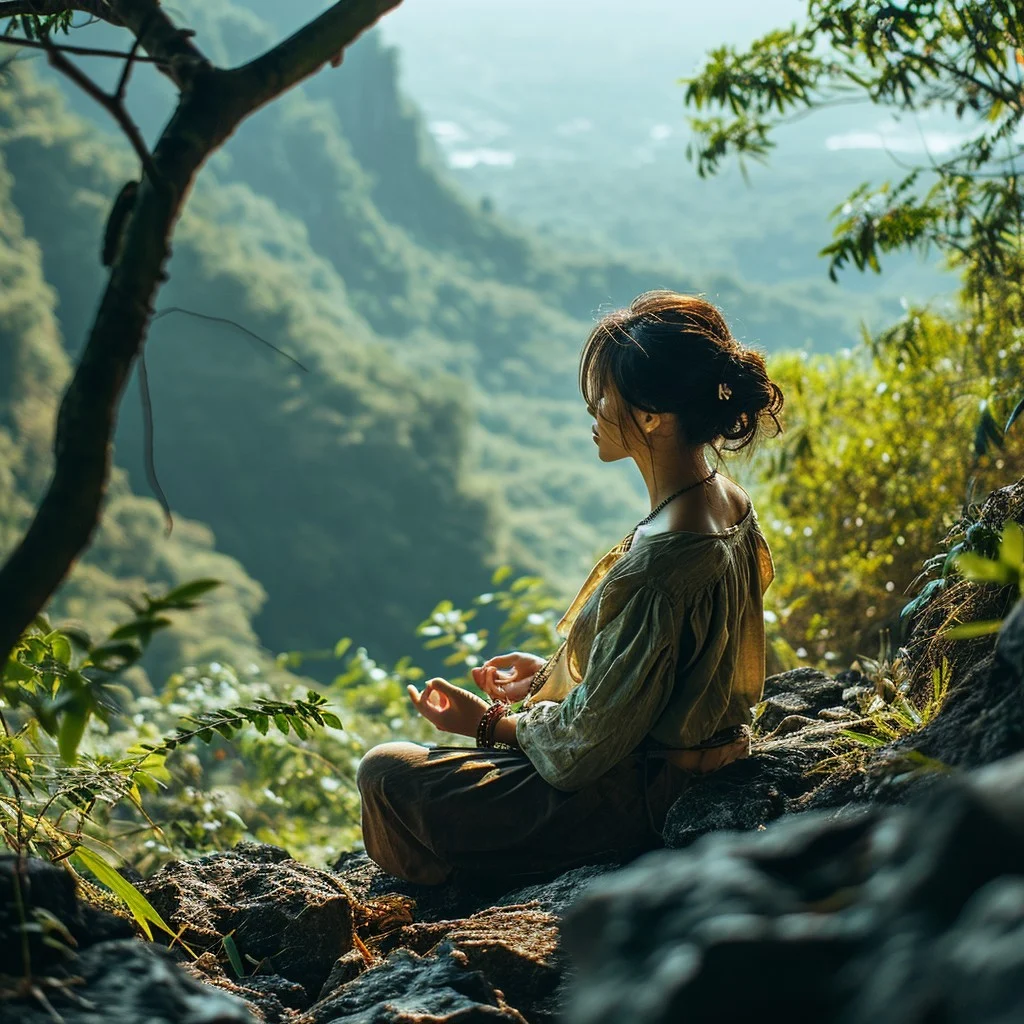
Your Sri Lanka Solo Adventure Awaits
Meet like-minded travelers · Explore ancient wonders · Create unforgettable memories
Hidden Gems of Sri Lanka: 10 Secret Spots You Won’t Find in Guidebooks
Hidden Gems of Sri Lanka: 10 Secret Spots You Won’t Find in Guidebooks
Discover Sri Lanka’s best-kept secrets beyond the tourist trail. From remote islands and forgotten temples to silent beaches and misty mountains, explore the island like a local.
Introduction: Leaving the Main Road
Most Sri Lanka guidebooks send you to the same six places. Sigiriya. Kandy. Ella. Galle. The south coast surf towns. They’re famous for good reason but they’re only part of the story .
The Sri Lanka most travellers never see is the one worth discovering. It’s the North’s Dutch forts and Hindu temple culture, the ferry-only islands of Nainativu and Delft, the Knuckles Mountain Range’s misty trails, and the forgotten forest monasteries of the Cultural Triangle . These are the places where you’ll find genuine solitude, authentic encounters, and the feeling that you’ve stumbled onto something special .
Hidden trails require effort the famous sites don’t. There’s no shuttle service, no ticketing app, no TripAdvisor listing with 4,000 reviews telling you exactly where to stand. You have to ask the right person in the right guesthouse and be willing to follow instructions that involve a tuk-tuk, a dirt road, and a guide who doesn’t speak much English but knows the forest better than anyone .
Most travellers aren’t set up for that. They’ve got a limited window, a pre-booked itinerary, and a list of things they can’t leave without seeing. That’s completely fine. It also means the trails stay quiet for the ones who do come .
So, where should you go?
1. Delft Island – Wild Ponies and Coral Walls
Off the Jaffna Peninsula in the far north, Delft Island (Neduntivu) is unlike anywhere else in Sri Lanka. Wind-swept plains, wild ponies descended from Portuguese stock, coral-block walls, and colonial ruins create a landscape that feels more like the Scottish Highlands than the Indian Ocean .
Why go: It’s one of the few places in Sri Lanka where you’ll feel genuinely remote. Ferries from Kurikadduwan jetty connect the island to the mainland, making for a great day trip that reveals a different side of Sri Lanka shaped by Tamil culture and history .
Hidden gem within: The 700-year-old baobab tree planted by Arab traders a living relic of ancient maritime trade routes .
2. The Knuckles Mountain Range – Sri Lanka’s Most Underrated Hike
Northeast of Kandy lies the Knuckles Range genuinely the most underrated hiking destination on the island. Ask most tourists if they’ve heard of it and they’ll look at you blankly. Ask most serious hikers who’ve spent real time in Sri Lanka and they’ll tell you it’s the best walk they did .
Why go: It doesn’t have a famous image. No single viewpoint has been photographed enough times to make it iconic. What it has is a network of trails through terrain that changes as you climb, micro-climates that mean one section of forest feels completely different from the next, and wildlife that includes things you don’t see in the more visited parks. The Knuckles Range forms part of the UNESCO Central Highlands World Heritage Site .
Corbett’s Gap
Start here if the Knuckles is new to you. The trail from Corbett’s Gap moves through montane forest where the cloud comes and goes as it pleases sometimes you have a view across the range that stretches for what feels like half the island, sometimes the mist is so thick you can barely see the path ahead. Both versions are good. Purple-faced langurs appear regularly. Birdwatchers tend to lose track of time here entirely .
The Nitre Cave Trail
This one barely gets mentioned even in guides that cover the Knuckles fairly thoroughly. The Nitre Cave Trail winds through dense forest before arriving at a cave formation that most visitors to the range never know exists. The cave is impressive cool air, unusual formations, the kind of place that takes you off guard. But it’s the walk in that justifies the trip. Stream crossings, sudden open viewpoints, sections of forest that feel like nobody has walked them in weeks .
Important: Don’t attempt this without a local guide. The trail is poorly marked in places and the landscape changes faster than any map accounts for .
3. Sinharaja Forest Reserve – Beyond the Main Path
Everyone who visits Sinharaja does the same thing. Kudawa entrance, standard trail, guided walk, a few good bird sightings, back to the guesthouse by lunch. It’s a decent morning. It’s also about a fifth of what Sinharaja actually is .
Why go: The forest runs to 88 square kilometres. The tourist trail covers a small corner of that. The rest of it older, denser, louder with things you can’t immediately identify sits largely untouched because nobody asks to go there .
A licensed guide is how you access it. Not the kind of guide who walks slightly ahead of you pointing at trees a proper Sinharaja guide who grew up near the forest and knows it section by section. They’ll have you off the standard path within twenty minutes and into something that feels genuinely wild within thirty .
What to expect: Leeches after rain are not a rumour. The humidity is real. The mud on the less-travelled sections can be properly deep in wet season. None of this is a reason not to go. All of it is the experience. Dry season between January and April, or the shorter dry window in August and September, gives you better underfoot conditions but the forest is worth visiting in almost any weather if you’re prepared for it .
4. Devipahala – The Language of Nature
Popularly known by villagers as Devipahala, this lesser-explored destination offers far more than the tourist-infested Bopath Ella waterfall just two kilometres away. Surrounded by the green peak wilderness of the Sri Pada (Adam’s Peak) range, and enveloped by small shola forests, Devipahala feels like a tiny hill station .
Why go: Beyond natural beauty, it’s also a historical hotspot. The area is associated with God Sumana Saman, and the legend tells of the deity manifesting here. Two massive ancient ‘na’ trees, said to be around 2,000 years old, stand beside a recently built devalaya .
Folklore: According to local belief, the jewellery belonging to God Saman at the Deraniyagala Devalaya became tainted. The displeased deity refused to reside there and alighted at Gavari Mountain, later renamed Devipahala where the deity manifested (Deviyo pahalavuna). A perennial stream, Devipahala Ela, flows beside the devalaya, echoing the ancient legends .
Best time to visit: Dry season (January to April) for clear views and accessible trails.
5. Panduwasnuwara – The Forgotten Capital
Set among lowland plains near Chilaw, Panduwasnuwara was briefly the capital of King Parakramabahu in the 12th century .
Why go: Though it lacks the grandeur of Anuradhapura or Polonnaruwa, the site offers a gentler kind of historical exploration quiet, uncrowded and evocative. Spread across 20 hectares, many of the ruins remain partially unexcavated, giving the impression of a forgotten city slowly emerging from the earth .
You’ll pass the wide moat and citadel walls before reaching the remains of dagobas, image houses, assembly halls, accommodation blocks and even an ancient ayurvedic hospital .
Insider tip: After wandering the site, stop at a local tea shop nearby for a hot cup and a piece of butter tablet an old-fashioned treat in a timeless setting .
6. Nilwella Blue Beach Island – The Deep South’s Secret
Hidden away near the peaceful fishing village of Nilwella, just outside Dickwella in Sri Lanka’s Deep South, is a small rocky island also called Blue Beach Island. It’s popular with locals who go fishing or have picnics here, but barely registers on the tourist radar .
Why go: Not as famous as nearby Hiriketiya Bay, the beach’s offbeat nature adds to its charm. During low tide you can wade across or hire a local boat for a short trip. It’s also a great spot for beach camping .
Best time to visit: December to March for calm seas and sunny weather. Temperatures hover around 29°C throughout the year, but heavy rain usually falls in May/June and September/October .
7. Silent Beach, Tangalle – True Solitude
Tucked away in the Goyambokka area near Tangalle, Silent Beach is one of Sri Lanka’s best-kept secrets a place where you can walk for hours without encountering another soul .
Why go: There are no beach bars blasting music, no vendors hawking souvenirs, no jet skis disturbing the tranquility. Just you, the ocean, the sand, and the magnificent isolation .
The beach stretches for approximately 3 kilometres of uninterrupted golden sand, gently curving between rocky headlands that create natural boundaries. During the dry season from November to April, swimming conditions are excellent with gentle waves and clear water. You might share the water with colourful tropical fish near the rocky areas, and occasionally sea turtles pass through the bay .
Insider tip: Arrive an hour before sunset to watch the light transform the landscape many visitors describe sunset at Silent Beach as one of their most memorable Sri Lanka experiences .
8. Mulgirigala Raja Maha Viharaya – Sigiriya’s Little Brother
This ancient Buddhist temple complex is hidden among the rocks and greenery of southern Sri Lanka. To reach the top, you need to climb a staircase through several levels of cave temples, where Buddha statues, frescoes, and paintings have been preserved .
Why go: At the top, a truly unique view opens up: dense green forests and hills. It feels like you’re standing on the summit of a truly high mountain, although in reality, it’s a relatively small cliff. This temple is called Sigiriya’s younger brother, but unlike its more popular relative, there were practically no people here .
Entrance: Free. Unlike Sigiriya, there were practically no people here .
Getting there: Rent a scooter or car. Bus 32 goes all the way from Colombo along the entire coast, with many stops along the way .
9. Kalpitiya & Wilpattu – The Wild Northwest
Kalpitiya – Sri Lanka’s Wild Northwest Coast
This coastal stretch is raw, peaceful, and dramatically different from the southern beaches. Vast empty beaches, dolphin watching (seasonal), lagoon kayaking, and incredible sunsets await .
What to do: Kitesurfing (May–October for the best wind; November–April for gentle conditions), snorkelling and diving at Bar Reef, one of Sri Lanka’s largest coral systems, and dolphin trips in season where huge pods of spinner dolphins leap in the early light .
Stay: Lagoon-side eco-lodges offering fresh seafood under the stars .
Wilpattu National Park – The Quiet Safari Alternative
Skip crowded Yala. Head to Wilpattu National Park, Sri Lanka’s largest and most atmospheric wildlife reserve .
Why Wilpattu: Fewer safari jeeps, natural lakes (“villus”), strong leopard population, and authentic wilderness feel .
Best time to visit: May to October, when wildlife gathers around the willus.
10. Karagasthenna & Kadadora – Community-Based Ecotourism
The Karagasthenna community-based ecotourism site spans several Grama Niladhari divisions, including Gammaduwa, Naguliyadda, Pussella, Kalugaltenna, and Palle Aswadduma .
Why go: Renowned for traditional industries such as kitul-based products, intricate wood and brass carvings, and Batik designs . You can experience the art of creating Batik for yourself under the guidance of local artisans .
The Kadadora Doorway: As you travel along the road to Kothmale, there’s a milestone you might easily overlook. The Kadadora doorway itself, understated and flanked by stone walls, awaits the gaze of the fortunate into a timeless sphere. What makes Kadadora and Ranamune special is its connection to history, being a safe haven for Prince Dutugemunu’s years in exile in the area .
Ranamune Spout: The water at the Ranamune Spout moves with an astonishing speed, so fast it’s almost hard to believe. Its endless flow makes you imagine what it would be like to step under its rushing stream .
Insider tip: The region is dotted with cultural and historical treasures like Dehadhukadulla, Morape Kataragama Devalaye, Mahaweli Maha Seya, and the Ranamune Pihilla a waterspout weaving in local legends and the history that breathes life into the landscape .
Why a Destination Management Company (DMC) is Your Best Bet for Hidden Gems
Discovering these hidden gems isn’t always straightforward. Hidden trails require effort the famous sites don’t. There’s no shuttle service, no ticketing app, no TripAdvisor listing with 4,000 reviews telling you exactly where to stand. You need local knowledge .
A Sri Lanka DMC like Rediscover Journeys can:
-
Get you off the standard path — licensed guides who can take you into the parts of Sinharaja that most visitors never see
-
Connect you with local experts — guides who grew up near these places and know the trails by heart
-
Handle logistics — from ferry timings to guesthouse bookings in remote areas
-
Ensure ethical travel — responsible wildlife experiences and community engagement that benefit local people
Practical Tips for Exploring Sri Lanka’s Hidden Gems
Getting around: A private driver is the most practical way to reach most of these destinations. The roads are winding in the hills and confusing in the villages; having a local behind the wheel makes a difference.
What to pack: For the Knuckles Range and Devipahala, bring sturdy boots and layers the weather can shift quickly. For the islands, reef-safe sunscreen is essential. For Sinharaja, prepare for leeches after rain, humidity, and proper mud .
Be respectful: Many of these places are active religious sites or working communities. Dress modestly (especially at temples), ask permission before photographing people, and support local businesses where you can.
Stay safe: On ferry-only islands like Delft, check schedules in advance. In forest reserves, always go with a licensed guide the trails are poorly marked in places, and the landscape changes faster than any map accounts for .
Conclusion: Leave the Main Road
Every fact in this guide elevations, species counts, ferry times, opening hours comes from direct fieldwork, not recycled internet listings . This is the kind of knowledge that transforms a trip from a checklist into a discovery.
Whether it’s wild ponies on Delft Island, the misty trails of the Knuckles Range, the silent serenity of Silent Beach, or the forgotten ruins of Panduwasnuwara, Sri Lanka’s hidden gems reward those who venture beyond the main road.
The Pearl of the Indian Ocean is waiting but only if you know where to look.
Ready to Discover the Real Sri Lanka?
Let us help you avoid the crowds and discover the real Sri Lanka.
Whether you’re dreaming of trekking through the Knuckles Range, spotting leopards in Wilpattu, or exploring forgotten temples that most travellers miss, our local experts can craft a personalised itinerary that matches your travel style, pace, and interests.
Contact our local experts for a personalised itinerary.
📞 Call us: +94 77 791 1276 (24/7)
📧 Email: [email protected]
🌐 Visit: rediscoversrilanka.com
Book Your Adventure
Ready to experience this coastal paradise? Plan your trip with Rediscover Sri Lanka and create unforgettable memories at Hiriketiya Beach.
📩 Visit: Rediscover Sri Lanka to book now.
Contact Us Today!
Ready to plan your dream group tour in Sri Lanka? Let us help you craft the perfect itinerary for a truly magical experience.
👉 Contact Rediscover Sri Lanka now to explore our Sri Lanka group tour packages, designed for families, solo travelers, and adventure seekers alike.
Reviews and Recommendations
Don’t just take our word for it! Check out these incredible reviews from past travelers:
Tripadvisor: Read about other travelers’ experiences on Tripadvisor, where Rediscover Sri Lanka has garnered rave reviews for its safe and well-organized tours.
Trustpilot: Visit Trustpilot for more real-life testimonials from travelers who have fallen in love with Sri Lanka’s beauty and hospitality.
Book Your Adventure
Ready to experience this coastal paradise? Plan your trip with Rediscover Sri Lanka and create unforgettable memories at Hiriketiya Beach.
📩 Visit: Rediscover Sri Lanka to book now.
Contact Us Today!
Ready to plan your dream group tour in Sri Lanka? Let us help you craft the perfect itinerary for a truly magical experience.
👉 Contact Rediscover Sri Lanka now to explore our Sri Lanka group tour packages, designed for families, solo travelers, and adventure seekers alike.
Reviews and Recommendations
Don't just take our word for it! Check out these incredible reviews from past travelers:
Read about other travelers' experiences on TripAdvisor, where Rediscover Sri Lanka has garnered rave reviews for its safe and well-organized tours.
Read ReviewsVisit Trustpilot for more real-life testimonials from travelers who have fallen in love with Sri Lanka's beauty and hospitality.
Read ReviewsExplore Related Topics

Frequently Asked Questions
Everything you need to know about traveling in Sri Lanka