Everything You Need to Know About Whale Watching Sri Lanka 2026 | Best Season, Spots & Ethical Tours
Whale Watching in Sri Lanka: The Complete Guide to the Best Season, Spots & Ethical Tours Sri Lanka is one of the few places on Earth where you can see the largest animal that has ever lived — the blue whale — from the shore. The island’s unique geography, with deep ocean trenches lying close […]
Whale Watching in Sri Lanka: The Complete Guide to the Best Season, Spots & Ethical Tours
Sri Lanka is one of the few places on Earth where you can see the largest animal that has ever lived — the blue whale — from the shore. The island’s unique geography, with deep ocean trenches lying close to the coastline, creates a migratory corridor that brings these ocean giants within reach of day-trippers and serious wildlife enthusiasts alike.
Whale watching in Sri Lanka is possible almost year-round, thanks to the island’s two monsoon systems. The season simply shifts from the south coast to the east coast and back again. This guide covers everything you need to know — the best time to visit, the top locations, the species you can expect to see, and how to choose an ethical operator.
Why Whale Watching in Sri Lanka Is Unique
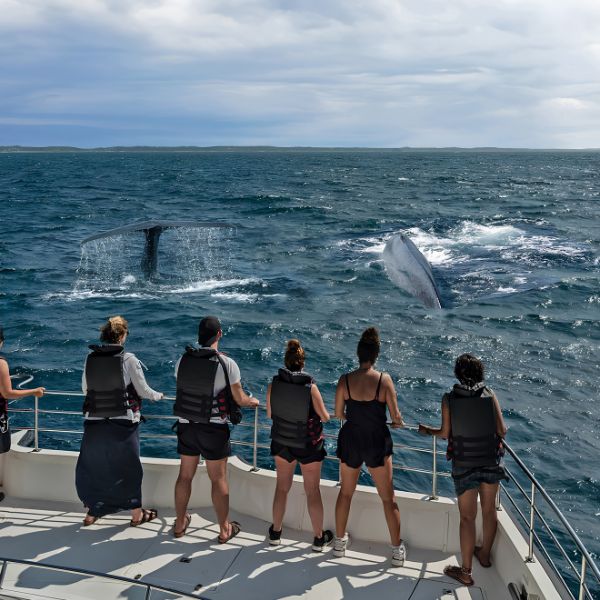
Sri Lanka is one of the best places in the world to see blue whales and sperm whales, with sightings possible in different locations almost year-round due to the island’s two monsoon seasons. The deep waters off the southern coast, particularly near Dondra Point, are exceptionally nutrient-rich, attracting blue whales close to shore between November and April.
Unlike many whale-watching destinations where you need to travel hours offshore, Sri Lanka’s continental shelf drops away steeply, meaning whales are often visible within a short boat ride — and occasionally from the coast itself.
Key highlights:
| Feature | Detail |
|---|---|
| Species | Blue whale, sperm whale, Bryde’s whale, fin whale, orca, spinner dolphin, bottlenose dolphin |
| South Coast Season | November – April |
| East Coast Season | May – October |
| Best Months (South) | February – March |
| Best Months (East) | April – July |
| Departure Point | Mirissa Harbour (South), Trincomalee (East) |
| Tour Duration | 3–5 hours |
| Sighting Probability (Peak) | Whales ~50–70%, Dolphins ~90% |
What Species Can You See in Sri Lanka?
Blue Whale
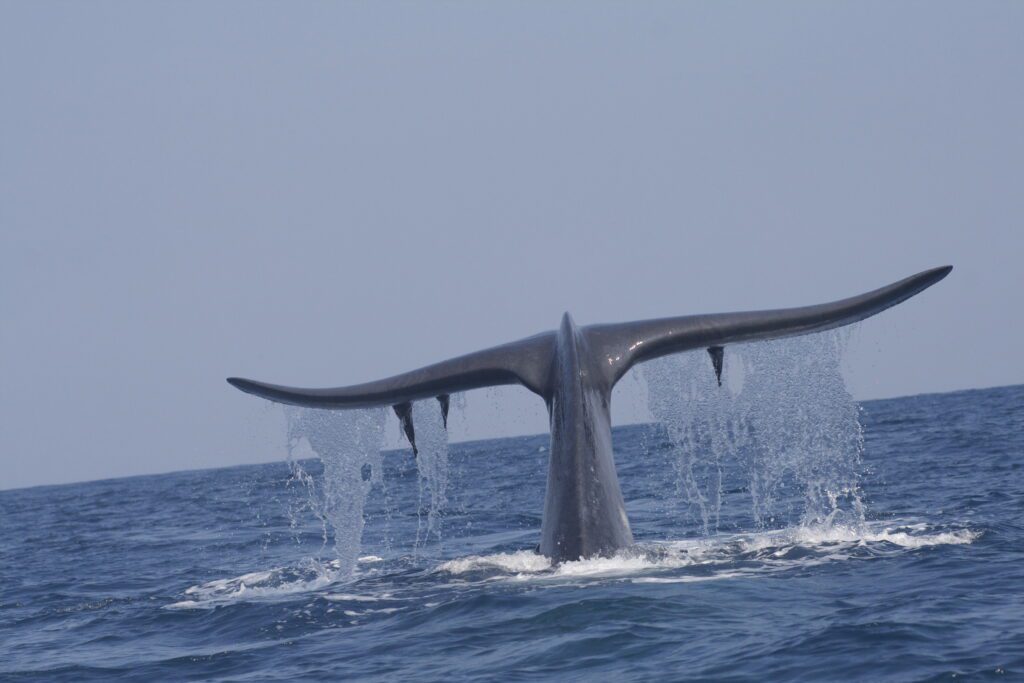
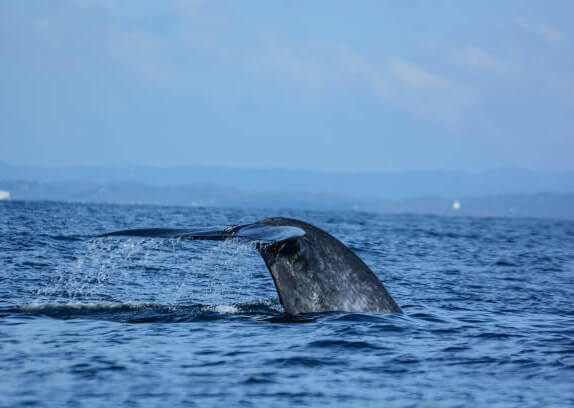
The blue whale is the largest animal ever to have lived on Earth, reaching up to 33 metres in length and weighing as much as 180 tonnes. Their hearts alone are the size of a small car. They are easily identified by their tall, column-shaped blow, which can rise up to 9 metres into the air.
Sri Lanka’s waters are home to a unique resident population of blue whales — Balaenoptera musculus indica — that spends all year in warm waters. The calving season peaks between March and April.
Where & When:
-
Mirissa (South): November – April, peak February – March
-
Trincomalee (East): March – October, peak April – July
Sperm Whale
Sperm whales are the largest toothed predators on Earth, known for their deep-diving ability and distinctive block-shaped heads. They are commonly seen off both the south and east coasts of Sri Lanka.
Where & When:
-
Mirissa (South): November – April, peak December – February
-
Trincomalee (East): March – May, for aggregations
Dolphins
Spinner dolphins and bottlenose dolphins are frequently seen in large pods, often playfully riding the wake of whale-watching boats. Sightings are highly reliable, with a ~90% chance on most tours.
Where & When:
-
Kalpitiya (North-West): October – March for spinner dolphins
-
Mirissa & Trincomalee: Year-round, but most abundant during whale season
Other Species
Less frequently sighted species include Bryde’s whales, fin whales, minke whales, melon-headed whales, dwarf sperm whales, and orcas. Manta rays, sea turtles, and whale sharks are also occasional sightings.
Best Time for Whale Watching in Sri Lanka
The best time for whale watching in Sri Lanka depends on which coast you plan to visit. The island’s two monsoon systems create two distinct whale-watching seasons, meaning you can see whales at almost any time of year — you just need to know which side of the island to visit.
South Coast: November – April
The south coast, particularly Mirissa and Dondra Point, is the best place in Sri Lanka for blue whale sightings. Blue whales congregate off the southern coast from late November through mid-April, drawn by nutrient-rich waters.
| Month | Blue Whale | Sperm Whale | Dolphins | Sea Conditions |
|---|---|---|---|---|
| November | Fair | Fair | Good | Improving |
| December | Good | Good | Excellent | Calm |
| January | Good | Good | Excellent | Calm |
| February | Excellent | Good | Excellent | Calmest |
| March | Excellent | Fair | Good | Calm |
| April | Good | Fair | Good | Warming |
Peak season: February – March, when seas are calmest and sighting rates are highest.
East Coast: May – October
Trincomalee is the primary whale-watching destination on the east coast, with whales migrating from the south as the monsoon shifts. While sightings are possible throughout the season, the best months for blue whales are April to July.
| Month | Blue Whale | Sperm Whale | Dolphins | Sea Conditions |
|---|---|---|---|---|
| May | Good | Good | Good | Calm |
| June | Good | Good | Good | Calm |
| July | Good | Fair | Good | Calm |
| August | Fair | Fair | Good | Calm |
| September | Fair | Fair | Good | Calm |
| October | Fair | Fair | Good | Transitioning |
Peak season: June – July.
Shoulder Seasons: April & October
April and October are transition months. The south coast season is winding down, and the east coast season is beginning or ending. Sightings are possible but less reliable. If you’re flexible, stick to peak season for your chosen coast.
Where to Go Whale Watching in Sri Lanka
Mirissa (South Coast) — The Hub
Mirissa is Sri Lanka’s whale-watching capital and one of the world’s most reliable places to see blue whales. The town is a 2.5-hour drive from Colombo or 1 hour from Galle Fort. Tours depart from Mirissa Harbour at around 6:00–6:30 AM, lasting 3–5 hours.
Why Mirissa:
-
Deep ocean trench runs close to shore, bringing whales within easy reach
-
Highest probability of blue whale sightings in Sri Lanka
-
Well-developed tourism infrastructure with cafés, surf schools, and boutique hotels
-
Can combine with a same-day safari at Udawalawe or Yala — Sri Lanka is the only place on Earth where you can see the world’s largest land mammal (elephant) and marine mammal (blue whale) in a single day
Best time: November – April, peak February – March
Trincomalee (East Coast) — The Alternative
Trincomalee is the east coast’s whale-watching hub, with a season that runs from May to October. The deep waters offshore attract blue whales, sperm whales, and spinner dolphins.
Why Trincomalee:
-
Whale watching possible when the south coast is off-season
-
Calmer seas during the east coast’s dry season
-
Opportunities for snorkelling at Pigeon Island
-
Combine with cultural sites like Koneswaram Temple
Best time: May – October, peak June – July
Kalpitiya (North-West Coast) — Dolphin Haven
Kalpitiya is the best place in Sri Lanka for dolphin watching, with large pods of spinner dolphins gathering in the lagoon and offshore waters between November and March. Sperm whales and blue whales are also occasionally sighted.
Best time: November – March
Dondra Point — The Southern Tip
Dondra Point, near Mirissa, is the southernmost tip of Sri Lanka and marks the point where the continental shelf drops away. Many experts consider the deep waters beyond Dondra Point to be the best in the world for seeing blue and sperm whales. Most whale-watching tours from Mirissa head toward Dondra Point.
Galle — Convenient Access
Galle offers convenient access to whale-watching tours departing from Mirissa Harbour, just 40 minutes away. The southwest coast near Galle also offers whale sightings between November and April, peaking in the early months of the year.
Sri Lanka Whale Watching Season: At a Glance
| Location | Season | Peak Months | Primary Species |
|---|---|---|---|
| Mirissa (South) | November – April | February – March | Blue whale, sperm whale, dolphins |
| Trincomalee (East) | May – October | June – July | Blue whale, sperm whale, dolphins |
| Kalpitiya (North-West) | November – March | December – January | Spinner dolphins, sperm whale |
| Dondra Point (South) | November – April | February – March | Blue whale, sperm whale |
| Galle (South-West) | November – April | January – March | Blue whale, sperm whale |
Ethical Whale Watching in Sri Lanka
Whale watching in Sri Lanka is regulated by the Sri Lanka Tourism Development Authority (SLTDA), with strict guidelines designed to protect marine mammals and ensure visitor safety. All operators must comply with the Merchant Shipping Act, the Fauna and Flora Protection Ordinance, and SLTDA regulations.
Key Regulations
| Rule | Requirement |
|---|---|
| Licensing | All vessels must obtain an annual licence from SLTDA |
| Distance | No more than 3 vessels within 300m of a whale at any time |
| Approach | Vessels must approach from the side, not head-on or from behind |
| Speed | Vessels must reduce speed within the caution zone |
| Swimming | Swimming with whales is banned under the Fauna and Flora Protection Ordinance |
| Prohibited Craft | Jet skis, water scooters, hovercraft, and paddle craft are strictly prohibited |
How to Choose an Ethical Operator
Ask these questions before booking:
-
Are you SLTDA-licensed? (A legitimate operator will have a licence number.)
-
Do you maintain safe distances? (At least 100m, ideally 300m.)
-
Do you limit time with each whale? (15–30 minutes maximum.)
-
Do you avoid chasing or crowding? (Ethical operators never chase.)
-
Do you have a trained guide on board? (For interpretation and safety.)
-
Do you follow a code of conduct? (Responsible operators have written policies.)
Responsible operators we recommend:
-
Whale Watching Club (WWC) — Operating since 2013, with a 60-ft catamaran and a captain with over 20 years’ experience
-
Sail Lanka — A charter company with a commitment to sustainability and marine conservation
-
Mirissa Water Sports — Described as a pioneer in responsible whale watching in Sri Lanka
What to Expect on an Ethical Tour
-
Departure from Mirissa Harbour at 6:00–6:30 AM
-
3–5 hour duration
-
Breakfast and refreshments served on board
-
Briefing on responsible wildlife viewing
-
Safe approach to whales (from the side, at distance)
-
Limited time with each whale (typically 15–30 minutes)
-
Opportunity to see dolphins riding the boat’s wake
-
Return to harbour by late morning
Practical Tips for Whale Watching in Sri Lanka
Before You Book
-
Choose the right season for your coast — South (Nov–Apr) or East (May–Oct)
-
Book in advance during peak season (December–March)
-
Check the operator’s credentials — SLTDA licence, reviews, ethical policies
-
Ask about sighting guarantees — Some operators offer a second trip if no whales are seen
What to Bring
-
Motion sickness tablets — Take them 30–60 minutes before departure
-
Sunscreen and hat — The sun is strong on the water
-
Light jacket — It can be cool in the early morning
-
Camera with zoom lens — For distant sightings
-
Binoculars — Essential for spotting blows
-
Water and snacks — Though most tours provide refreshments
During the Tour
-
Listen to your guide — They know the whales’ behaviour
-
Keep noise to a minimum — Loud noises disturb marine life
-
Don’t lean over the side — Safety first
-
Be patient — Wildlife sightings are never guaranteed
-
Enjoy the dolphins — Even if whales are elusive, dolphins are almost always seen
Health Considerations
-
Seasickness — The Indian Ocean can be choppy, especially in the shoulder seasons. Take medication if you’re prone.
-
Sun exposure — The tropical sun is intense. Reapply sunscreen regularly.
-
Hydration — Drink plenty of water.
Combine Whale Watching with Other Sri Lankan Experiences
South Coast (November – April)
-
Galle Fort — UNESCO World Heritage Site, boutique shopping, dining
-
Udawalawe National Park — Elephant safari (same-day possible)
-
Yala National Park — Leopard safari
-
Weligama — Surfing lessons for beginners
-
Mirissa — Beach time, Coconut Tree Hill sunset
East Coast (May – October)
-
Trincomalee — Koneswaram Temple, Pigeon Island snorkelling
-
Pasikuda — Calm, shallow waters for families
-
Arugam Bay — World-class surfing
-
Kumana National Park — Birdwatching and wildlife
Frequently Asked Questions
What is the best time for whale watching in Sri Lanka?
The best time is November to April on the south coast (Mirissa) and May to October on the east coast (Trincomalee). Peak months for blue whales are February–March in Mirissa and June–July in Trincomalee.
Where is the best place to see blue whales in Sri Lanka?
Mirissa, on the south coast, is the best place to see blue whales in Sri Lanka. The deep waters off Dondra Point attract blue whales close to shore from November to April.
Can I see whales from the shore in Sri Lanka?
Yes — Sri Lanka is one of the few places in the world where whales can occasionally be seen from the coast. Dondra Point is the best location for shore-based sightings, though boat-based tours offer far higher probability.
What species of whales can I see in Sri Lanka?
You can see blue whales, sperm whales, Bryde’s whales, fin whales, minke whales, and occasionally orcas. Dolphins (spinner and bottlenose) are also commonly seen.
Is whale watching in Sri Lanka ethical?
Yes — if you choose a responsible, SLTDA-licensed operator. Ethical operators maintain safe distances, limit time with each whale, and never chase or harass marine mammals. Avoid operators who promise “swimming with whales” — this is illegal in Sri Lanka.
What is the sighting probability?
Sighting probability varies by season. During peak season, whale sightings are approximately 50–70%, while dolphin sightings are approximately 90%. No operator can guarantee whale sightings, as these are wild animals.
How long do whale watching tours last?
Most tours last 3–5 hours, departing from Mirissa Harbour around 6:00–6:30 AM and returning by late morning.
What should I bring on a whale watching tour?
Bring motion sickness tablets, sunscreen, a hat, a light jacket, a camera with zoom lens, binoculars, and water. Most tours provide breakfast and refreshments.
Can I combine whale watching with a safari?
Yes — Sri Lanka is the only place on Earth where you can see the world’s largest land mammal (elephant) and marine mammal (blue whale) in a single day. An afternoon safari at Udawalawe or Yala is possible after a morning whale-watching tour.
What is the whale watching season in Trincomalee?
The Trincomalee whale watching season runs from May to October, with the best months for blue whales being April to July.
Are whale watching tours suitable for children?
Yes — whale watching tours are generally suitable for children, though very young children and pregnant women should take extra care due to sea conditions. Check with your operator for age restrictions.
Experience Whale Watching with Rediscover Journeys
Whale watching in Sri Lanka is one of the island’s most extraordinary experiences. Whether you’re watching a blue whale breach off Mirissa or spotting dolphins off Trincomalee, these encounters with the ocean’s giants will stay with you forever.
Ready to plan your whale watching adventure? Contact our local experts to design a bespoke journey that includes the best whale-watching season, the right coast, and an ethical operator.
Explore Sri Lanka: https://rediscoversrilanka.com/srilanka/
-
🌐 Website: rediscoversrilanka.com
-
💬 WhatsApp: +94 77 791 1276
-
📧 Email: [email protected]
Book Your Dream Getaway to Sri Lanka Today!
Contact Us Today!
Ready to plan your dream group tour in Sri Lanka? Let us help you craft the perfect itinerary for a truly magical experience.
👉 Contact Rediscover Sri Lankanow to explore our Sri Lanka group tour packages, designed for families, solo travelers, and adventure seekers alike.
Reviews and Recommendations
Don’t just take our word for it! Check out these incredible reviews from past travelers:
- Tripadvisor: Read about other travelers’ experiences on Tripadvisor, where Rediscover Sri Lanka has garnered rave reviews for its safe and well-organized tours.
- Trustpilot: Visit Trustpilot for more real-life testimonials from travelers who have fallen in love with Sri Lanka’s beauty and hospitality.
Rediscover Journeys — Boutique Sri Lanka Tour Operator & Travel Agency
Trustpilot 4.9/5 (192 reviews) | TripAdvisor Travellers’ Choice 2025 | SLTDA-licensed
35+ years collective Sri Lanka expertise | Private chauffeur-guide | Tailor-made journeys
Contact Us Today!
Ready to plan your dream journey in Sri Lanka? Let us help you craft the perfect itinerary for a truly memorable experience.
Contact Rediscover Sri Lanka to explore our tailor-made journeys, private tours and authentic Sri Lankan experiences.
Contact UsReviews and Recommendations.
Don't just take our word for it! Check out these incredible reviews from past travelers.
Read about other travelers' experiences with Rediscover Sri Lanka and explore reviews from guests who have travelled across the island.
Read ReviewsDiscover feedback from travelers who have experienced Rediscover Journeys and explored Sri Lanka with our team.
Read ReviewsBook Your Adventure.
Ready to experience Sri Lanka beyond the usual tourist trail? Let us create a private journey around your interests, pace and travel style.
Ready to Rediscover Sri Lanka?
Plan your trip with Rediscover Sri Lanka and create unforgettable memories at some of the island's most extraordinary places.
Visit Rediscover Sri Lanka to start planning your journey.
Plan Your JourneyEverything you need to know about traveling in Sri Lanka.
Sri Lanka is a year-round destination, but the best time depends on which part of the island you plan to explore. The west and south coasts are generally best from December to April, while the east coast is ideal from May to September.
Around 7 to 14 days is a good amount of time to experience Sri Lanka's highlights without rushing. A longer journey allows more time for wildlife, beaches, cultural sites, scenic train journeys and the hill country.
Most international travellers need travel authorisation or a visa to enter Sri Lanka, depending on their nationality and purpose of travel. Travellers should check the latest requirements through official Sri Lankan government channels before travelling.
Sri Lanka is a popular destination for international travellers. As with any destination, visitors should take normal precautions, look after their belongings, use reputable transport and follow local advice.
The official currency is the Sri Lankan Rupee (LKR). Your budget depends on accommodation, transportation, dining, activities and travel style. Sri Lanka offers everything from budget-friendly experiences to premium hotels and tailor-made luxury travel.