Everything You Need to Know About Discover Sri Lanka: Top Tourist Attractions & Destinations Guide
Discover Sri Lanka: A Complete Guide to the Island’s Top Tourist Attractions Sri Lanka is a land of remarkable contrasts—ancient kingdoms and misty tea plantations, golden beaches and wildlife-rich national parks, sacred temples and colonial forts. Whether you’re drawn to culture, nature, adventure, or simply the perfect stretch of sand, this island paradise has something …
Discover Sri Lanka: A Complete Guide to the Island’s Top Tourist Attractions
Sri Lanka is a land of remarkable contrasts—ancient kingdoms and misty tea plantations, golden beaches and wildlife-rich national parks, sacred temples and colonial forts. Whether you’re drawn to culture, nature, adventure, or simply the perfect stretch of sand, this island paradise has something extraordinary for every traveler.
From the well-preserved ruins of Anuradhapura—one of South Asia’s most stable centers of ancient civilization—to the surf-friendly shores of Arugam Bay, Sri Lanka’s attractions span thousands of years of history and hundreds of kilometers of coastline. Here’s our guide to the island’s most compelling destinations.
The Cultural Triangle: Sri Lanka’s Ancient Heart
Anuradhapura
Anuradhapura is one of the ancient capitals of Sri Lanka, famous for its well-preserved ruins of ancient Lankan civilization. From the 4th century BC until the beginning of the 11th century AD, it remained one of the most stable and durable centers of political power and urban life in South Asia. Today, the ancient city—considered sacred to the Buddhist world—is surrounded by monasteries covering an area of over sixteen square miles (40 km²). Anuradhapura is also significant in Hindu legend as the fabled capital of the Asura King Ravana in the Ramayana.
Polonnaruwa
The second most ancient of Sri Lanka’s kingdoms, Polonnaruwa was first declared the capital city by King Vijayabahu I, who defeated the Chola invaders in 1070 CE to reunite the country once more under a local leader. Its well-preserved archaeological sites make it a must-visit for history enthusiasts.
Sigiriya
Sigiriya (Lion’s Rock) is an ancient rock fortress and castle/palace ruin situated in the central Matale District, surrounded by the remains of an extensive network of gardens, reservoirs, and other structures. A popular tourist destination, it is also known for its ancient frescoes, very similar to those in the Ajanta Caves of India. Sigiriya was built during the reign of King Kassapa I (AD 477–495) and is one of the seven World Heritage Sites of Sri Lanka.
Dambulla
Major attractions of Dambulla include the largest and best-preserved cave temple complex in Sri Lanka, and the Rangiri Dambulla International Stadium, famous for being built in just 167 days. The city also boasts the largest rose quartz mountain range in South Asia and the Ironwood Forest, or Namal Uyana. The Ibbankatuwa prehistoric burial site near the cave temple complexes is the latest archaeological site of significant historical importance, providing evidence of indigenous civilizations long before the arrival of Indian influence.
Hill Country: Tea, Trains & Breathtaking Views
Kandy
Kandy—Maha Nuvara in Sinhala—is the English name for the city in the center of Sri Lanka. It is the capital of the Central Province and Kandy District, lying in the midst of hills in the Kandy Valley, which crosses an area of tropical plantations, mainly tea. Kandy is one of the most scenic cities in Sri Lanka, serving as both an administrative and religious center.
Nuwara Eliya
Nuwara Eliya, meaning “city on the plain” or “city of light,” is located at an altitude of 1,868 m (6,128 ft) in the central highlands and is considered one of the most important locations for tea production in Sri Lanka. The town is overlooked by Pidurutalagala, the highest mountain in Sri Lanka.
Ella
Ella is blessed with some of the most beautiful views you could find in Sri Lanka. Only 8 km from Bandarawela, this small town serves as a base for plenty of trekking expeditions to the surrounding countryside. A taste of the breathtaking scenery of Ella can be had by walking into the Garden of the Grand Ella Motel (formerly Ella Rest House), where you seem to be standing at the edge of the world. Some of the places to see in Ella include the Ella Gap, Ravana Ella Falls, Little Adam’s Peak, and Bambaragala Peak.
Horton Plains
Horton Plains National Park—”Maha-Eliya” in Sinhala—lies at a height of more than 2,000 m in the central highlands. Its altitude means it has a much cooler and more windy climate than the lowlands, with a mean annual temperature of 16°C rather than the 26°C of the coasts. The area was named in 1834 after Lady Anne Horton, wife of Sir Robert Wilmot-Horton, then-governor of Ceylon.
Adam’s Peak
Adam’s Peak is a 2,243-metre (7,359 ft) tall conical mountain located in central Sri Lanka. It is well known for the Sri Pada “sacred footprint,” a 1.8 m rock formation near the summit—held in Buddhist tradition to be the footprint of Buddha, in Hindu tradition that of Shiva, and in Muslim tradition that of Adam.
Knuckles Range
The Knuckles Mountain Range lies in central Sri Lanka, north-east of Kandy. The range takes its name from a series of recumbent folds and peaks in the west of the massif which resemble the knuckles of a clenched fist when viewed from certain locations in the Kandy District. The Sinhalese residents have traditionally referred to the area as Dumbara Kanduvetiya, meaning “mist-laden mountain range.” It is a climatic microcosm of the rest of Sri Lanka.
Coastal Escapes: Beaches & Seaside Towns
Galle
Galle is a town situated on the southwestern tip of Sri Lanka, 119 km from Colombo. Known as Gimhathiththa before the arrival of the Portuguese in the 16th century, it was the main port on the island. Galle reached the height of its development in the 18th century during the Dutch colonial period. The Gin Ganga river passes through villages such as Neluwa, Nagoda, Baddegama, Thelikada, and Wakwella before meeting the sea at Ginthota. The Wakwella Bridge over the river is the longest bridge in Sri Lanka.
Bentota
A Sri Lankan coastal city famous for golden beaches, Bentota is situated on the southern coastal tip of the Galle District. The name comes from a mythical story dating back to king’s time, saying a demon called Bem ruled this river (tota = river bank). Bentota hosts a handful of world-renowned hotels and delivers an ancient art of healing called Ayurveda. It is also famous for its production of toddy, an alcoholic beverage made from coconut nectar.
Hikkaduwa
Hikkaduwa is a small town on the south coast of Sri Lanka, located about 20 km north-west of Galle. Famous for its beach and corals, it is primarily a tourist destination offering surfing, snorkeling, and sunshine on the famous Galle Road from Colombo to Galle.
Unawatuna
Unawatuna is a beach resort on the southern coast of Sri Lanka, described as the most wonderful beach location by nature. It is one of the best scuba diving locations in Sri Lanka, where you can enjoy the beach, scuba diving, surfing, and seafood in Sri Lankan style. The Jungle Beach, Roomassagala Hills, Kathaluwa Temple, and Galle Fort are interesting places to visit.
Weligama
Weligama is a fishing town in Matara District on the southern coast. The term Weligama literally means “Sandy Village,” referring to the area’s sandy sweep bay. Situated 143 km from Colombo, Weligama is a popular tourist destination hosting several boutique hotels. It is most famous for its distinct stilt fishermen and an offshore islet known as Taprobane, where a dream house of French Count de Maunay was built.
Mirissa
Mirissa is a small town on the south coast of Sri Lanka, known for its beautiful beach and whale-watching opportunities. It offers a relaxed atmosphere and is a popular base for exploring the southern coast.
Arugam Bay
Arugam Bay is a bay situated on the Indian Ocean in the dry zone of Sri Lanka’s southeast coast, located 320 km due east of Colombo. It is a popular surfing and tourist destination. Due to its popularity among low-budget tourists, the area has managed a slow recovery through private initiatives.
Trincomalee
Trincomalee is a port city on the east coast of Sri Lanka, about 110 miles northeast of Kandy. Built on a peninsula that divides the inner and outer harbours, it is one of the main centers of Tamil-speaking culture on the island. Historically referred to as Gokanna or Gokarna, it has been a seaport playing a major role in Sri Lanka’s maritime and international trading history.
Nilaveli & Pasikudah
Nilaveli is a coastal resort town located about 20 km north-west of Trincomalee. Pasikudah (or Pasikuda) is a coastal resort town about 35 km northwest of Batticaloa. Both are popular tourist destinations with beautiful beaches and calm waters.
Kalkudah
Kalkudah (pronounced Kal-Kuda, Tamil for “rock-bay”) is a coastal resort town located about 35 km northwest of Batticaloa. It used to be a popular tourist destination, and together with Pasikudah, they are located a few kilometers apart.
Beruwela
Beruwela is a small resort town in the south-western coastal belt. The name is derived from the Sinhalese word meaning “the place where the sail is lowered.” It marks the spot of the first Muslim settlement on the island, established by Arab traders around the 8th century AD. A large population of Sri Lankan Moors, many of them gem merchants, still live in the town—particularly in the “China Fort.” Msjid-ul-Abrar, a landmark and Sri Lanka’s oldest mosque, was built by Arab traders on a rocky peninsula overlooking the town.
Wildlife & Nature: National Parks
Yala National Park
Yala National Park covers 979 km², although only the original 141 km² are open to the public. Established in 1894 as a Game Sanctuary, much of the reserve is parkland, but it also contains jungle, beaches, freshwater lakes and rivers, and scrubland. The latter zone is punctuated with enormous rocky outcrops, and the range of habitats gives rise to a good range of wildlife—including the highest density of leopards in the world.
Wilpattu National Park
Wilpattu National Park is located on the northwest coast lowland dry zone, 30 km west of Anuradhapura and 26 km north of Puttalam (approximately 180 km north of Colombo). The park is 131,693 hectares and ranges from 0 to 152 meters above sea level. Its unique feature is the existence of “Willus”—natural, sand-rimmed water basins or depressions that fill with rainwater. Nearly sixty lakes and tanks are found throughout Wilpattu, one of the largest and oldest National Parks in Sri Lanka, renowned for its leopard population.
Bundala National Park
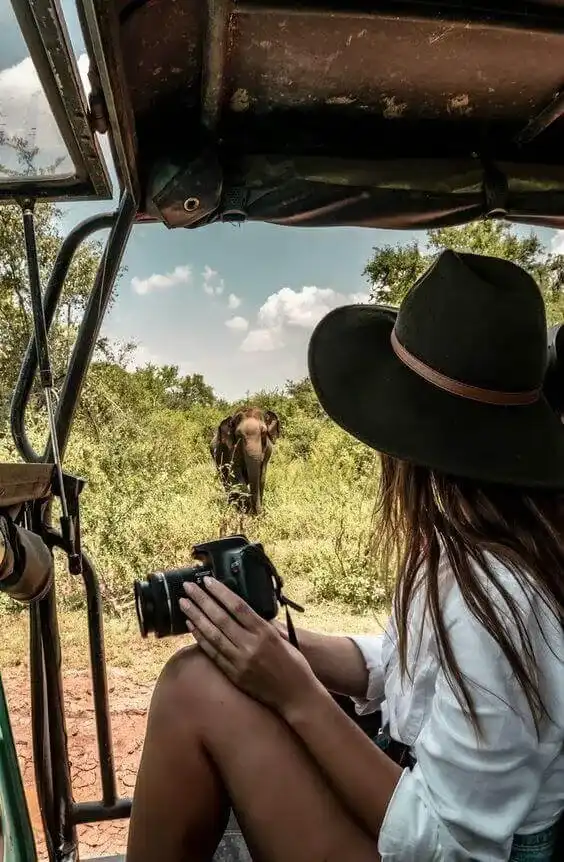
Located about fifteen kilometers east of Hambantota, Bundala National Park is one of Sri Lanka’s foremost destinations for birdwatchers, protecting an important area of coastal wetland famous for its abundant aquatic and other birdlife. The park is also home to significant populations of elephants, marsh and estuarine crocodiles, turtles, and other fauna, including the leopard. Afternoon safaris in the dry season (December–May) provide the best chance of seeing the wildlife.
Minneriya
Minneriya is a small town famous for two things: the great Minneriya Lake built by King Mahasen, and the Minneriya Wildlife Sanctuary, a hotspot for safari lovers because of its abundance of elephants. It is situated near Habarana, which has high-class hotels and famous World Heritage Sites like Anuradhapura, Polonnaruwa, and Sigiriya relatively close by.
Sinharaja Forest Reserve
Sinharaja Forest Reserve is a national park of international significance, designated a Biosphere Reserve and World Heritage Site by UNESCO. The hilly virgin rainforest, part of the Sri Lanka lowland rain forests ecoregion, was saved from the worst of commercial logging by its inaccessibility, and was designated a World Biosphere Reserve in 1978 and a World Heritage Site in 1988. The reserve’s name translates as “Kingdom of the Lion.”
Pinnawela
The Pinnawela Elephant Orphanage is situated northwest of the town of Kegalle, halfway between Colombo and Kandy. Established in 1975 by the Sri Lanka Wildlife Department on a 25-acre coconut property near the Maha Oya river, the orphanage was founded to afford care and protection to orphaned elephants found in the jungle. As of 2008, there are about 84 elephants.
Northern & Eastern Treasures
Jaffna
Jaffna (or Yazhpanam) is the capital city of the Northern Province. Most residents are Sri Lankan Tamils, with a presence of Sri Lankan Moors and Portuguese Burghers. It is one of the main centers of Tamil-speaking culture on the island.
Mannar
Mannar Island is part of Mannar District, linked to the rest of Sri Lanka by a causeway. It is known for its natural beauty and rich birdlife.
Kalpitiya
Despite its natural beauty, the western peninsular area of Kalpitiya in Puttalam District is remarkably untouched by tourism. With a small close-knit fishing community dominating local life, visitors can get a real insight into working life away from the city. The Dutch Fort and St. Peter’s Kerk church are interesting examples of Sri Lanka’s rich history and colonial past. Leisurely boat rides up the lagoon, canoe trips down the river, and 4WD jeep rides along the deserted sand dunes offer unique ways to explore.
Puttalam
The history of this dry zone district goes back to the arrival of North Indian Prince Vijaya 2,500 years ago in Tammanna in the coastal belt above Puttalam. Thonigala, the homeland of Kuweni, is deep in the district. The name “Puttalam” may be a modification of the Tamil Uppuththalam—Uppu means salt and Thalam means the place where salt production.
Kitulgala
Kitulgala is a small town in the west of Sri Lanka, in the wet zone rainforest, which gets two monsoons each year and is one of the wettest places in the country. The Academy Award-winning “The Bridge on the River Kwai” was filmed on the Kelani River near Kitulgala. It is also a base for white-water rafting, which starts a few kilometres upstream.
Central & Western Highlights
Colombo
The name “Colombo” was first introduced by the Portuguese in 1505 and is believed to be derived from the classical Sinhalese name Kolon thota, meaning “port on the river Kelani.” Due to its large harbour and strategic position along East-West sea trade routes, Colombo was known to ancient traders 2,000 years ago. It became the capital when Sri Lanka was ceded to the British Empire in 1815, and in 1978, when administrative functions moved to Sri Jayawardenepura Kotte, Colombo was designated the commercial capital of Sri Lanka.
Negombo
Negombo is a town of about 65,000, approximately 37 km north of Colombo, located at the mouth of the Negombo lagoon. It has a small port, and its economy is mainly based on tourism and its centuries-old fishing industry, though it also produces cinnamon, ceramics, and brassware.
Katunayake
Katunayake is situated on the west coast near Negombo and close to Colombo. It is the site of Bandaranaike International Airport, the primary international air gateway to Sri Lanka. The free trade zone created here has contributed substantially to the country’s economy.
Ratnapura
Ratnapura is the provincial capital of Sabaragamuwa Province, located 101 km southeast of Colombo. It is the center of a long-established industry of precious stone mining, including rubies, sapphires, and other gems. The name comes from the Sinhala “ratna” (gems) and “pura” (city). Apart from gem mining, the town is known for rice and fruit cultivations.
Matara
Matara historically belongs to the area called Ruhana, one of the three kingdoms in Sri Lanka. The first Indians who arrived on the island according to the Mahawansa settled along the banks of the Nilwala River. Matara was ruled by Sinhala kings for thousands of years, evident from ancient temples such as those in Dondra (Devinuwara) and Weherahena. In the 16th and 18th centuries, Matara was ruled by the Portuguese and Dutch respectively.
Hambantota
Hambantota is a rural town in the southeastern coastal area of Sri Lanka and the capital of the Hambantota District in the Southern Province.
Plan Your Sri Lanka Journey
With so many extraordinary destinations—from the sacred ruins of Anuradhapura to the leopard-filled plains of Yala, from the tea-covered hills of Nuwara Eliya to the surf-friendly shores of Arugam Bay—Sri Lanka rewards every kind of traveler.
Whether you’re seeking cultural immersion, wildlife adventure, beachside relaxation, or a journey through the island’s remarkable history, Rediscover Journeys can craft a tailor-made itinerary that brings your Sri Lankan dream to life.
Contact our team today to start planning your journey.
Rediscover Journeys — Purposeful travel, designed around you.
FAQ
What are the must-visit attractions in Sri Lanka?
The top attractions include Anuradhapura, Sigiriya, Polonnaruwa, Kandy, Nuwara Eliya, Ella, Galle Fort, Yala National Park, and the southern beaches of Unawatuna and Mirissa.
What is the best time to visit Sri Lanka?
Sri Lanka is a year-round destination. The west and south coasts are best from November to April; the east coast from May to September. The hill country is pleasant year-round.
How many days do I need to explore Sri Lanka?
A minimum of 7–10 days is recommended to cover the Cultural Triangle, hill country, and southern coast. Two weeks allows for a more relaxed pace including wildlife safaris and northern or eastern regions.
What is the Cultural Triangle in Sri Lanka?
The Cultural Triangle encompasses Anuradhapura, Polonnaruwa, Sigiriya, and Dambulla—home to some of Sri Lanka’s most significant ancient sites and UNESCO World Heritage locations.
Which national park is best for seeing leopards in Sri Lanka?
Yala National Park has the highest density of leopards in the world. Wilpattu National Park is also renowned for its leopard population.
Is Sri Lanka safe for tourists?
Yes, Sri Lanka is generally safe for tourists. As with any destination, it’s advisable to follow local guidance, use reputable transport, and stay informed about current conditions.
Internal & External Links
Rediscover Journeys:
Authoritative sources:
Social:
Contact Us Today!
Ready to plan your dream journey in Sri Lanka? Let us help you craft the perfect itinerary for a truly memorable experience.
Contact Rediscover Sri Lanka to explore our tailor-made journeys, private tours and authentic Sri Lankan experiences.
Begin a ConversationReviews and Recommendations.
Don't just take our word for it! Check out these incredible reviews from past travellers.
Read about other travellers' experiences and explore reviews of our parent company.
Read ReviewsDiscover feedback from travellers who have experienced Rediscover Journeys and explored Sri Lanka with our team.
Read ReviewsBook Your Adventure.
Ready to experience Sri Lanka beyond the usual tourist trail? Let us create a private journey around your interests, pace and travel style.
Ready to Rediscover Sri Lanka?
Plan your trip with Rediscover Sri Lanka and create unforgettable memories at some of the island's most extraordinary places.
Visit Rediscover Sri Lanka to start planning your journey.
Curate Your JourneyEverything you need to know about travelling in Sri Lanka.
Sri Lanka is a year-round destination, with the best time to visit depending on the regions you plan to explore. The west and south coasts are generally best from December to April, while the east coast is ideal from May to September. The central highlands offer cooler weather and scenic landscapes throughout much of the year.
A journey of 7 to 14 days allows you to experience many of Sri Lanka’s highlights at a comfortable pace. You can combine ancient cultural sites, wildlife safaris, scenic train journeys, tea country, and tropical beaches. A longer stay gives you more time to discover hidden gems and enjoy meaningful local experiences.
Sri Lanka offers a remarkable variety of destinations, from the ancient cities of Sigiriya and Polonnaruwa to the misty hills of Ella and Nuwara Eliya. Wildlife enthusiasts can explore Yala and Udawalawe National Parks, while the southern coast offers beautiful beaches and historic Galle Fort. The best places to visit depend on your interests, travel dates, and preferred pace.
Absolutely. Sri Lanka is home to diverse ecosystems, national parks, rainforests, wetlands, and mountain landscapes. Visitors can look for elephants, leopards, and a wide variety of birdlife on guided wildlife safaris, explore lush nature trails, or discover marine life along the coast. Responsible travel and following local wildlife guidelines help protect these natural environments.
Travellers can discover centuries-old temples, ancient kingdoms, traditional arts and crafts, vibrant festivals, and the island’s rich culinary heritage. Experiences may include visiting local markets, learning about traditional cooking, exploring historic landmarks, or meeting local communities. These encounters offer a deeper understanding of Sri Lanka’s traditions, people, and way of life.
Before travelling, consider the seasonal weather, regional travel times, local customs, appropriate clothing for religious sites, and entry requirements for your nationality. Sri Lanka’s landscapes and road conditions can make journeys longer than expected, so allowing time between destinations is worthwhile. Planning ahead helps you enjoy a more comfortable and rewarding experience.
The official currency is the Sri Lankan Rupee (LKR). Cards are accepted at many hotels, restaurants, and larger businesses, while cash is useful for local shops, markets, and smaller establishments. It is helpful to carry some local currency and check current exchange rates before your trip.
Yes. Sri Lanka offers experiences for a wide range of travellers, including families, couples, solo explorers, and groups of friends. Families can enjoy wildlife safaris, cultural discoveries, and relaxed beach stays, while couples may prefer scenic retreats, boutique hotels, and private experiences. An itinerary tailored to your interests can help create a more enjoyable journey.