Includes: Private rooms · Group activities · Local guidesPerfect for solo travelers - no single supplement on select dates24/7 support · Flexible booking · Free cancellation
Raja the Tax Collector Elephant: The Viral Sensation Taking Over Sri Lanka
Raja the Tax Collector Elephant: The Viral Sensation Taking Over Sri Lanka
Everything You Need to Know About Raja the Tax Collector Elephant: The Viral Sensation Taking Over Sri Lanka
From booking your tailor-made Sri Lanka package to understanding driver guide costs, wildlife safaris, and cultural etiquette - find all the answers from Sri Lanka's boutique DMC.
Raja the Tax Collector Elephant: The Viral Sensation Taking Over Sri Lanka
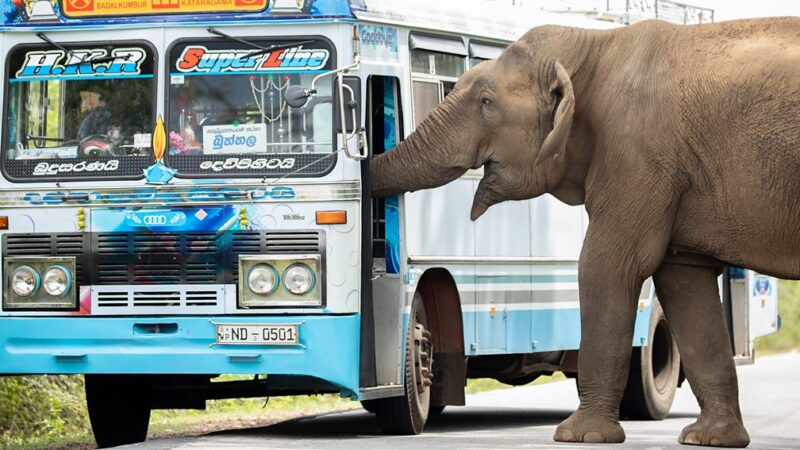
The traditional road toll has taken an unexpected turn in Sri Lanka. On the Buttala-Kataragama road, a 40-year-old wild elephant named Raja has appointed himself as the area’s most unconventional and most beloved tax collector. Instead of demanding cash, this majestic pachyderm stops vehicles and requests a “food tax” in the form of bananas, sugarcane, and other fruits before allowing drivers to continue their journey. And the internet can’t get enough.
The viral video, shared by BBC Earth on Instagram, racked up over 16 million views in under 24 hours. With the caption “It’s Raja’s world, we’re just living in it,” the clip captured the gentle giant calmly using his trunk to poke drivers for snacks a hustle that has delighted millions worldwide.
Raja elephant, tax collector elephant,
The Making of a Tax Collector
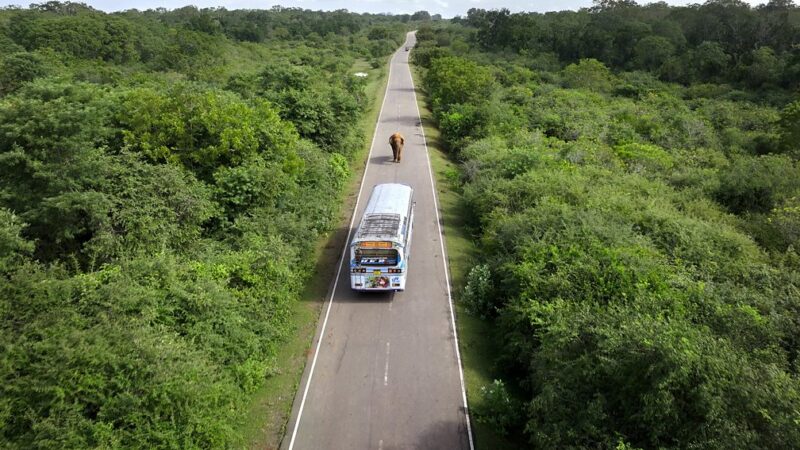
Raja, whose name means “king” in Sinhala, has perfected his roadside routine. He positions himself along the Buttala-Kataragama road, a major linkway connecting Sri Lanka’s west coast with the southeast coast. When a promising vehicle approaches particularly larger vehicles and buses, which have the most to offer the steps onto the road. At a whopping four tonnes, his sizable bulk is enough to bring traffic to a halt.
Once the vehicle stops, Raja gently pokes his trunk through a door or window, calmly and patiently asking for food. A negotiation may ensue, but the insistent tax collector always wins. Only when his “food tax” is paid does he allow travellers to continue their journey.
What started as a desperate search for food has now evolved into a full-fledged tradition. Locals and regular commuters prepare for encounters with Raja by stocking up on fruits from wayside stalls along the road from Lunugamvehera to Sella Kataragama. Many motorists now buy bananas in advance, anticipating an encounter with the famous elephant.
A Viral Sensation
The video spread like wildfire across social media platforms, racking up over 16 million views in less than 24 hours. The comments section flooded with netizens who couldn’t get enough of the cuteness and humour.
Social media users gave their seal of approval to Raja to continue his bureaucratic duties:
“This is where and how I want my tax to be paid.”
“For people saying it’s dangerous, I mean who’s gonna stop him? It’s called hustle!”
“These elephants are true businessmen. Look how patiently he’s dealing with the drivers.”
“We got corruption in Animal Government.”
“GST = Gajraj Service Tax.”
One user captured the sentiment perfectly: “The only corruption that’s acceptable”.
A Star of Asia
Raja’s celebrity status extends beyond social media. He unknowingly became a star of Asia, a BBC documentary series presented by Sir David Attenborough that explores the continent’s incredible wildlife. While filming in Sri Lanka, the production team came across Raja and his routine.
The researchers were impressed by his punctuality and professionalism. “Raja was a magnificent 40-year-old elephant who has been hustling by the side of the road longer than any other elephant on this highway,” commented Seth Daood, a researcher for the series. “In fact, he had laid down the blueprint for how to get food from vehicles on the road”.
The team arrived at the roadside at 6 am sharp every day, and every day Raja was there to greet them, ready for another busy day of stopping cars and collecting snacks. His dedication to his self-appointed duties is unmatched.
Raja elephant, tax collector elephant,
Why Sri Lankans Embrace Raja
Despite causing occasional traffic congestion, locals treat Raja with profound respect. The Buttala-Kataragama road cuts through wild, untamed jungle, and the elephants who roam there are considered part of the natural landscape. Raja is seen as a kind figure, and his “tax collection” is viewed as a fair practice.
This deep respect stems from religious and cultural reverence for elephants. Approximately 70 per cent of Sri Lanka’s population is Buddhist. According to Buddhist tradition, before Buddha was born, his mother dreamt of a great white elephant. It is believed that Buddha himself may have lived as an elephant in some of his previous lives.
Similarly, those belonging to the Hindu faith in Sri Lanka worship Lord Ganesha, the elephant-headed god. For both communities, elephants are sacred beings deserving of admiration and protection.
Raja Is Not Alone
Raja is not the only elephant that stops vehicles on this stretch of road, but he is the original pachyderm tax collector. He has inspired younger elephants to adopt similar tactics, though Raja remains the most patient and gentle of them all. While some younger elephants can occasionally become aggressive, Raja’s calm demeanour sets him apart. He understands that getting angry will only drive people away, so he relies on patience and persistence instead.
A Whimsical Reminder of Coexistence
Raja’s story is a whimsical reminder of the coexistence between humans and wildlife in Sri Lanka. What began as an elephant’s search for food has turned into a charming interaction that leaves a lasting impression on all who pass through. In a world increasingly disconnected from nature, Raja’s daily routine brings joy, laughter, and a sense of wonder to thousands of travellers and millions of online viewers.
He has turned a mundane commute into an adventure, a simple road into a stage, and himself into a global icon. Raja doesn’t collect taxes in the traditional sense he collects smiles, laughs, and a whole lot of bananas.
Long may he reign.
Contact Us Today!
Ready to plan your dream group tour in Sri Lanka? Let us help you craft the perfect itinerary for a truly magical experience.
👉 Contact Rediscover Sri Lanka now to explore our Sri Lanka group tour packages, designed for families, solo travelers, and adventure seekers alike.
Reviews and Recommendations
Don’t just take our word for it! Check out these incredible reviews from past travelers:
Tripadvisor: Read about other travelers’ experiences on Tripadvisor, where Rediscover Sri Lanka has garnered rave reviews for its safe and well-organized tours.
Trustpilot: Visit Trustpilot for more real-life testimonials from travelers who have fallen in love with Sri Lanka’s beauty and hospitality.
Everything you need to know about traveling in Sri Lanka
What is the best time to visit Sri Lanka?
The best time to visit Sri Lanka depends on which region you plan to explore. The west and south coasts (including Colombo, Galle, and Mirissa) are best from December to March, while the east coast (including Trincomalee and Arugam Bay) is ideal from April to September. The central highlands (Kandy, Nuwara Eliya, Ella) are pleasant year-round with cooler temperatures.
How many days are enough for a Sri Lanka tour?
For a comprehensive tour covering major highlights, we recommend 10-14 days. This allows you to explore the Cultural Triangle (Kandy, Sigiriya, Polonnaruwa), the hill country (Nuwara Eliya, Ella), and the beautiful beaches (Mirissa, Bentota) comfortably. A 7-day itinerary can cover the essentials, while 21+ days allows for a deeper exploration of the island's hidden gems.
Do I need a visa for Sri Lanka?
Yes, most nationalities require an Electronic Travel Authorization (ETA) to enter Sri Lanka. You can apply online through the official Sri Lanka ETA website before your trip or obtain a visa on arrival at the Bandaranaike International Airport (CMB). The ETA is valid for 30 days and can be extended up to 90 days. Citizens of Singapore, Maldives, and Seychelles are visa-exempt for up to 30 days.
Is Sri Lanka safe for tourists?
Yes, Sri Lanka is generally safe for tourists. The country has a thriving tourism industry with excellent infrastructure. However, like any destination, we recommend taking standard precautions: avoid isolated areas at night, keep valuables secure, and follow local advice. The Sri Lankan people are known for their hospitality and friendliness towards visitors.
What is the currency in Sri Lanka and how much should I budget?
The currency in Sri Lanka is the Sri Lankan Rupee (LKR). As a budget traveler, you can expect to spend around $30-50 USD per day, mid-range travelers $50-100 USD per day, and luxury travelers $100-300+ USD per day. ATMs are widely available in cities and tourist areas, and credit cards are accepted at most hotels and upscale restaurants.
What vaccinations do I need for Sri Lanka?
The CDC and WHO recommend the following vaccinations for Sri Lanka: Hepatitis A, Hepatitis B, Typhoid, Tetanus, and Japanese Encephalitis (if spending significant time in rural areas). Malaria is not a major risk in most tourist areas, but it's recommended to consult with your doctor about antimalarial medication if visiting rural areas. Dengue fever is present, so use mosquito repellent and wear long sleeves.
Is Sri Lanka safe for solo travelers?
Absolutely! Sri Lanka is one of the safest destinations for solo travelers in Asia. The locals are incredibly friendly and helpful, the tourism infrastructure is well-developed, and there's a vibrant community of solo travelers. We recommend staying in hostels or guesthouses with good reviews, joining group tours for certain activities, and always trusting your instincts.
What are the best places for solo travelers in Sri Lanka?
For solo travelers, we recommend: Sigiriya (Lion Rock) for breathtaking views, Kandy for cultural immersion, Ella for stunning hikes and social hostels, Mirissa for beach vibes and whale watching, Galle for colonial charm, and Yala National Park for wildlife safaris. The hill country train journey from Kandy to Ella is a must-do!
Are there group tours for solo travelers in Sri Lanka?
Yes! We offer small-group tours specifically designed for solo travelers with max 12 people. These tours are perfect for meeting like-minded travelers, with no single supplement on select dates. Our group tours include private rooms, local guides, and a mix of cultural, wildlife, and beach experiences.
What is the single supplement fee for solo travelers?
For our solo-friendly group tours, we offer select departures with no single supplement. On other tours, the single supplement typically ranges from $200-400 depending on the tour length and accommodation standards. We always recommend checking the specific tour page for the most accurate pricing.
Can solo travelers join private tours?
Absolutely! Many solo travelers prefer private tours for maximum flexibility. Our private chauffeur guide tours are perfect for solo travelers who want to explore at their own pace. You'll have a dedicated vehicle and an English-speaking guide who can customize the itinerary to your interests.
Is it easy to meet other travelers in Sri Lanka?
Yes, Sri Lanka has a thriving backpacker and solo traveler community. Hostels in Ella, Kandy, and Mirissa are particularly social. You'll also find many cafes, restaurants, and tour operators that cater to solo travelers. Joining group activities like cooking classes, safari tours, or train rides is a great way to meet people.
What are the must-visit places in Sri Lanka?
Sri Lanka's must-visit destinations include: the ancient city of Sigiriya (Lion Rock), the sacred Temple of the Tooth in Kandy, the historic Galle Fort, the scenic hill country train journey from Kandy to Ella, the beautiful beaches of Mirissa and Unawatuna, the wildlife-rich Yala National Park (home to leopards), the cultural capital of Anuradhapura, and the stunning Adam's Peak for sunrise views.
Which beaches are best in Sri Lanka?
The best beaches in Sri Lanka include: Mirissa for whale watching and relaxed vibes, Unawatuna for swimming and snorkeling, Bentota for water sports, Arugam Bay for surfing (east coast, best April-September), and Nilaveli for pristine white sands and coral reefs. Each beach offers a unique experience depending on your preferences.
What is the Cultural Triangle in Sri Lanka?
The Cultural Triangle refers to the area in central Sri Lanka that contains five UNESCO World Heritage sites: the ancient cities of Anuradhapura and Polonnaruwa, the rock fortress of Sigiriya, the sacred city of Kandy, and the cave temples of Dambulla. This region is the heart of Sri Lanka's rich cultural and historical heritage.
Is the train from Kandy to Ella worth it?
Absolutely! The train journey from Kandy to Ella is considered one of the most scenic train rides in the world. You'll pass through lush tea plantations, misty mountains, and picturesque villages. The journey takes about 6-7 hours and we recommend booking a reserved seat in advance, especially during peak season.
What wildlife can I see in Sri Lanka?
Sri Lanka is home to incredible wildlife including: elephants (at Minneriya and Udawalawe), leopards (Yala National Park), blue whales and sperm whales (Mirissa), sloth bears (Wilpattu), over 400 bird species, crocodiles, and many species of monkeys. The country is a paradise for nature and wildlife enthusiasts.
What is the local food like in Sri Lanka?
Sri Lankan cuisine is a flavorful blend of spices, coconut, and fresh ingredients. Must-try dishes include: Rice and Curry (the national dish with various vegetable and meat curries), Kottu Roti (chopped roti with vegetables and meat), Hoppers (bowl-shaped pancake with an egg), String Hoppers (steamed rice noodles), Lamprais (rice and curry baked in a banana leaf), and fresh seafood along the coast.
Is English widely spoken in Sri Lanka?
Yes, English is widely spoken in Sri Lanka, especially in tourist areas, hotels, and restaurants. It is taught as a second language in schools and is commonly used in business and government. You'll find that most Sri Lankans can communicate in English, making it easy for international travelers to navigate the country.
What are the cultural etiquettes in Sri Lanka?
When visiting temples, dress modestly covering shoulders and knees. Remove shoes before entering temples and homes. The traditional greeting is "Ayubowan" (Sinhalese) or "Vanakkam" (Tamil). Always use your right hand for eating and giving/receiving items. It's polite to ask before taking photos of people.
What are the main festivals in Sri Lanka?
Major festivals include: Sinhala and Tamil New Year (April), Vesak (May - Buddhist festival of lights), Kandy Esala Perahera (July/August - spectacular procession), Deepavali (October/November - Hindu festival of lights), and Christmas (December). These festivals offer unique cultural experiences for visitors.
What is the best way to get around Sri Lanka?
The best ways to get around Sri Lanka include: the scenic train network (especially the Kandy to Ella route), private drivers for comfort and flexibility, local buses for budget travel, tuk-tuks for short distances, and domestic flights for time-saving between regions. The train journey through the hill country is considered one of the most beautiful train rides in the world.
What should I pack for a trip to Sri Lanka?
Pack light, breathable cotton clothing suitable for tropical weather. Essentials include: comfortable walking shoes, swimwear, sun protection (hat, sunglasses, high SPF sunscreen), insect repellent, a rain jacket (monsoon season), light layers for the hill country, modest clothing for temple visits (covering shoulders and knees), a power adapter (230V, Type D or G plugs), and a reusable water bottle.
Is tap water safe to drink in Sri Lanka?
It's recommended to drink bottled water in Sri Lanka. Most hotels provide complimentary bottled water, and it's widely available at shops. Avoid tap water, ice from street vendors, and raw food from street stalls. For eco-conscious travelers, consider bringing a reusable water bottle with a built-in filter.
What is the internet and mobile coverage like in Sri Lanka?
Sri Lanka has excellent mobile and internet coverage, especially in urban areas and tourist destinations. You can purchase a local SIM card at the airport (Dialog and Mobitel are popular) with affordable data packages. Most hotels, cafes, and restaurants offer free Wi-Fi. Remote areas may have weaker signals.
Do I need travel insurance for Sri Lanka?
Yes, travel insurance is highly recommended for your trip to Sri Lanka. It should cover medical expenses, trip cancellation, lost luggage, and emergency evacuation. Some activities like scuba diving, surfing, and hiking may require additional coverage. Always read the policy carefully before purchasing.
Can I use my credit card in Sri Lanka?
Yes, credit cards (Visa and Mastercard) are widely accepted at hotels, upscale restaurants, and larger shops in cities. However, it's recommended to carry cash (Sri Lankan Rupees) for local markets, street food, small shops, and remote areas. ATMs are available in cities and major tourist towns.
What is the tipping culture in Sri Lanka?
Tipping is appreciated but not mandatory in Sri Lanka. For restaurants, a 10% service charge is often included. If not, leaving 5-10% is customary. For tour guides and drivers, $5-10 per day is standard for good service. For hotel staff, $1-2 per bag or per day is appropriate.
Is Sri Lanka good for surfing?
Yes, Sri Lanka is a fantastic surfing destination. The east coast (Arugam Bay) offers world-class waves from April to September, while the south coast (Hikkaduwa, Weligama, Mirissa) has great waves from November to April. There are surf schools for beginners and challenging breaks for experienced surfers.
What are the best hikes in Sri Lanka?
The best hikes include: Adam's Peak (Sri Pada) for sunrise views (season December-May), Ella Rock for panoramic views, Little Adam's Peak for an easier hike, the Knuckles Mountain Range for challenging treks, and Horton Plains National Park for the famous World's End cliff.
Can I see whales in Sri Lanka?
Absolutely! Mirissa on the south coast is one of the best places in the world for whale watching. From November to April, you can spot blue whales, sperm whales, and dolphins. The season peaks from December to March. Many tour operators offer half-day whale watching trips with experienced guides.
What are the best souvenirs to buy in Sri Lanka?
Popular souvenirs include: Ceylon tea (the world's finest), spices (cinnamon, cardamom, cloves), hand-carved masks from the south coast, batik fabrics, gemstones (sapphires), wooden crafts, traditional jewelry, and local art. Visit local markets and craft centers for authentic, high-quality products.
How can I support sustainable tourism in Sri Lanka?
Support sustainable tourism by: choosing eco-friendly accommodations, using reusable water bottles, avoiding single-use plastics, respecting wildlife (do not feed animals), buying local products, using local guides, participating in community-based tourism, and reducing your carbon footprint by using trains instead of private vehicles where possible.
🍪 We value your privacy
We use cookies to improve your browsing experience, analyze website traffic, and support essential website functions.
By clicking “Accept All”, you consent to our use of cookies.
Read our Cookie Policy.