Includes: Private rooms · Group activities · Local guidesPerfect for solo travelers - no single supplement on select dates24/7 support · Flexible booking · Free cancellation
We Didn’t See a Single Elephant, And It Was the Best Safari of My Life
We Didn’t See a Single Elephant, And It Was the Best Safari of My Life
Everything You Need to Know About We Didn’t See a Single Elephant, And It Was the Best Safari of My Life
From booking your tailor-made Sri Lanka package to understanding driver guide costs, wildlife safaris, and cultural etiquette - find all the answers from Sri Lanka's boutique DMC.
We Didn’t See a Single Elephant… And It Was the Best Safari of My Life
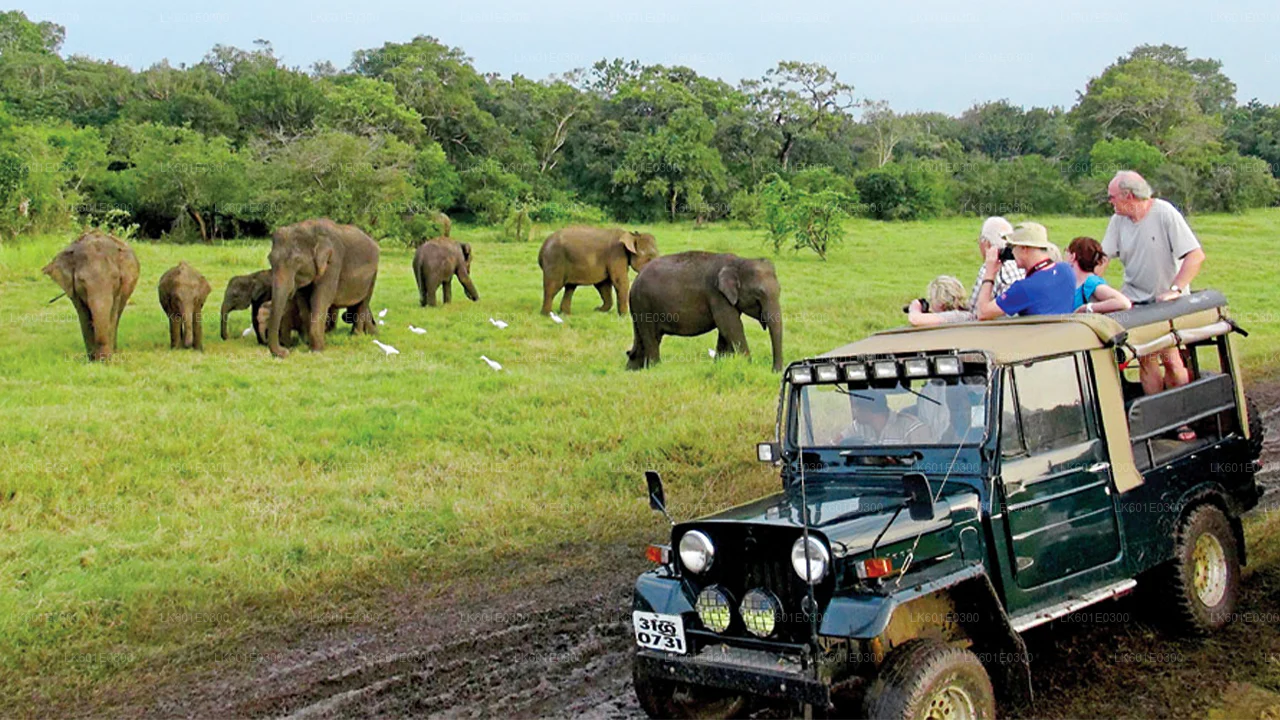
We were an hour into our safari at Udawalawe National Park, the place famous for guaranteeing elephant sightings. Our driver, a wiry man with decades of experience tracking wildlife, had already pointed out a majestic tusker and a playful baby elephant splashing in a waterhole. We were thrilled, already composing our Instagram captions in our heads. Then, we turned a corner, and everything changed.
A massive bull elephant, easily the largest we had ever seen, was blocking the road. He wasn’t aggressive, just… there. A four-tonne wall of muscle, wrinkles, and wisdom. He stared at us with what I can only describe as ancient indifference. Our driver killed the engine. The silence was absolute. For ten minutes, we just sat there, locked in a silent staring contest with a creature that had been roaming these lands long before our great-grandparents were born.
We saw plenty of elephants that day. But it wasn’t a single elephant that made this the best safari of my life. It was the unexpected moments – the feeling of being truly small in the face of nature’s grandeur.
Sri Lanka offers some of the most incredible safari experiences in the world. Here’s everything you need to know to plan your own unforgettable wildlife adventure.
The Majestic Safari Parks of Sri Lanka
1. Yala National Park – The Leopard Capital
Yala National Park is the crown jewel of Sri Lankan safaris. It’s famous for having one of the world’s highest densities of leopards. Covering nearly 979 square kilometers, the park is divided into five blocks. Block 1 is the most renowned for leopard sightings. Early morning and late afternoon safaris increase your chances of spotting these elusive beasts. The park is also home to elephants, sloth bears, spotted deer, sambar, water buffalo, crocodiles, and mongoose, while birdwatchers will have the chance to spot over 200 species.
Best for: Leopards, sloth bears, elephants
Best Time: February to June (peak leopard sightings in April–June)
2. Udawalawe National Park – Elephant Paradise
This is the park where my story began. Udawalawe National Park is the best place in Sri Lanka to see elephants year-round. The expansive grasslands stretch around a central reservoir, creating one of Sri Lanka’s most reliable destinations for seeing elephants in their natural habitat. The park’s relatively flat terrain makes it a great choice for first-time safari-goers.
Best for: Guaranteed elephant herds
Best Time: Year-round (never closes)
3. Minneriya National Park – The Great Elephant Gathering
Minneriya National Park hosts the “Gathering” – one of the largest elephant congregations in the world. From July to October, over 300 elephants converge around the ancient Minneriya Tank. The scale of elephants gathered at the ancient tank is unmatched in Asia.
Best for: Massive elephant gatherings
Best Time: August to October
4. Wilpattu National Park – The Untamed Wilderness
Wilpattu National Park is Sri Lanka’s largest national park. Known for its natural water holes (locally called “willus”), it offers a quieter, more peaceful safari experience. Many experienced travelers now prefer Wilpattu over Yala for the solitude and natural animal behavior.
Best for: Peaceful leopard and elephant sightings
Best Time: February to May
5. Kumana National Park – The Bird Sanctuary
Kumana National Park is a birdwatcher’s paradise. It’s less crowded than Yala and offers sightings of leopards, elephants, and a rich variety of bird species.
Best for: Birds and quiet leopard sightings
Best Time: April to July
6. Bundala National Park – The Flamingo Haven
Bundala National Park is a RAMSAR wetland, famous for its flamingos and migratory birds. It’s a paradise for bird lovers.
Best for: Birds and flamingos
Best Time: November to March
7. Gal Oya National Park – The Boat Safari Experience
Gal Oya National Park is unique – it’s the only national park in Sri Lanka where boat safaris are possible. You can witness the extraordinary sight of elephants swimming between islands in the Senanayake Samudra reservoir.
Best for: Unique boat safaris and swimming elephants
Best Time: March to July
8. Wasgamuwa National Park – Off the Beaten Path
Wasgamuwa National Park offers a peaceful wildlife experience. See wild elephants, spotted deer, monkeys, crocodiles, and a wide range of bird species.
Best for: Quiet elephant sightings
Best Time: November to May
9. Horton Plains National Park – The Highland Trek
Horton Plains National Park offers a unique highland experience with its cloud forests and grasslands. The famous “World’s End” – an 880-meter sheer cliff – offers breathtaking views.
Best for: Hiking and scenic views
Best Time: December to March
10. Sinharaja Forest Reserve – The Rainforest Jewel
Sinharaja Forest Reserve is a UNESCO Biosphere Reserve and a biodiversity hotspot. It’s home to 20 endemic bird species.
Best for: Endemic birds and rainforest experiences
Best Time: December to March
11. Kaudulla National Park – The Elephant Alternative
Kaudulla National Park is a dry evergreen forest set around the ancient Kaudulla Reservoir. Like Minneriya, it hosts hundreds of elephants during the dry season.
Best for: Elephants and birdwatching
Best Time: August to October
12. Hurulu Eco Park – The Private Sanctuary
Hurulu Eco Park is another excellent spot in the Cultural Triangle for elephant viewing, especially during the dry season.
Best for: Elephants and private safaris
Best Time: August to October
13. Lunugamvehera National Park – The Yala Extension
Lunugamvehera National Park is often considered an extension of Yala (Blocks 5 & 6). It offers a less crowded alternative for spotting leopards, elephants, and sloth bears.
Best for: Leopards and fewer crowds
Best Time: February to June
14. Maduru Oya National Park – The Dry Zone Gem
Maduru Oya National Park is located in the dry zone and offers sightings of Asian elephants, deer, wild boar, and a variety of bird species.
Best for: Elephants and diverse habitats
Best Time: May to September
Bundala National Park Safari
How to Choose the Right Safari Park
If You Want…
Go To…
Leopards
Yala National Park
Guaranteed Elephants
Udawalawe National Park
The Elephant Gathering
Minneriya National Park
Peace & Solitude
Wilpattu National Park
Birdwatching
Kumana or Bundala National Park
Unique Boat Safari
Gal Oya National Park
Rainforest Experience
Sinharaja Forest Reserve
Highland Trekking
Horton Plains National Park
Safari Tips for Your Sri Lanka Adventure
Go Early: Early morning safaris (starting at 6:00 AM) offer the best wildlife viewing
Choose the Right Season: Plan your safari around the dry season for the best visibility
Hire a Good Guide: An experienced driver-guide makes all the difference
Pack Essentials: Binoculars, a good camera, sunscreen, and insect repellent
Be Patient: Wildlife is unpredictable – that’s what makes it magical
Conclusion: The Real Magic of a Safari
That day in Udawalawe, we did see elephants. We saw dozens of them. But that wasn’t the point. The real magic of a safari isn’t about ticking off a checklist of animals. It’s about the unexpected moments – the silence of the jungle, the sudden appearance of a majestic creature, the feeling of being part of something larger than yourself.
Sri Lanka’s national parks offer some of the most incredible wildlife experiences on the planet. Whether you’re tracking leopards in Yala, watching the Elephant Gathering in Minneriya, or taking a boat safari in Gal Oya, you’re guaranteed to create memories that will last a lifetime.
Book your Sri Lanka safari today – and discover the wild heart of the Pearl of the Indian Ocean.
Contact Us Today!
Ready to plan your dream group tour in Sri Lanka? Let us help you craft the perfect itinerary for a truly magical experience.
👉 Contact Rediscover Sri Lanka now to explore our Sri Lanka group tour packages, designed for families, solo travelers, and adventure seekers alike.
Reviews and Recommendations
Don’t just take our word for it! Check out these incredible reviews from past travelers:
Tripadvisor: Read about other travelers’ experiences on Tripadvisor, where Rediscover Sri Lanka has garnered rave reviews for its safe and well-organized tours.
Trustpilot: Visit Trustpilot for more real-life testimonials from travelers who have fallen in love with Sri Lanka’s beauty and hospitality.
Everything you need to know about traveling in Sri Lanka
What is the best time to visit Sri Lanka?
The best time to visit Sri Lanka depends on which region you plan to explore. The west and south coasts (including Colombo, Galle, and Mirissa) are best from December to March, while the east coast (including Trincomalee and Arugam Bay) is ideal from April to September. The central highlands (Kandy, Nuwara Eliya, Ella) are pleasant year-round with cooler temperatures.
How many days are enough for a Sri Lanka tour?
For a comprehensive tour covering major highlights, we recommend 10-14 days. This allows you to explore the Cultural Triangle (Kandy, Sigiriya, Polonnaruwa), the hill country (Nuwara Eliya, Ella), and the beautiful beaches (Mirissa, Bentota) comfortably. A 7-day itinerary can cover the essentials, while 21+ days allows for a deeper exploration of the island's hidden gems.
Do I need a visa for Sri Lanka?
Yes, most nationalities require an Electronic Travel Authorization (ETA) to enter Sri Lanka. You can apply online through the official Sri Lanka ETA website before your trip or obtain a visa on arrival at the Bandaranaike International Airport (CMB). The ETA is valid for 30 days and can be extended up to 90 days. Citizens of Singapore, Maldives, and Seychelles are visa-exempt for up to 30 days.
Is Sri Lanka safe for tourists?
Yes, Sri Lanka is generally safe for tourists. The country has a thriving tourism industry with excellent infrastructure. However, like any destination, we recommend taking standard precautions: avoid isolated areas at night, keep valuables secure, and follow local advice. The Sri Lankan people are known for their hospitality and friendliness towards visitors.
What is the currency in Sri Lanka and how much should I budget?
The currency in Sri Lanka is the Sri Lankan Rupee (LKR). As a budget traveler, you can expect to spend around $30-50 USD per day, mid-range travelers $50-100 USD per day, and luxury travelers $100-300+ USD per day. ATMs are widely available in cities and tourist areas, and credit cards are accepted at most hotels and upscale restaurants.
What vaccinations do I need for Sri Lanka?
The CDC and WHO recommend the following vaccinations for Sri Lanka: Hepatitis A, Hepatitis B, Typhoid, Tetanus, and Japanese Encephalitis (if spending significant time in rural areas). Malaria is not a major risk in most tourist areas, but it's recommended to consult with your doctor about antimalarial medication if visiting rural areas. Dengue fever is present, so use mosquito repellent and wear long sleeves.
Is Sri Lanka safe for solo travelers?
Absolutely! Sri Lanka is one of the safest destinations for solo travelers in Asia. The locals are incredibly friendly and helpful, the tourism infrastructure is well-developed, and there's a vibrant community of solo travelers. We recommend staying in hostels or guesthouses with good reviews, joining group tours for certain activities, and always trusting your instincts.
What are the best places for solo travelers in Sri Lanka?
For solo travelers, we recommend: Sigiriya (Lion Rock) for breathtaking views, Kandy for cultural immersion, Ella for stunning hikes and social hostels, Mirissa for beach vibes and whale watching, Galle for colonial charm, and Yala National Park for wildlife safaris. The hill country train journey from Kandy to Ella is a must-do!
Are there group tours for solo travelers in Sri Lanka?
Yes! We offer small-group tours specifically designed for solo travelers with max 12 people. These tours are perfect for meeting like-minded travelers, with no single supplement on select dates. Our group tours include private rooms, local guides, and a mix of cultural, wildlife, and beach experiences.
What is the single supplement fee for solo travelers?
For our solo-friendly group tours, we offer select departures with no single supplement. On other tours, the single supplement typically ranges from $200-400 depending on the tour length and accommodation standards. We always recommend checking the specific tour page for the most accurate pricing.
Can solo travelers join private tours?
Absolutely! Many solo travelers prefer private tours for maximum flexibility. Our private chauffeur guide tours are perfect for solo travelers who want to explore at their own pace. You'll have a dedicated vehicle and an English-speaking guide who can customize the itinerary to your interests.
Is it easy to meet other travelers in Sri Lanka?
Yes, Sri Lanka has a thriving backpacker and solo traveler community. Hostels in Ella, Kandy, and Mirissa are particularly social. You'll also find many cafes, restaurants, and tour operators that cater to solo travelers. Joining group activities like cooking classes, safari tours, or train rides is a great way to meet people.
What are the must-visit places in Sri Lanka?
Sri Lanka's must-visit destinations include: the ancient city of Sigiriya (Lion Rock), the sacred Temple of the Tooth in Kandy, the historic Galle Fort, the scenic hill country train journey from Kandy to Ella, the beautiful beaches of Mirissa and Unawatuna, the wildlife-rich Yala National Park (home to leopards), the cultural capital of Anuradhapura, and the stunning Adam's Peak for sunrise views.
Which beaches are best in Sri Lanka?
The best beaches in Sri Lanka include: Mirissa for whale watching and relaxed vibes, Unawatuna for swimming and snorkeling, Bentota for water sports, Arugam Bay for surfing (east coast, best April-September), and Nilaveli for pristine white sands and coral reefs. Each beach offers a unique experience depending on your preferences.
What is the Cultural Triangle in Sri Lanka?
The Cultural Triangle refers to the area in central Sri Lanka that contains five UNESCO World Heritage sites: the ancient cities of Anuradhapura and Polonnaruwa, the rock fortress of Sigiriya, the sacred city of Kandy, and the cave temples of Dambulla. This region is the heart of Sri Lanka's rich cultural and historical heritage.
Is the train from Kandy to Ella worth it?
Absolutely! The train journey from Kandy to Ella is considered one of the most scenic train rides in the world. You'll pass through lush tea plantations, misty mountains, and picturesque villages. The journey takes about 6-7 hours and we recommend booking a reserved seat in advance, especially during peak season.
What wildlife can I see in Sri Lanka?
Sri Lanka is home to incredible wildlife including: elephants (at Minneriya and Udawalawe), leopards (Yala National Park), blue whales and sperm whales (Mirissa), sloth bears (Wilpattu), over 400 bird species, crocodiles, and many species of monkeys. The country is a paradise for nature and wildlife enthusiasts.
What is the local food like in Sri Lanka?
Sri Lankan cuisine is a flavorful blend of spices, coconut, and fresh ingredients. Must-try dishes include: Rice and Curry (the national dish with various vegetable and meat curries), Kottu Roti (chopped roti with vegetables and meat), Hoppers (bowl-shaped pancake with an egg), String Hoppers (steamed rice noodles), Lamprais (rice and curry baked in a banana leaf), and fresh seafood along the coast.
Is English widely spoken in Sri Lanka?
Yes, English is widely spoken in Sri Lanka, especially in tourist areas, hotels, and restaurants. It is taught as a second language in schools and is commonly used in business and government. You'll find that most Sri Lankans can communicate in English, making it easy for international travelers to navigate the country.
What are the cultural etiquettes in Sri Lanka?
When visiting temples, dress modestly covering shoulders and knees. Remove shoes before entering temples and homes. The traditional greeting is "Ayubowan" (Sinhalese) or "Vanakkam" (Tamil). Always use your right hand for eating and giving/receiving items. It's polite to ask before taking photos of people.
What are the main festivals in Sri Lanka?
Major festivals include: Sinhala and Tamil New Year (April), Vesak (May - Buddhist festival of lights), Kandy Esala Perahera (July/August - spectacular procession), Deepavali (October/November - Hindu festival of lights), and Christmas (December). These festivals offer unique cultural experiences for visitors.
What is the best way to get around Sri Lanka?
The best ways to get around Sri Lanka include: the scenic train network (especially the Kandy to Ella route), private drivers for comfort and flexibility, local buses for budget travel, tuk-tuks for short distances, and domestic flights for time-saving between regions. The train journey through the hill country is considered one of the most beautiful train rides in the world.
What should I pack for a trip to Sri Lanka?
Pack light, breathable cotton clothing suitable for tropical weather. Essentials include: comfortable walking shoes, swimwear, sun protection (hat, sunglasses, high SPF sunscreen), insect repellent, a rain jacket (monsoon season), light layers for the hill country, modest clothing for temple visits (covering shoulders and knees), a power adapter (230V, Type D or G plugs), and a reusable water bottle.
Is tap water safe to drink in Sri Lanka?
It's recommended to drink bottled water in Sri Lanka. Most hotels provide complimentary bottled water, and it's widely available at shops. Avoid tap water, ice from street vendors, and raw food from street stalls. For eco-conscious travelers, consider bringing a reusable water bottle with a built-in filter.
What is the internet and mobile coverage like in Sri Lanka?
Sri Lanka has excellent mobile and internet coverage, especially in urban areas and tourist destinations. You can purchase a local SIM card at the airport (Dialog and Mobitel are popular) with affordable data packages. Most hotels, cafes, and restaurants offer free Wi-Fi. Remote areas may have weaker signals.
Do I need travel insurance for Sri Lanka?
Yes, travel insurance is highly recommended for your trip to Sri Lanka. It should cover medical expenses, trip cancellation, lost luggage, and emergency evacuation. Some activities like scuba diving, surfing, and hiking may require additional coverage. Always read the policy carefully before purchasing.
Can I use my credit card in Sri Lanka?
Yes, credit cards (Visa and Mastercard) are widely accepted at hotels, upscale restaurants, and larger shops in cities. However, it's recommended to carry cash (Sri Lankan Rupees) for local markets, street food, small shops, and remote areas. ATMs are available in cities and major tourist towns.
What is the tipping culture in Sri Lanka?
Tipping is appreciated but not mandatory in Sri Lanka. For restaurants, a 10% service charge is often included. If not, leaving 5-10% is customary. For tour guides and drivers, $5-10 per day is standard for good service. For hotel staff, $1-2 per bag or per day is appropriate.
Is Sri Lanka good for surfing?
Yes, Sri Lanka is a fantastic surfing destination. The east coast (Arugam Bay) offers world-class waves from April to September, while the south coast (Hikkaduwa, Weligama, Mirissa) has great waves from November to April. There are surf schools for beginners and challenging breaks for experienced surfers.
What are the best hikes in Sri Lanka?
The best hikes include: Adam's Peak (Sri Pada) for sunrise views (season December-May), Ella Rock for panoramic views, Little Adam's Peak for an easier hike, the Knuckles Mountain Range for challenging treks, and Horton Plains National Park for the famous World's End cliff.
Can I see whales in Sri Lanka?
Absolutely! Mirissa on the south coast is one of the best places in the world for whale watching. From November to April, you can spot blue whales, sperm whales, and dolphins. The season peaks from December to March. Many tour operators offer half-day whale watching trips with experienced guides.
What are the best souvenirs to buy in Sri Lanka?
Popular souvenirs include: Ceylon tea (the world's finest), spices (cinnamon, cardamom, cloves), hand-carved masks from the south coast, batik fabrics, gemstones (sapphires), wooden crafts, traditional jewelry, and local art. Visit local markets and craft centers for authentic, high-quality products.
How can I support sustainable tourism in Sri Lanka?
Support sustainable tourism by: choosing eco-friendly accommodations, using reusable water bottles, avoiding single-use plastics, respecting wildlife (do not feed animals), buying local products, using local guides, participating in community-based tourism, and reducing your carbon footprint by using trains instead of private vehicles where possible.
🍪 We value your privacy
We use cookies to improve your browsing experience, analyze website traffic, and support essential website functions.
By clicking “Accept All”, you consent to our use of cookies.
Read our Cookie Policy.