
Your Sri Lanka Solo Adventure Awaits
Meet like-minded travelers · Explore ancient wonders · Create unforgettable memories
Geoffrey Bawa Sri Lanka Tour Hotels: Where to Stay in His Masterpieces
Geoffrey Bawa Sri Lanka Tour Hotels: Where to Stay
The best way to appreciate Geoffrey Bawa’s “tropical modernism” is to sleep in the hotels he designed. As one travel writer put it, “The best way to appreciate Bawa’s ‘tropical modernism’ is to sleep in the hotels he designed” . These aren’t museums they’re living, breathing spaces where you can experience his genius firsthand.
This guide covers every Bawa-designed hotel in Sri Lanka where you can actually stay with all the details you need to plan your architectural pilgrimage.
Heritance Kandalama Dambulla
The Masterpiece
Heritance Kandalama is widely considered Bawa’s most iconic hotel design and his most ambitious environmental statement .
The Design Story:
Bawa insisted the hotel be sited eleven kilometres southeast of Sigiriya, rather than adjacent, to protect the historic site and frame a distant view of the rock fortress across Kandalama Lake . The hotel was built without employing earth-moving machinery, ensuring native rock formations remained undisturbed . It clings to a steep rock outcrop, with seven storeys and 152 rooms unfolding over an 85-hectare estate .
The Arrival Sequence:
Guests enter through a cave-like porte cochère, winding through a confined tunnel-like passage with walls lined by boulders, before suddenly emerging into the open-air lobby with its panoramic view . This choreographed arrival was designed to dramatise the threshold between the entrance drive and the spectacular views .
Key Details:
-
Location: Dambulla, Central Province
-
Opened: 1994
-
Rooms: 152 total (137 rooms + 15 suites)
-
Signature Features: Open-air lobby, cave-like entrance, infinity pool overlooking Kandalama Tank, view of Sigiriya
-
Room Types: Luxury Panoramic rooms, Suites with jacuzzis and lake views
-
Best For: Architecture enthusiasts, wildlife lovers (the hotel is immersed in jungle vegetation)
-
Guest Experience: “Brilliant, intelligent architecture. I extended my stay because I liked it so much”
Heritance Ahungalla Ahungalla
The Beach Resort Pioneer
Originally named the Triton Hotel, this influential beach resort opened in 1981 and unfolds along the Colombo coast in a series of characteristically cooling, interconnected buildings .
The Design Story:
Bawa reportedly conceived the design on-site, at full scale, strolling the sand and making gestures for his team to log on paper . Despite the macro focus, every column and corner was meticulously accounted for . The hotel features gorgeous infinity pools that appear to merge with the crashing ocean “an infinity pool that perfectly mirrors the three blues pond, pool, and sea” .
Key Details:
-
Location: Ahungalla, Galle District
-
Opened: 1981
-
Rooms: 152 total (Deluxe, Premium Deluxe, Luxury, Suites)
-
Signature Features: Infinity pools merging with the ocean, interconnected buildings, meticulous column and corner detailing
-
Room Types: Deluxe, Premium Deluxe with panoramic ocean views, Luxury Rooms, Suites with private balconies
-
Best For: Beach lovers, design enthusiasts, families
-
Nearby Attractions: Madu Ganga river safaris, Galle Fort, Ambalangoda mask museum
Jetwing Lagoon Wellness Negombo
The Early Experiment
Jetwing Lagoon Wellness was one of Bawa’s early hotel projects and is conveniently close to the airport making it an ideal first-night stop .
The Design Story:
Originally known as “The Blue Lagoon,” this property was “a masterpiece originally envisioned in 1965 by legendary architect Geoffrey Bawa” and claims the title of being his first resort design project . The design represents Bawa’s early exploration of hotel design, where traditional Sri Lankan and Dutch Colonial influences began to fuse into his signature style .
Key Details:
-
Location: Thalahena, Negombo, Western Province
-
Original Vision: 1965
-
Signature Features: Sri Lanka’s longest hotel pool (100 metres) , semi-open air bathrooms, villas designed like connected small structures
-
Room Types: Deluxe, Bawa Room, Family rooms, Suites
-
Best For: First-night stays, architecture enthusiasts beginning their Bawa journey, wellness seekers
-
Guest Experience: “The semi-open air bathroom… perfectly embodies Bawa’s philosophy of organically integrating architecture with nature. This might just be the longest hotel pool I’ve ever seen!”
-
Note: Now an adults-only wellness sanctuary
Jetwing Lighthouse Galle
The Cliffside Drama
The Jetwing Lighthouse is a dramatic Bawa design perched on a hillock overlooking the Indian Ocean near Galle .
The Design Story:
This hotel exemplifies Bawa’s ability to respond to dramatic coastal topography, creating spaces that frame the ocean and rock formations. It was “a masterwork by the legendary Geoffrey Bawa, and the culmination of efforts by renowned talents such as Laki Senanayake and Ena de Silva” .
Key Details:
-
Location: Dadella, Galle, Southern Province
-
Signature Features: Cliffside setting, dramatic ocean views, beautifully designed bathrooms with sea views reflected through mirrors
-
Room Types: Luxury Rooms (Main Wing and Spa Wing), Themed Suites, Themed Suites with Plunge Pool
-
Best For: Design lovers exploring the south coast, couples, those wanting proximity to Galle Fort
-
Guest Experience: “A special highlight was the complimentary minibar… What I liked most was the beautifully designed bathroom, while relaxing in the tub, you can enjoy the sea view reflected through the mirror”
-
Nearby: Galle Fort (5-10 minutes away)
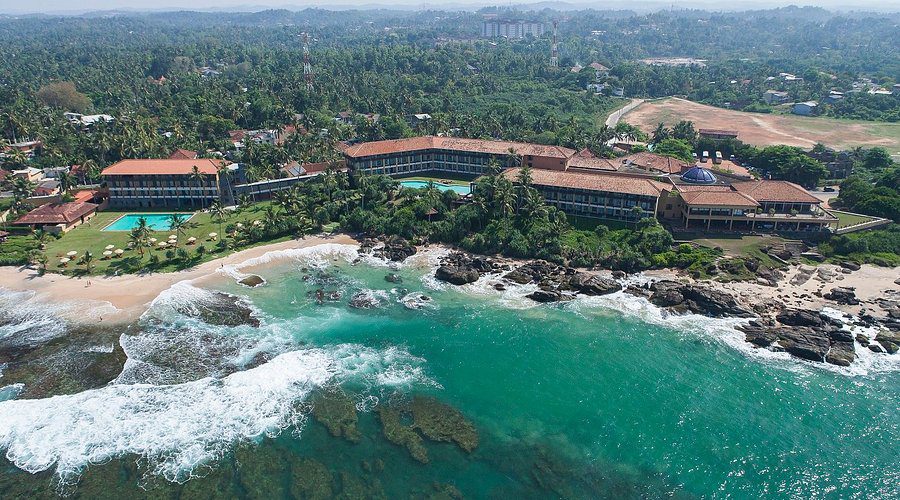
The Blue Water Hotel Wadduwa
The Final Masterwork
The Blue Water Hotel holds a special place in Bawa’s oeuvre it was his last hotel project and the last project he supervised on site before succumbing to illness .
The Design Story:
Completed in 1997-1998, the hotel was a collaboration between Bawa and Milroy Perera . For this design, Bawa returned to a simple rest house layout he first used in 1967, but reinterpreted it on a grand scale with expansive courtyards and limitless vistas . Water is the recurrent theme of the hotel and its namesake: “Cascading ponds, fountains and waterways dot the exterior of the hotel, with the giant swimming pool winding through the main lobby area and through to the fabulous manicured gardens underneath the coconut palms” .
Key Details:
-
Location: Wadduwa, Western Province (27 km from Colombo)
-
Opened: 1997
-
Rooms: 136
-
Signature Features: Minimalistic approach, expansive courtyards, carefully orchestrated sequence of spaces between land and ocean, water as a recurring theme
-
Room Types: Various room categories with garden or ocean views
-
Best For: Those seeking Bawa’s final architectural statement, families, beach lovers
Number 11 Colombo Colombo
Bawa’s Townhouse
Number 11 (Geoffrey Bawa’s Home) is a Bawa townhouse converted into a boutique guest house .
The Design Story:
Bawa gave up his Galle Face Court apartment and rented the third of a row of four tiny bungalows in a narrow alley at the end of 33rd Lane in Colpetty . Over time, he transformed this into an oasis of inward-looking peace within a noisy urban environment, created around a series of courts, verandahs, and loggie . The house is now managed by the Geoffrey Bawa Trust.
Key Details:
-
Location: Kollupitiya, Colombo
-
Type: Guest house / boutique hotel
-
Guest Rating: 9.8 out of 10 (97 reviews)
-
Signature Features: Urban townhouse design, intimate scale, city views
-
Best For: Urban explorers wanting to experience Bawa in the city, architecture pilgrims
Jetwing Ratnam Residence Colombo
The Newly Opened Urban Gem
Jetwing Ratnam Residence is one of Geoffrey Bawa’s most iconic yet surprisingly little-known urban designs .
The Design Story:
Originally designed by Bawa and built in 1979 for a member of the Ratna Sivaratnam family, this was a private family home until recently . Having been secured and beautifully restored by Jetwing in 2024, Ratnam Residence “recently opened its doors to paying guests, reimagined as an intimate boutique hotel” . The architectural marvel reflects Bawa’s signature Tropical Modernist style, “seamlessly blending indoor and outdoor spaces” with “tree trunks wrapped in oxygen-pumping epiphytes soar out past the wooden beams” .
Key Details:
-
Location: Bauddhaloka Mawatha, Colombo 00700
-
Built: 1979
-
Opened as Hotel: 2024-2025
-
Rooms: 4 double en-suite dwellings
-
Signature Features: Original Bawa furniture (midcentury tulip chairs, concrete-topped coffee tables), nature-filled interiors, tree roots growing through open roof sections
-
Best For: Bawa enthusiasts wanting an intimate, authentic experience
Lunuganga Bentota
The Origin Story
Lunuganga is not just a garden it is the origin story of Bawa’s architectural career .
The Design Story:
In 1948, Bawa returned from travels across Asia and Europe to set up home in newly independent Sri Lanka. He purchased an abandoned rubber estate and set about crafting his dream home . The garden at Lunuganga led Bawa, a lawyer called to the Bar at the Inner Temple in 1940, to decide to become an architect . Lunuganga was Bawa’s “first muse and experimental laboratory for new ideas” . He continued to change and experiment with its spaces and structures throughout his life until his final illness in 1998 . The estate is now run as a country house hotel by the Lunuganga Trust, and the gardens are open to the public .
Key Details:
-
Location: Bentota, Southern Province
-
Started: 1947-1948
-
Type: Country house hotel + public garden tours
-
Signature Features: Tropical interpretation of a European Renaissance Garden, each structure and statue has a purpose and backstory
-
Best For: Garden lovers, architecture pilgrims, those seeking tranquility
-
Access: Guided tours available (3 hours 15 minutes, includes Brief Garden)
The Last House Tangalle
Bawa’s Beachside Villa
The Last House was Bawa’s gorgeous beachside villa, now a lovely boutique hotel on the beautiful south coast .
Key Details:
-
Location: Tangalle, Southern Province
-
Type: Boutique hotel
-
Best For: Those wanting a beachside Bawa experience away from the main tourist trail
Suggested Bawa Hotel Itinerary
Based on expert Bawa tours, here’s a suggested 10–14 day itinerary staying in Bawa-designed properties:
| Days | Location | Bawa Hotel |
|---|---|---|
| 1 | Negombo | Jetwing Lagoon Wellness (Bawa Room) |
| 2–4 | Dambulla / Cultural Triangle | Heritance Kandalama |
| 5–6 | Kandy | Hiyarapitiya House (by Bawa’s protégé Channa Daswatta) |
| 7 | Colombo | Number 11 or Jetwing Ratnam Residence |
| 8–9 | Bentota | Lunuganga |
| 10–11 | Ahungalla | Heritance Ahungalla |
| 12–14 | Tangalle | The Last House |
Frequently Asked Questions
Which hotels did Geoffrey Bawa design in Sri Lanka?
Bawa designed numerous hotels including Heritance Kandalama, Heritance Ahungalla (originally Triton), Jetwing Lagoon Wellness, Jetwing Lighthouse, The Blue Water Hotel, Number 11 Colombo, Jetwing Ratnam Residence, Lunuganga, and The Last House .
Can I stay in a Geoffrey Bawa-designed hotel?
Yes most Bawa hotels operate as commercial properties and accept guests. These include Heritance Kandalama, Heritance Ahungalla, Jetwing Lagoon Wellness, Jetwing Lighthouse, The Blue Water Hotel, Number 11 Colombo, Jetwing Ratnam Residence, Lunuganga, and The Last House .
Which Bawa hotel is the most iconic?
Heritance Kandalama is widely considered Bawa’s most iconic hotel design, known for its seamless integration with the jungle landscape and its dramatic cave-like entrance .
What is the best Bawa hotel for a first-night stay?
Jetwing Lagoon Wellness in Negombo is ideal for a first-night stay, as it’s close to the airport and was one of Bawa’s early hotel projects .
Can I visit Lunuganga?
Yes Lunuganga offers guided tours and accommodation. It is located near Bentota on Sri Lanka’s south coast .
What makes Bawa’s hotel designs special?
Bawa’s design ethos was inherently sustainable. Rather than attempting to tame the environment, he imagined structures that coexisted alongside their natural surroundings, blurring the boundaries between indoor and outdoor spaces . His hotels prioritise natural ventilation, integration with landscape, and the use of local materials .
Which Bawa hotel is best for beach lovers?
Heritance Ahungalla and Jetwing Lighthouse are both excellent beachside Bawa hotels. Heritance Ahungalla features infinity pools merging with the ocean , while Jetwing Lighthouse is perched on a cliffside near Galle .
What is the newest Bawa hotel to stay in?
Jetwing Ratnam Residence in Colombo is one of the newest Bawa properties to open as a hotel, having been restored and opened to guests in 2024-2025 .
Experience Bawa’s Sri Lanka
A Geoffrey Bawa tour of Sri Lanka is more than an architecture pilgrimage it’s an invitation to experience the island through the eyes of a genius who understood how to build in harmony with nature. From the dramatic cliffside drama of Kandalama to the tranquil gardens of Lunuganga, Bawa’s work reveals a Sri Lanka that is thoughtful, sensual, and deeply connected to its landscape.
Ready to plan your Bawa-inspired journey? Contact our local experts to design a bespoke itinerary that includes the Bawa hotels and gardens that speak to you.
-
🌐 Website: rediscoversrilanka.com
-
💬 WhatsApp: +94 77 791 1276
-
📧 Email: [email protected]
Rediscover Journeys Boutique Sri Lanka Tour Operator & Travel Agency
Trustpilot 4.9/5 (192 reviews) | TripAdvisor Travellers’ Choice 2025 | SLTDA-licensed
35+ years collective Sri Lanka expertise | Private chauffeur-guide | Tailor-made tours
Book Your Dream Getaway to Sri Lanka Today!
Contact Us Today!
Ready to plan your dream group tour in Sri Lanka? Let us help you craft the perfect itinerary for a truly magical experience.
👉 Contact Rediscover Sri Lankanow to explore our Sri Lanka group tour packages, designed for families, solo travelers, and adventure seekers alike.
Reviews and Recommendations
Don’t just take our word for it! Check out these incredible reviews from past travelers:
- Tripadvisor: Read about other travelers’ experiences on Tripadvisor, where Rediscover Sri Lanka has garnered rave reviews for its safe and well-organized tours.
- Trustpilot: Visit Trustpilot for more real-life testimonials from travelers who have fallen in love with Sri Lanka’s beauty and hospitality.
Book Your Adventure
Ready to experience this coastal paradise? Plan your trip with Rediscover Journeys and create unforgettable memories at Hiriketiya Beach.
📩 Visit: Rediscover Journeys to book now.
Contact Us Today!
Ready to plan your dream group tour in Sri Lanka? Let us help you craft the perfect itinerary for a truly magical experience.
👉 Contact Rediscover Journeys now to explore our Sri Lanka group tour packages, designed for families, solo travelers, and adventure seekers alike.
Reviews and Recommendations
Don't just take our word for it! Check out these incredible reviews from past travelers:
Read about other travelers' experiences on TripAdvisor, where Rediscover Journeys has garnered rave reviews for its safe and well-organized tours.
Read ReviewsVisit Trustpilot for more real-life testimonials from travelers who have fallen in love with Sri Lanka's beauty and hospitality.
Read ReviewsExplore Related Topics

Frequently Asked Questions
Everything you need to know about traveling in Sri Lanka