
Your Sri Lanka Solo Adventure Awaits
Meet like-minded travelers · Explore ancient wonders · Create unforgettable memories
How a Safari in Sri Lanka Changes How You See the Wild | 2026 Guide
How a Safari in Sri Lanka Changes How You See the Wild
There is a moment on every safari when something shifts. It might be the first time you see a leopard emerge from the jungle shadows. It might be the instant a herd of elephants surrounds your vehicle, so close you can hear them breathe. It might be the quiet awe of watching a sloth bear amble across a dusty track, unaware of your presence.
Whenever it happens, it changes you. You begin to see the wild not as a backdrop to your holiday, but as a living, breathing world with its own rhythms, its own dramas, its own intelligence.
A safari in Sri Lanka offers this transformation in a way few destinations can. The island packs extraordinary biodiversity into a compact geography leopards, elephants, sloth bears, whales, and over 400 bird species and it does so without the crowds and commercialism of more famous safari destinations.
This is how a safari in Sri Lanka changes how you see the wild.
The First Shift: From Tourist to Witness
Most holidays position you as a spectator. You visit a place, take photos, and move on. A safari is different. It asks you to slow down, to wait, to observe. It transforms you from a tourist into a witness.
In Sri Lanka, this transformation happens quickly. Within an hour of entering Yala National Park, the world outside the emails, the deadlines, the noise fades away. What remains is the present moment: the heat, the dust, the calls of birds, and the electric anticipation of what might appear around the next bend.
What changes:
-
You learn to wait and to find joy in the waiting
-
You become attuned to small details: a flicker of movement, a warning call, a fresh track in the dust
-
You stop thinking about the next destination and start being fully where you are
As one traveller put it, “The jungle teaches you patience. And patience, it turns out, is where the magic lives.”
The Second Shift: From Seeing to Understanding
A safari isn’t just about seeing animals. It’s about understanding them their behaviour, their relationships, their role in the ecosystem.
In Sri Lanka, this understanding deepens with every sighting:
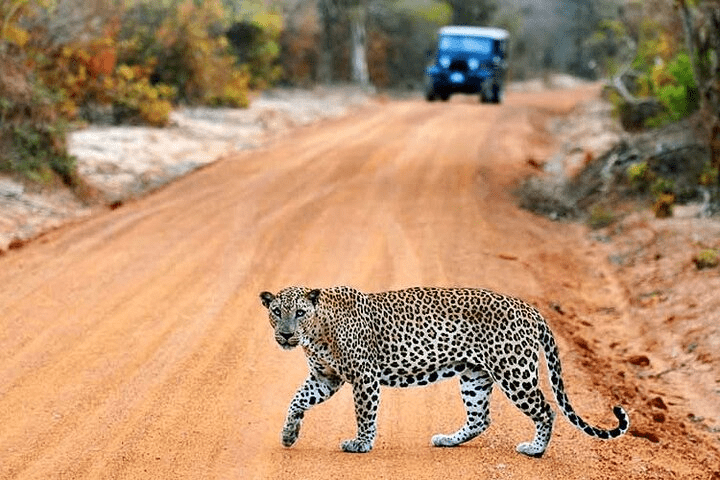
Leopards: The Art of Solitude
Yala National Park has the highest leopard density in the world. But seeing a leopard is never guaranteed. They are solitary, secretive, and masters of camouflage.
When you finally spot one a flick of the tail, a shift in the shadows you realise you’re not just looking at an animal. You’re looking at a survivor. A creature that has evolved to thrive in a world of dense jungle and fierce competition.
What you learn: Patience, respect, and the humility of being in the presence of something truly wild.
Elephants: The Power of Family
In Udawalawe and Minneriya, you’ll see elephants in herds mothers with calves, aunts protecting the young, older males on the periphery. You’ll watch them communicate with low rumbles, touch each other with their trunks, and move as a single, gentle force.
What you learn: Elephants are not just animals. They are families. They are societies. They are beings with complex emotional lives.
Sloth Bears: The Underrated Wonder
Sloth bears are one of Sri Lanka’s most underrated wildlife experiences. They’re shaggy, comical, and surprisingly aggressive when threatened. Watching one dig for termites or amble across a track is a reminder that the wild is full of surprises.
What you learn: Every species has its own genius. Every creature has a role.
Birds: The Hidden World
Sri Lanka is a birdwatcher’s paradise over 400 species, including 26 endemics. On safari, you’ll start to notice birds you might otherwise have ignored: eagles soaring overhead, kingfishers flashing along rivers, hornbills calling from the canopy.
What you learn: The wild is not just about the big animals. It’s an entire ecosystem, interconnected and endlessly fascinating.
The Third Shift: From Fear to Respect
Many people arrive on safari with a vague sense of fear fear of the unknown, fear of the animals, fear of being in a wild place. Sri Lanka dissolves that fear and replaces it with respect.
You learn that:
-
Wild animals are not out to get you. They want to be left alone.
-
The jungle is not a dangerous place if you respect its rules.
-
Your guide’s knowledge and experience keep you safe.
-
Fear is replaced by awe and awe is a much better travel companion.
As one guest said, “I came expecting to be scared. I left feeling more alive than I have in years.”
The Fourth Shift: From Taking to Giving
A safari in Sri Lanka can also change how you think about your impact on the wild.
Ethical wildlife tourism matters. Sri Lanka has a growing number of operators who prioritise animal welfare, limit vehicle numbers, and support conservation. But there are also operators who chase animals, crowd them, and prioritise photographs over welfare.
A good safari teaches you the difference. You learn to ask:
-
Does this operator maintain safe distances?
-
Do they limit the number of vehicles at sightings?
-
Do they avoid baiting animals or using calls?
-
Do they support conservation?
What changes: You stop being a passive consumer and become a responsible traveller. You understand that your choices matter for the animals, for the ecosystems, and for the communities that live alongside them.
The Fifth Shift: From Holiday to Memory
The final shift is the most enduring. A safari in Sri Lanka doesn’t just give you photographs. It gives you memories that stay with you for a lifetime.
You’ll remember:
-
The first time you saw a leopard and the way your heart raced
-
The elephant that walked so close to your vehicle you could have touched it
-
The sunset over the lagoon, with elephants silhouetted against the orange sky
-
The quiet of the jungle at dawn, before the world woke up
-
The guide who taught you the names of birds and the stories of the forest
These memories change you. They remind you that the world is bigger than your daily life. That wild places matter. That there is still magic in the world.
Where to Safari in Sri Lanka
Yala National Park
Best for: Leopards
Note: Blocks 1 and 2 are temporarily closed from September 14 to October 15, 2026, due to drought conditions.
Udawalawe National Park
Best for: Elephants
Note: Reliable year-round elephant sightings
Wilpattu National Park
Best for: Leopards, sloth bears, and a quieter experience
Note: Less crowded than Yala
Minneriya National Park
Best for: The Gathering the largest seasonal gathering of Asian elephants in the world (July to September)
Gal Oya National Park
Best for: Swimming elephants and boat safaris
Note: A unique experience found nowhere else
Maduru Oya National Park
Best for: An alternative to Yala, with around 150 elephants
Note: Recommended by the Department of Wildlife Conservation during Yala closures
What to Expect on Safari in Sri Lanka
The Vehicle
Safaris in Sri Lanka are done in 4×4 jeeps, usually with an open top and tiered seating for better viewing. Most vehicles seat 6–8 people.
The Guide
Your guide is essential. They know the parks, the animals, and the best times and places to find them. A good guide transforms a safari from a drive into an education.
The Timing
Safaris usually run early morning (6 AM) or late afternoon (3 PM), when animals are most active. Full-day safaris are also available for serious wildlife enthusiasts.
The Experience
Expect to spend hours driving through the park, stopping for sightings, and waiting. Bring water, snacks, sunscreen, and patience.
Frequently Asked Questions
What is the best safari in Sri Lanka?
Yala is best for leopards. Udawalawe is best for elephants. Wilpattu offers a quieter experience. Minneriya is best for The Gathering (July–September). Gal Oya offers swimming elephants and boat safaris.
What animals will I see on a Sri Lanka safari?
You may see leopards, elephants, sloth bears, crocodiles, monkeys, deer, buffalo, and hundreds of bird species. Sightings depend on the park, the season, and luck.
Is a Sri Lanka safari ethical?
Yes if you choose an ethical operator who maintains safe distances, limits vehicle numbers, and prioritises animal welfare. Avoid operators who chase animals or use bait.
When is the best time for a safari in Sri Lanka?
February to June is best for Yala and Wilpattu (leopards). July to September is best for Minneriya (The Gathering). Udawalawe is good year-round.
How long does a safari take?
Half-day safaris run 3–4 hours. Full-day safaris run 6–8 hours. Many travellers do multiple safaris to increase their chances of sightings.
What should I bring on safari?
Camera, binoculars, sunscreen, hat, sunglasses, water, snacks, and insect repellent. Wear neutral-coloured clothing.
Is Yala National Park open?
Yala Blocks 1 and 2 are temporarily closed from September 14 to October 15, 2026, due to drought conditions. Other blocks and alternative parks (Udawalawe, Wilpattu, Maduru Oya) remain open.
Can I do a safari with children?
Yes many parks offer family-friendly safaris. Udawalawe is particularly good for children, with reliable elephant sightings and the Elephant Transit Home.
How Safari Changes You
A safari in Sri Lanka isn’t just a holiday activity. It’s an experience that changes how you see the wild and how you see yourself.
You return home with more than photographs. You return with a deeper appreciation for the natural world, a greater understanding of your place within it, and memories that will stay with you forever.
Ready to experience a Sri Lanka safari? Contact our local experts to design a bespoke itinerary that includes the parks, the wildlife, and the ethical encounters you’ve been dreaming of.
-
🌐 Website: rediscoversrilanka.com
-
💬 WhatsApp: +94 77 791 1276
-
📧 Email: [email protected]
Book Your Dream Getaway to Sri Lanka Today!
Contact Us Today!
Ready to plan your dream group tour in Sri Lanka? Let us help you craft the perfect itinerary for a truly magical experience.
👉 Contact Rediscover Sri Lankanow to explore our Sri Lanka group tour packages, designed for families, solo travelers, and adventure seekers alike.
Reviews and Recommendations
Don’t just take our word for it! Check out these incredible reviews from past travelers:
- Tripadvisor: Read about other travelers’ experiences on Tripadvisor, where Rediscover Sri Lanka has garnered rave reviews for its safe and well-organized tours.
- Trustpilot: Visit Trustpilot for more real-life testimonials from travelers who have fallen in love with Sri Lanka’s beauty and hospitality.
Rediscover Journeys Boutique Sri Lanka Tour Operator & Travel Agency
Trustpilot 4.9/5 (192 reviews) | TripAdvisor Travellers’ Choice 2025 | SLTDA-licensed
35+ years collective Sri Lanka expertise | Private chauffeur-guide | Tailor-made tours
Book Your Adventure
Ready to experience this coastal paradise? Plan your trip with Rediscover Journeys and create unforgettable memories at Hiriketiya Beach.
📩 Visit: Rediscover Journeys to book now.
Contact Us Today!
Ready to plan your dream group tour in Sri Lanka? Let us help you craft the perfect itinerary for a truly magical experience.
👉 Contact Rediscover Journeys now to explore our Sri Lanka group tour packages, designed for families, solo travelers, and adventure seekers alike.
Reviews and Recommendations
Don't just take our word for it! Check out these incredible reviews from past travelers:
Read about other travelers' experiences on TripAdvisor, where Rediscover Journeys has garnered rave reviews for its safe and well-organized tours.
Read ReviewsVisit Trustpilot for more real-life testimonials from travelers who have fallen in love with Sri Lanka's beauty and hospitality.
Read ReviewsExplore Related Topics

Frequently Asked Questions
Everything you need to know about traveling in Sri Lanka