A Foodie’s Guide to the Unique Logic of Sri Lankan Cuisine
A Foodie’s Guide to the Unique Logic of Sri Lankan Cuisine: Beyond the Tourist Trails There’s a certain magic to Sri Lankan cuisine that you simply can’t find in the polished hotel buffets or the Instagram-friendly cafes that line the tourist trails. It’s a logic built on fire, spice, coconut, and centuries of cultural cross-pollination, …
Everything You Need to Know About
A Foodie’s Guide to the Unique Logic of Sri Lankan Cuisine
A Foodie’s Guide to the Unique Logic of Sri Lankan Cuisine: Beyond the Tourist Trails There’s a certain magic to Sri Lankan cuisine that you simply can’t find in the polished hotel buffets or the Instagram-friendly cafes that line the tourist trails. It’s a logic built on fire, spice, coconut, and centuries of cultural cross-pollination, …
A Foodie’s Guide to the Unique Logic of Sri Lankan Cuisine: Beyond the Tourist Trails
There’s a certain magic to Sri Lankan cuisine that you simply can’t find in the polished hotel buffets or the Instagram-friendly cafes that line the tourist trails. It’s a logic built on fire, spice, coconut, and centuries of cultural cross-pollination, creating a culinary landscape that is as complex and layered as the island’s own history.
Sri Lankan cuisine is the result of a rich tapestry of influences: the deep roots of South Indian gastronomy, the aromatic legacy of Arab and Malay traders, and the indelible marks of Portuguese, Dutch, and British colonialism. For a food lover, this is the true treasure of the “Pearl of the Indian Ocean” – a vibrant, fiery, and surprisingly sophisticated world of flavor that exists just beyond the well-trodden path.
Sri-Lankan-curry-love
The Heart of the Matter: Rice, Curry, and the Logic of Flavor
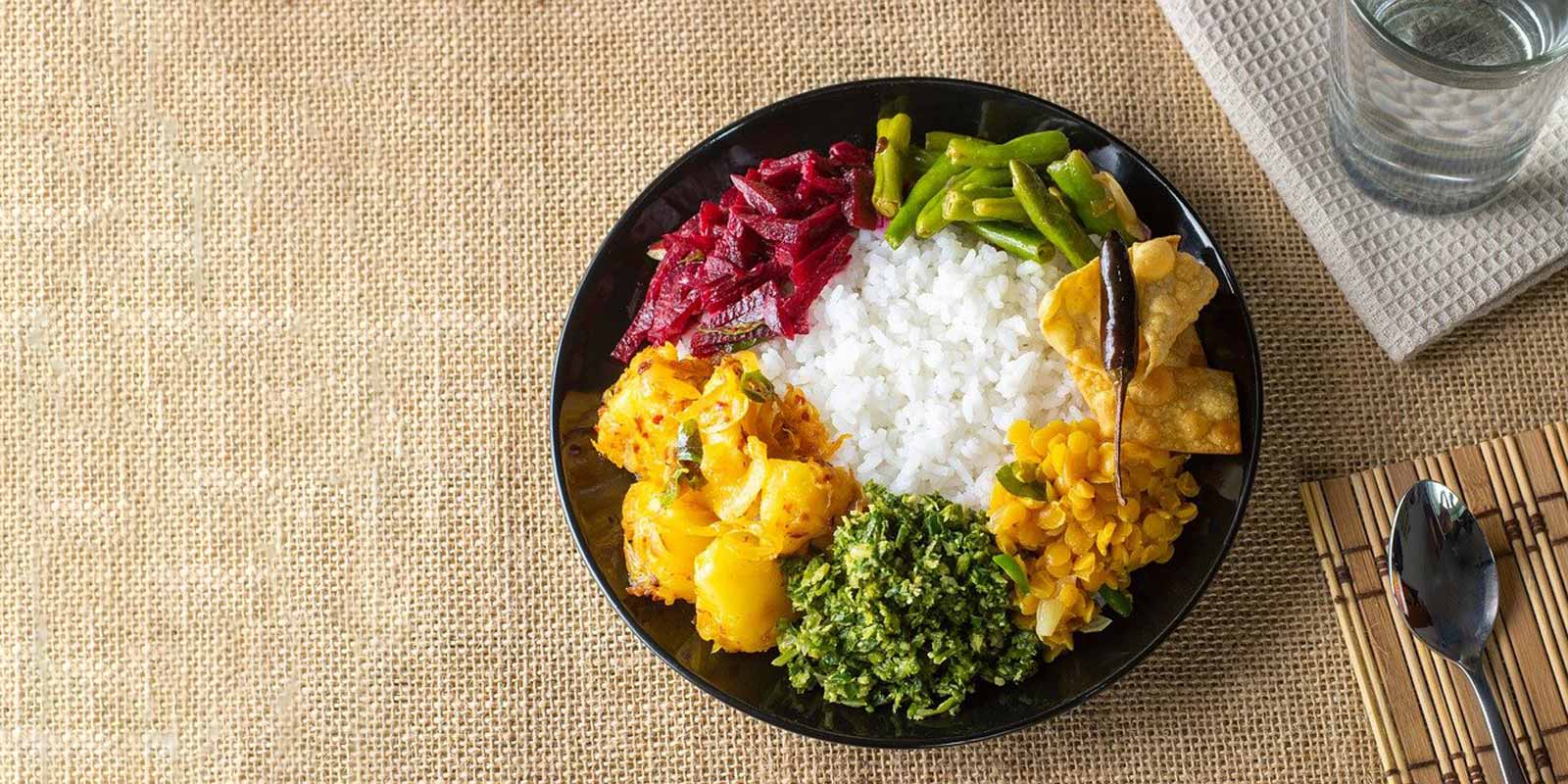
The beating heart of Sri Lankan food isn’t a single dish, but a philosophy. It’s called “rice and curry,” and it’s the country’s national meal. While the name might sound simple, it’s anything but.
A proper Sri Lankan rice and curry plate is a symphony of textures and tastes. A mound of steaming, fluffy rice (either white or red) is accompanied by a minimum of three, and ideally five, different curries. The genius lies in the contrast and balance. You might have a fiery red curry, a milder white curry enriched with coconut milk, and a fragrant black curry made with dark-roasted spices.
This is the fundamental logic of Sri Lankan cooking: it’s not about one overwhelming flavor, but about the harmony of many. This logic extends to the very ingredients that define the cuisine.
Sri Lanka’s Holy Trinity: Coconut, Chili, and Spice
Three elements are the cornerstones of almost every Sri Lankan meal:
Coconut, in All Its Forms: Coconut is the backbone of Sri Lankan cooking. Coconut milk is used to create rich, creamy gravies. Grated coconut is pounded with chili and lime to make sambol, a fresh and fiery condiment that accompanies almost every meal. Coconut oil is used for frying, and even the husks are used for roasting spices, adding a smoky depth to curries.
The Heat of Chili: Sri Lankan cuisine is notorious for its heat, and for good reason. They don’t just use chili for spiciness; they use it for its color and flavor. Red chilies give curries their vibrant hue, while the use of fresh green chilies adds a bright, grassy heat.
A World of Spices: Thanks to its history as a spice-trading hub, Sri Lanka uses an incredible array of spices. Cinnamon, cardamom, cloves, and nutmeg are used liberally, but the real magic comes from the more complex blends, like the roasted spice mix used in “black” curries.
The Essential Sri Lankan Dishes You Must Try
To truly understand Sri Lankan cuisine, you need to taste it. Here are the essential dishes that define the culinary landscape.
Hoppers: Sri Lanka’s Lacy Crepes
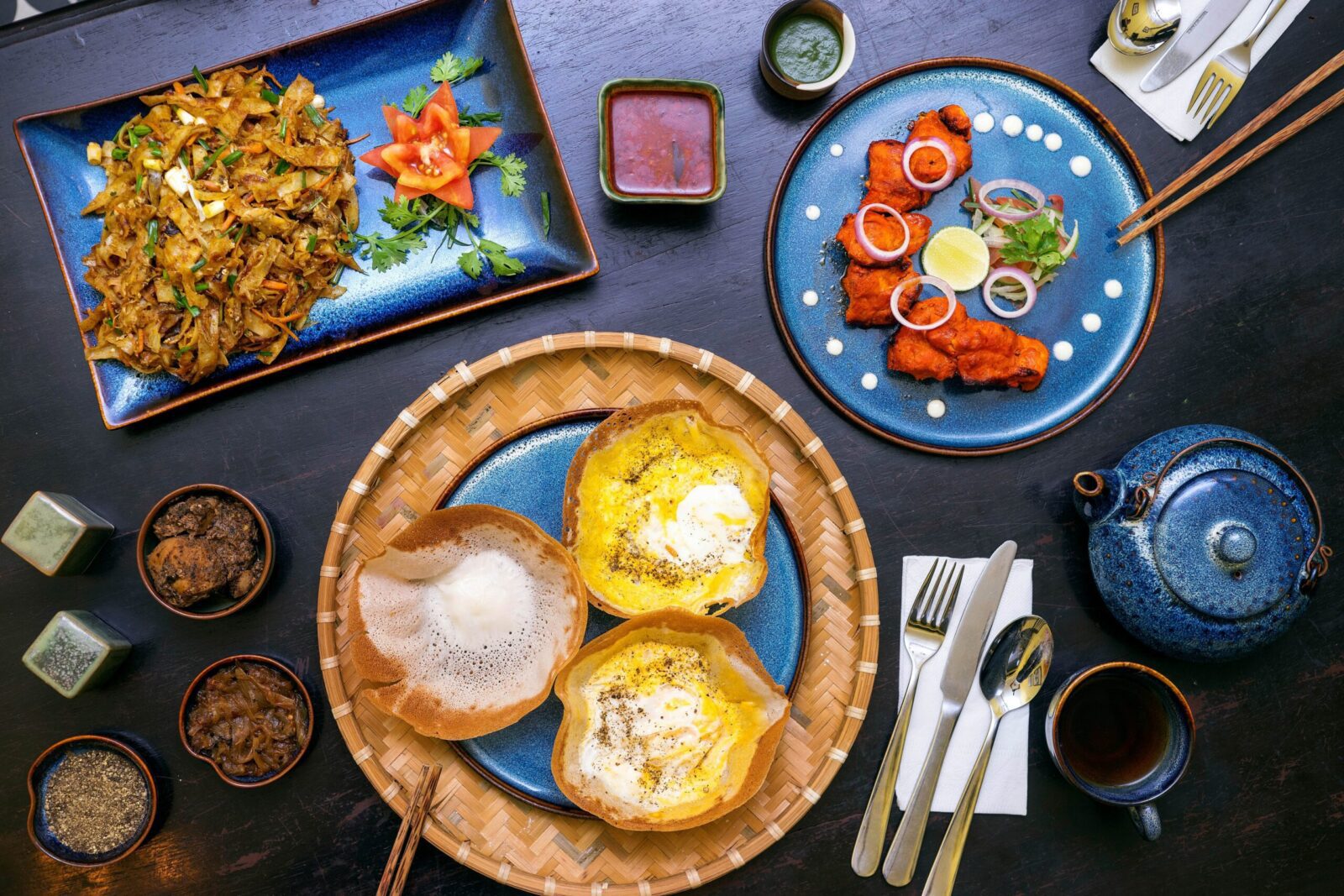
Hoppers are a beloved staple in Sri Lanka, a bowl-shaped pancake with a soft, spongy center and a delightfully crispy, lacy edge. They’re made from a fermented batter of rice flour and coconut milk. You’ll find them served for breakfast or dinner. A classic version is the “Biththara Appa” or egg hopper, where an egg is cracked into the center of the hopper as it cooks, creating a satisfying combination of textures and flavors.
Kottu Roti: The Rhythmic Street Food King
If hoppers are the delicate crepe of Sri Lanka, then kottu roti is its loud, proud, and deliciously chaotic king. This is the ultimate street food, a dish that’s as much a performance as it is a meal. Chopped roti flatbread is stir-fried on a hot griddle with vegetables, eggs, meat, and a generous splash of curry gravy. The unmistakable, rhythmic clang of metal blades chopping and mixing the ingredients on the griddle is the soundtrack of Sri Lankan street food.
String Hoppers: Delicate Nests of Flavor
A close relative of the hopper is the string hopper (idiyappam) . These are delicate, nest-like bundles of steamed rice flour noodles. They are typically eaten for breakfast or dinner, often served with a creamy coconut milk-based curry (like a dhal) and a fiery sambol. Their light, fluffy texture makes them the perfect vehicle for soaking up rich, flavorful sauces.
Pol Sambol: The Ubiquitous Condiment
No Sri Lankan meal is complete without pol sambol. This is the nation’s favorite condiment, a simple yet powerfully flavorful mix of freshly grated coconut, red chili powder, shallots, lime juice, and salt. The ingredients are pounded together, creating a fresh, spicy, and tangy relish that adds an incredible burst of flavor to rice, hoppers, or any curry.
Beyond the Tourist Trails: The Street Food Scene
This is where you’ll find the real, unfiltered heart of Sri Lankan cuisine. The streets of Colombo, Kandy, and Galle are alive with a dizzying array of snacks and meals.
Isso Vade (Prawn Fritters): Deep-fried lentil patties topped with a whole prawn, crunchy and incredibly savory.
Achcharu (Pickled Fruit): A classic Sri Lankan street snack, this is a tangy, spicy, and sometimes sweet pickle made from various fruits and vegetables.
Pol Roti (Coconut Roti): A simple, hearty flatbread made with wheat flour and grated coconut, often eaten for breakfast or as a snack. It’s the perfect companion to a cup of Ceylon tea.
Pro-Tip: To find the most authentic food, venture just 2-3 streets back from the main coastal roads. Look for the bustling spots with no English menus, where locals are lining up – that’s where you’ll find the real deal.
The Wild Cookbook Effect: Sri Lankan Food Goes Global
The global appetite for Sri Lankan cuisine has been supercharged by the phenomenal success of the YouTube channel “Wild Cookbook.” Created by chef Charith N. Silva during the COVID-19 pandemic in 2020, the channel has become a global phenomenon.
It was the first Sri Lankan YouTube channel to cross 10 million subscribers, racking up over 4 billion views across more than 600 videos. The channel’s success, which earned it the coveted Diamond Play Button, has brought the smoky aromas of jungle grills and bubbling clay pots of spice into millions of homes worldwide. Charith has since opened his first restaurant, “Wildish,” in Colombo.
The success of “Wild Cookbook” is a testament to the universal appeal of Sri Lankan flavors when presented with passion and authenticity, helping put the country’s cuisine firmly on the global culinary map.
A Culinary Adventure Awaits
Sri Lankan cuisine is a vibrant, complex, and deeply rewarding world to explore. It’s a cuisine that tells the story of the island: its history, its people, and its land. It’s the fiery kick of a chili, the rich creaminess of coconut milk, the rhythmic clang of a kottu roti griddle, and the warm hospitality of a local family sharing their meal.
To experience it, you must go beyond the tourist trails. Venture into the bustling markets, follow the sound of the kottu roti makers, and eat where the locals eat. That is where the true logic of Sri Lankan food—and the heart of the island—truly reveals itself.
Contact Us Today!
Ready to plan your dream group tour in Sri Lanka? Let us help you craft the perfect itinerary for a truly magical experience.
👉 Contact Rediscover Sri Lanka now to explore our Sri Lanka group tour packages, designed for families, solo travelers, and adventure seekers alike.
Reviews and Recommendations
Don’t just take our word for it! Check out these incredible reviews from past travelers:
Tripadvisor: Read about other travelers’ experiences on Tripadvisor, where Rediscover Sri Lanka has garnered rave reviews for its safe and well-organized tours.
Trustpilot: Visit Trustpilot for more real-life testimonials from travelers who have fallen in love with Sri Lanka’s beauty and hospitality.
Rediscover · Plan Your Journey
Contact Us
Today!
Ready to plan your dream journey in Sri Lanka?
Let us help you craft the perfect itinerary
for a truly memorable experience.
Contact Rediscover Sri Lanka to explore our
tailor-made journeys, private tours and
authentic Sri Lankan experiences.
Everything you need to know about
traveling in Sri Lanka.
Sri Lanka is a year-round destination, but the best time depends on which part of the island you plan to explore. The west and south coasts are generally best from December to April, while the east coast is ideal from May to September.
Around 7 to 14 days is a good amount of time to experience Sri Lanka's highlights without rushing. A longer journey allows more time for wildlife, beaches, cultural sites, scenic train journeys and the hill country.
Most international travellers need travel authorisation or a visa to enter Sri Lanka, depending on their nationality and purpose of travel. Travellers should check the latest requirements through official Sri Lankan government channels before travelling.
Sri Lanka is a popular destination for international travellers. As with any destination, visitors should take normal precautions, look after their belongings, use reputable transport and follow local advice.
The official currency is the Sri Lankan Rupee (LKR). Your budget depends on accommodation, transportation, dining, activities and travel style. Sri Lanka offers everything from budget-friendly experiences to premium hotels and tailor-made luxury travel.
Rediscover Journeys is a boutique Sri Lankan travel
company creating tailor-made journeys, private tours
and meaningful travel experiences across the island.
We use cookies to improve your browsing experience, analyze website traffic, and support essential website functions. By clicking "Accept All", you consent to our use of cookies.