Everything You Need to Know About Sri Lanka Photography Guide 2026: 20 Best Photo Locations
Sri Lanka Photography Guide: 20 Best Photo Locations (2026) Sri Lanka is one of Asia’s most photogenic islands — leopard safaris at dawn, tea pickers on misty hillsides, stilt fishermen at sunset, and the Kandy–Ella train curving through cloud forest. The challenge isn’t finding subjects; it’s knowing where to be, at what hour, with the …
Sri Lanka Photography Guide: 20 Best Photo Locations (2026)
Sri Lanka is one of Asia’s most photogenic islands — leopard safaris at dawn, tea pickers on misty hillsides, stilt fishermen at sunset, and the Kandy–Ella train curving through cloud forest. The challenge isn’t finding subjects; it’s knowing where to be, at what hour, with the right lens.
Direct answer: The 20 best photo locations in Sri Lanka are Sigiriya, Dambulla, Polonnaruwa, Anuradhapura, Kandy (Temple of the Tooth), Ella (Nine Arches Bridge), Nuwara Eliya, Haputale (Lipton’s Seat), Horton Plains, Yala, Udawalawe, Minneriya, Galle Fort, Mirissa, Weligama, Tangalle, Ambalangoda, Kandy–Ella train, Adam’s Peak, and Arugam Bay. Shoot at golden hour, bring a zoom for wildlife, and always ask before photographing people.
Quick Answer: The 20 Locations at a Glance
| # | Location | Best Subject | Best Time | Lens |
|---|---|---|---|---|
| 1 | Sigiriya | Ancient rock fortress, frescoes | Dawn (6–7 am) | 24–70mm |
| 2 | Dambulla | Cave temple Buddha statues, murals | Morning | 16–35mm |
| 3 | Polonnaruwa | Gal Vihara rock Buddhas, ruins | Early morning | 24–70mm |
| 4 | Anuradhapura | Stupas, sacred Bodhi tree | Golden hour | 16–35mm + 70–200mm |
| 5 | Kandy | Temple of the Tooth, lake | Evening puja | 35–70mm |
| 6 | Nine Arches Bridge (Ella) | Train crossing bridge | Morning (9:30 am train) | 24–70mm |
| 7 | Nuwara Eliya | Tea estates, colonial architecture | Morning mist | 24–70mm |
| 8 | Lipton’s Seat (Haputale) | Tea plantations, panorama | Dawn | 24–70mm |
| 9 | Horton Plains | World’s End cliff, cloud forest | Dawn (before 9 am) | 16–35mm |
| 10 | Yala | Leopards, elephants, birdlife | Dawn and dusk | 100–400mm |
| 11 | Udawalawe | Elephant herds | Dawn and dusk | 100–400mm |
| 12 | Minneriya | Elephant gathering (Jul–Sep) | Afternoon | 100–400mm |
| 13 | Galle Fort | Colonial architecture, ramparts | Sunset | 16–35mm |
| 14 | Mirissa | Whale watching, beach | Morning (Nov–Apr) | 100–400mm |
| 15 | Weligama | Surfers, stilt fishermen | Dawn and sunset | 70–200mm |
| 16 | Tangalle | Quiet beaches, fishing boats | Golden hour | 24–70mm |
| 17 | Ambalangoda | Traditional masks | Morning | 35–70mm |
| 18 | Kandy–Ella train | Scenic railway, tunnels | Morning departure | 24–70mm |
| 19 | Adam’s Peak | Pilgrimage, sunrise | Night climb | 16–35mm |
| 20 | Arugam Bay | Surf, lagoon, beach | Sunrise and sunset | 24–70mm |
AEO answer block: What are the best photo locations in Sri Lanka? Sigiriya, Yala, Galle Fort, the Nine Arches Bridge, Lipton’s Seat, and the Kandy–Ella train are the most photographed — each for a different reason.
Wildlife and Landscape Photography
1. Sigiriya — The Ancient Rock Fortress
Sri Lanka’s most iconic image — the Lion Rock rising from the plain, with frescoes and water gardens below.
| Detail | What to Know |
|---|---|
| Best time | Dawn (6–7 am), before heat and crowds |
| Best angle | From Pidurangala Rock opposite (sunrise) |
| Lenses | 24–70mm for the rock; 70–200mm for frescoes |
| Tip | Pidurangala gives the classic postcard shot without crowds |
2. Dambulla — The Cave Temple
Five caves filled with Buddha statues and centuries-old murals — challenging light, but extraordinary detail.
| Detail | What to Know |
|---|---|
| Best time | Morning (soft light from entrance) |
| Lenses | 16–35mm for interiors; 35–70mm for statues |
| Tip | No flash; raise ISO instead |
| Etiquette | Remove shoes; cover shoulders and knees |
See: Cultural Triangle
3. Polonnaruwa — The Ancient City
The Gal Vihara rock-cut Buddhas are among the finest Buddhist sculptures in Asia.
| Detail | What to Know |
|---|---|
| Best time | Early morning, before tour groups |
| Lenses | 24–70mm; 70–200mm for details |
| Tip | Cycle between sites for flexibility |
| Etiquette | Remove shoes at Gal Vihara |
See: Cultural Triangle
4. Anuradhapura — The Sacred City
Stupas, the sacred Bodhi tree, and monks in orange robes — Sri Lanka’s oldest Buddhist capital.
| Detail | What to Know |
|---|---|
| Best time | Golden hour (late afternoon) |
| Lenses | 16–35mm for stupas; 70–200mm for monks and details |
| Tip | Ask before photographing monks |
| Etiquette | Cover shoulders and knees |
See: Cultural Triangle
5. Kandy — The Temple of the Sacred Tooth Relic
The evening puja brings drummers, worshippers, and flowers — an atmospheric low-light challenge.
| Detail | What to Know |
|---|---|
| Best time | Evening puja (around 6:30 pm) |
| Lenses | 35–70mm; fast prime (f/1.8) for low light |
| Tip | Raise ISO; no flash |
| Etiquette | Modest dress; remove shoes |
See: Kandy Travel Guide · Sri Lanka Buddhism for Travellers
6. Nine Arches Bridge — Ella
The colonial-era viaduct is the most photographed spot in the Hill Country — best when the blue train crosses.
| Detail | What to Know |
|---|---|
| Best time | Morning (train crosses around 9:30 am and 3:30 pm) |
| Best angle | From the tea estate below the bridge |
| Lenses | 24–70mm |
| Tip | Arrive 30 minutes early for a good spot |
See: Ella Travel Guide
7. Nuwara Eliya — Tea Country
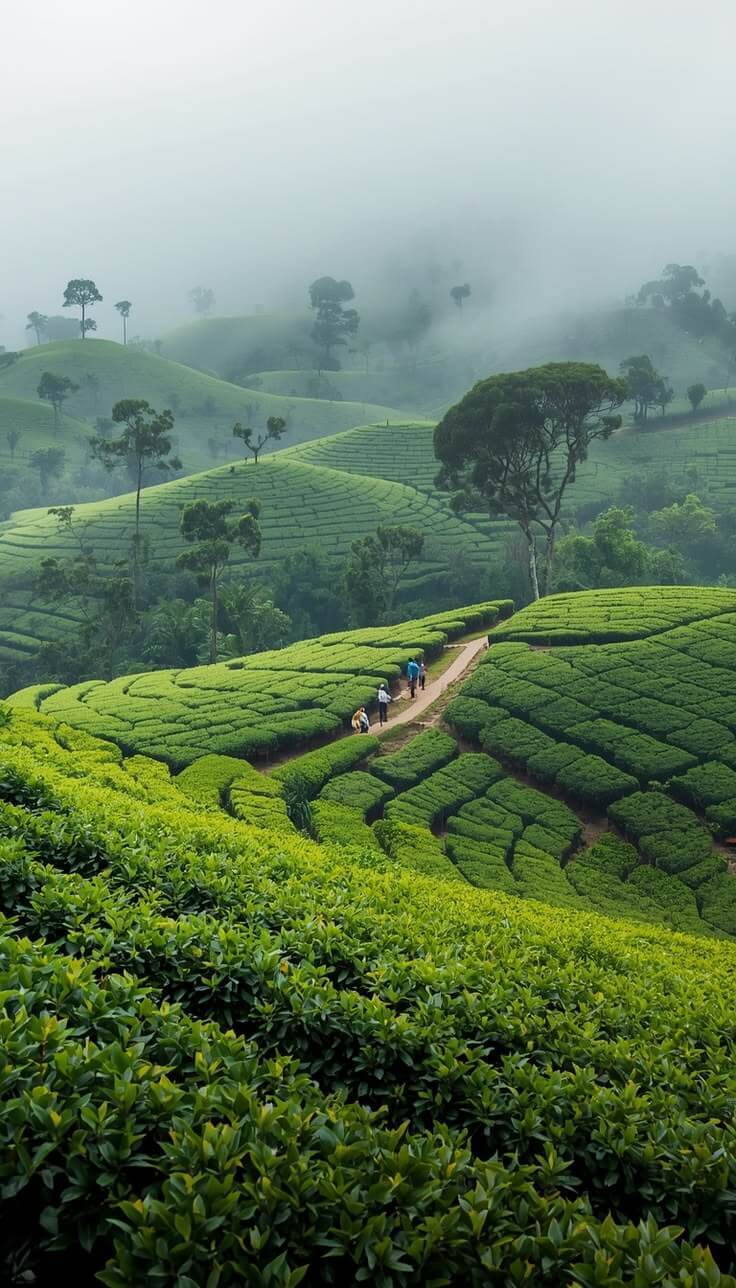
Misty tea estates, colonial bungalows, and tea pickers at work — the cooler side of Sri Lanka.
| Detail | What to Know |
|---|---|
| Best time | Early morning (mist and soft light) |
| Lenses | 24–70mm |
| Tip | Ask tea pickers before photographing them |
| Etiquette | Respect workers’ privacy |
See: Tea Country
8. Lipton’s Seat — Haputale
A panoramic viewpoint over endless tea plantations — Sir Thomas Lipton’s favourite view.
| Detail | What to Know |
|---|---|
| Best time | Dawn (before 7 am) |
| Lenses | 24–70mm; 70–200mm for compression |
| Tip | Early morning mist makes the shot |
See: Tea Country
9. Horton Plains — World’s End
A dramatic cliff edge dropping 800 metres — best reached at dawn before clouds roll in.
| Detail | What to Know |
|---|---|
| Best time | Dawn (before 9 am, before clouds) |
| Lenses | 16–35mm for the panorama |
| Tip | The walk to World’s End takes 45 minutes |
| Note | Yala access and park hours may change |
See: Adventure Tours
10. Yala — Leopard Country
Sri Lanka’s best wildlife photography — leopards, elephants, sloth bears, and birdlife.
| Detail | What to Know |
|---|---|
| Best time | Dawn and dusk (animals active) |
| Lenses | 100–400mm (essential); 70–200mm for landscape |
| Tip | Book a private jeep for flexibility |
| Note | Yala Block 1 often closes September–October |
See: Wildlife Safaris
11. Udawalawe — Elephant Herds
Around 600 elephants — the most reliable place for elephant photography in Sri Lanka.
| Detail | What to Know |
|---|---|
| Best time | Dawn and dusk |
| Lenses | 100–400mm |
| Tip | The reservoir attracts elephants at sunset |
See: Wildlife Safaris
12. Minneriya — The Elephant Gathering
Up to 300 elephants gather at the reservoir between July and September — one of Asia’s great wildlife spectacles.
| Detail | What to Know |
|---|---|
| Best time | Afternoon (3–6 pm) |
| Lenses | 100–400mm |
| Tip | Book a private jeep for the best angle |
See: Wildlife Safaris
Coastal and Cultural Photography
13. Galle Fort — Colonial Architecture
Dutch colonial streets, ramparts, and the lighthouse — Sri Lanka’s most photogenic town.
| Detail | What to Know |
|---|---|
| Best time | Sunset (ramparts, lighthouse) |
| Lenses | 16–35mm for streets; 70–200mm for details |
| Tip | Walk the ramparts at golden hour |
| Etiquette | Ask before photographing residents |
See: Galle Travel Guide
14. Mirissa — Whale Watching
Blue whales and sperm whales off the south coast from November to April.
| Detail | What to Know |
|---|---|
| Best time | Morning (sea calmest) |
| Lenses | 100–400mm; polarising filter |
| Tip | Choose a reputable operator; motion sickness tablets advised |
See: Whale Watching Sri Lanka · Mirissa Travel Guide
15. Weligama — Surfers and Stilt Fishermen
Surfers at Weligama Bay and the iconic stilt fishermen of Koggala nearby.
| Detail | What to Know |
|---|---|
| Best time | Dawn (surfers, calm sea); sunset (stilt fishermen) |
| Lenses | 70–200mm |
| Tip | Stilt fishermen expect payment for photos — agree first |
See: Mirissa Travel Guide · Southern Coast
16. Tangalle — Quiet Beaches
Long empty beaches, fishing boats, and palm trees — the south coast at its most peaceful.
| Detail | What to Know |
|---|---|
| Best time | Golden hour (fishing boats return) |
| Lenses | 24–70mm |
| Tip | Ask before photographing fishermen |
See: Southern Coast
17. Ambalangoda — Traditional Masks
Sri Lanka’s mask-carving centre — vivid colours, texture, and character.
| Detail | What to Know |
|---|---|
| Best time | Morning (workshop light) |
| Lenses | 35–70mm |
| Tip | Ask before photographing craftsmen |
| See | Sri Lanka Shopping Guide |
18. The Kandy–Ella Train
The blue train curving through tea estates and cloud forest — one of the world’s great rail journeys.
| Detail | What to Know |
|---|---|
| Best time | Morning departure (soft light) |
| Lenses | 24–70mm |
| Tip | Book reserved seats; stand at the door for the classic shot |
| Etiquette | Don’t hang out of open doors |
See: Hill Country Rail
19. Adam’s Peak — Pilgrimage at Sunrise
A night climb to the sacred summit, with pilgrims and sunrise over the island.
| Detail | What to Know |
|---|---|
| Best time | Night climb (start 2–3 am) for sunrise |
| Lenses | 16–35mm for the summit; 24–70mm for pilgrims |
| Tip | Bring a tripod for the summit |
| Season | December–May |
See: Adventure Tours
20. Arugam Bay — Surf and Lagoon
Sri Lanka’s premier surf destination, with lagoon safaris and empty beaches.
| Detail | What to Know |
|---|---|
| Best time | Sunrise (surf), sunset (lagoon) |
| Lenses | 24–70mm; 70–200mm for surfers |
| Tip | Best April–October |
| See | East Coast |
Photography Planning Tips
The difference between good and great photos in Sri Lanka is planning — light, timing, and permissions.
| Tip | Why |
|---|---|
| Shoot golden hour | Dawn and dusk give the best light |
| Ask before photographing people | Respectful and often yields better portraits |
| Bring a zoom | Wildlife needs 100–400mm |
| Carry a fast prime | Temples are low-light |
| Use a polarising filter | Cuts glare on water and leaves |
| Protect from humidity | Silica gel packs in your bag |
| No flash in temples | Respectful and avoids glare |
| Carry spare batteries | Heat drains them faster |
| Use a rain cover | Tropical downpours are sudden |
| Back up daily | Bring a portable drive |
See: Sri Lanka Packing List by Region — what to carry
Photography Etiquette in Sri Lanka
-
Ask before photographing people — monks, tea pickers, fishermen, children.
-
Don’t pay for photos of children — it encourages exploitation.
-
Stilt fishermen expect payment — agree the price first.
-
No flash inside temples.
-
Don’t pose disrespectfully with Buddha images.
-
Respect restricted areas — some temples prohibit photography.
-
Don’t photograph military or police installations.
See: Sri Lanka Buddhism for Travellers — full etiquette guide
Best Time of Year for Photography
| Season | Best Locations | Notes |
|---|---|---|
| December–March | South and west coasts, Hill Country, Cultural Triangle | Dry, clear light |
| April | Shoulder — south and Hill Country | Some rain, good light |
| May–September | East coast, Hill Country | East dry; south in monsoon |
| October–November | Cultural Triangle, Hill Country | Mixed weather; fewer crowds |
See: Best Time to Visit
Frequently Asked Questions
What are the best photo locations in Sri Lanka?
Sigiriya, Yala, Galle Fort, Nine Arches Bridge, Lipton’s Seat, and the Kandy–Ella train.
What is the best time of day for photography in Sri Lanka?
Dawn (6–9 am) and late afternoon (3–6 pm) — animals are active and light is soft.
What lens should I bring to Sri Lanka?
A 24–70mm for landscapes and street, a 100–400mm for wildlife, and a fast prime (f/1.8) for temples.
Can I photograph monks in Sri Lanka?
Ask first. Many monks decline; respect their answer.
Can I photograph the stilt fishermen?
Yes — but they expect payment. Agree the price first.
Is photography allowed inside Sri Lankan temples?
Usually yes, without flash. Some areas prohibit photography; check signs.
Where can I photograph leopards in Sri Lanka?
Yala National Park — dawn and dusk game drives with a private jeep.
What is the best time for whale photography in Sri Lanka?
Mirissa, November to April, on morning boats.
Can I photograph the Kandy–Ella train?
Yes — the classic shot is from the door of the train or from the Nine Arches Bridge below.
What camera gear should I protect against in Sri Lanka?
Humidity, rain, and heat. Bring silica gel packs and a rain cover.
Is drone photography allowed in Sri Lanka?
Only with a permit from the Civil Aviation Authority and defence ministry.
What is the best season for photography in Sri Lanka?
December–March for the south and west; May–September for the east.
Plan Your Sri Lanka Photography Trip
Tell us which locations you want to photograph and we’ll build the route around light and timing. Contact our Sri Lanka specialists — or call us directly.
Speak to our team: +94 77 791 1276 (Rasith Gunaratna) · +94 77 887 8723 (Lakshan Surekha) · +94 11 226 0407 (Office) · [email protected]
Explore more:
-
Bespoke Journeys — photography-focused journeys
-
Wildlife Safaris — Yala, Udawalawe, Minneriya
-
Tea Country — Lipton’s Seat, Nuwara Eliya
-
Kandy Travel Guide — Temple of the Tooth
-
Galle Travel Guide — Galle Fort
-
Ella Travel Guide — Nine Arches Bridge
-
Hill Country Rail — Kandy–Ella train
-
Whale Watching Sri Lanka — Mirissa
-
Sri Lanka Buddhism for Travellers — etiquette
-
Sri Lanka Packing List by Region — what to carry
-
Sri Lanka Travel FAQs — 247 answers across 13 categories
Trusted by photographers — see our reviews on TripAdvisor and Trustpilot.
Contact Us Today!
Ready to plan your dream journey in Sri Lanka? Let us help you craft the perfect itinerary for a truly memorable experience.
Contact Rediscover Sri Lanka to explore our tailor-made journeys, private tours and authentic Sri Lankan experiences.
Contact UsReviews and Recommendations.
Don't just take our word for it! Check out these incredible reviews from past travellers.
Read about other travellers' experiences with Rediscover Sri Lanka and explore reviews from guests who have travelled across the island.
Read ReviewsDiscover feedback from travellers who have experienced Rediscover Journeys and explored Sri Lanka with our team.
Read ReviewsBook Your Adventure.
Ready to experience Sri Lanka beyond the usual tourist trail? Let us create a private journey around your interests, pace and travel style.
Ready to Rediscover Sri Lanka?
Plan your trip with Rediscover Sri Lanka and create unforgettable memories at some of the island's most extraordinary places.
Visit Rediscover Sri Lanka to start planning your journey.
Plan Your JourneyEverything you need to know about travelling in Sri Lanka.
Sri Lanka is a year-round destination, with the best time to visit depending on the regions you plan to explore. The west and south coasts are generally best from December to April, while the east coast is ideal from May to September. The central highlands offer cooler weather and scenic landscapes throughout much of the year.
A journey of 7 to 14 days allows you to experience many of Sri Lanka’s highlights at a comfortable pace. You can combine ancient cultural sites, wildlife safaris, scenic train journeys, tea country, and tropical beaches. A longer stay gives you more time to discover hidden gems and enjoy meaningful local experiences.
Sri Lanka offers a remarkable variety of destinations, from the ancient cities of Sigiriya and Polonnaruwa to the misty hills of Ella and Nuwara Eliya. Wildlife enthusiasts can explore Yala and Udawalawe National Parks, while the southern coast offers beautiful beaches and historic Galle Fort. The best places to visit depend on your interests, travel dates, and preferred pace.
Absolutely. Sri Lanka is home to diverse ecosystems, national parks, rainforests, wetlands, and mountain landscapes. Visitors can look for elephants, leopards, and a wide variety of birdlife on guided wildlife safaris, explore lush nature trails, or discover marine life along the coast. Responsible travel and following local wildlife guidelines help protect these natural environments.
Travellers can discover centuries-old temples, ancient kingdoms, traditional arts and crafts, vibrant festivals, and the island’s rich culinary heritage. Experiences may include visiting local markets, learning about traditional cooking, exploring historic landmarks, or meeting local communities. These encounters offer a deeper understanding of Sri Lanka’s traditions, people, and way of life.
Before travelling, consider the seasonal weather, regional travel times, local customs, appropriate clothing for religious sites, and entry requirements for your nationality. Sri Lanka’s landscapes and road conditions can make journeys longer than expected, so allowing time between destinations is worthwhile. Planning ahead helps you enjoy a more comfortable and rewarding experience.
The official currency is the Sri Lankan Rupee (LKR). Cards are accepted at many hotels, restaurants, and larger businesses, while cash is useful for local shops, markets, and smaller establishments. It is helpful to carry some local currency and check current exchange rates before your trip.
Yes. Sri Lanka offers experiences for a wide range of travellers, including families, couples, solo explorers, and groups of friends. Families can enjoy wildlife safaris, cultural discoveries, and relaxed beach stays, while couples may prefer scenic retreats, boutique hotels, and private experiences. An itinerary tailored to your interests can help create a more enjoyable journey.