Everything You Need to Know About Wildlife Photographer’s Guide to Sri Lanka National Parks 2026
The Wildlife Photographer’s Guide to Sri Lanka’s National Parks Sri Lanka is one of Asia’s most underrated wildlife photography destinations. The island packs an extraordinary diversity of species into a compact geography — leopards, elephants, sloth bears, blue whales, and over 400 bird species. For photographers, this means something rare: the ability to capture multiple …
The Wildlife Photographer’s Guide to Sri Lanka’s National Parks
Sri Lanka is one of Asia’s most underrated wildlife photography destinations. The island packs an extraordinary diversity of species into a compact geography — leopards, elephants, sloth bears, blue whales, and over 400 bird species. For photographers, this means something rare: the ability to capture multiple iconic subjects in a single trip, without the crowds of African safaris or the logistical challenges of deeper Asia.
But wildlife photography in Sri Lanka requires preparation. The light is harsh, the jungle is dense, and the animals don’t always cooperate. This guide gives you everything you need — from the best parks and times to camera settings and ethical practices — to come home with images you’re proud of.
Why Sri Lanka for Wildlife Photography?
Sri Lanka offers several advantages for wildlife photographers:
1. Exceptional Biodiversity
The island is a biodiversity hotspot with:
-
26 endemic bird species
-
Highest leopard density in the world (Yala National Park)
-
Largest gathering of Asian elephants (Minneriya)
-
Blue whales and sperm whales offshore
-
Sloth bears, crocodiles, and countless reptiles
2. Compact Geography
Distances are short. You can photograph leopards in the morning and elephants in the afternoon. No internal flights required.
3. Year-Round Opportunities
Sri Lanka’s two monsoon systems mean some part of the island is always in season. The east coast is best from May to September; the south and west from November to April.
4. Ethical Operators
Sri Lanka has a growing number of responsible safari operators who prioritise animal welfare and photographer needs.
5. Affordability
Compared to African safaris, Sri Lanka offers exceptional value for wildlife photography — without compromising on quality.
The Best National Parks for Wildlife Photography
Yala National Park
The Leopard Capital
Yala has the highest leopard density in the world — making it the best place on the planet to photograph these elusive cats. The park also offers elephants, sloth bears, crocodiles, and abundant birdlife.
What to Photograph:
-
Leopards — especially around waterholes in the early morning
-
Elephants — often near the coast
-
Sloth bears — best seen in June and July
-
Birdlife — including peacocks, eagles, and hornbills
Best Time:
-
February to June — dry season, best visibility
-
Note: Blocks 1 and 2 are temporarily closed from September 14 to October 15, 2026
Photography Tips:
-
Book a full-day safari — leopards are most active at dawn and dusk
-
The light is best in the early morning (6–9 AM)
-
Bring a telephoto lens — 400mm minimum
-
Be patient — leopards require waiting
Wilpattu National Park
The Quiet Alternative
Wilpattu is Sri Lanka’s largest national park, known for its natural lakes (villus) and dense forest. It’s quieter than Yala and offers excellent leopard and sloth bear sightings.
What to Photograph:
-
Leopards — less habituated but more rewarding
-
Sloth bears — often seen on the roads
-
Elephants — large herds
-
Birdlife — including water birds around the villus
Best Time:
-
February to October — best water levels and visibility
Photography Tips:
-
The villus provide beautiful reflections and water-based compositions
-
Leopards are less habituated — patience is essential
-
The dense forest means you’ll need a fast lens
-
Fewer vehicles means a more authentic experience
Udawalawe National Park
The Elephant Paradise
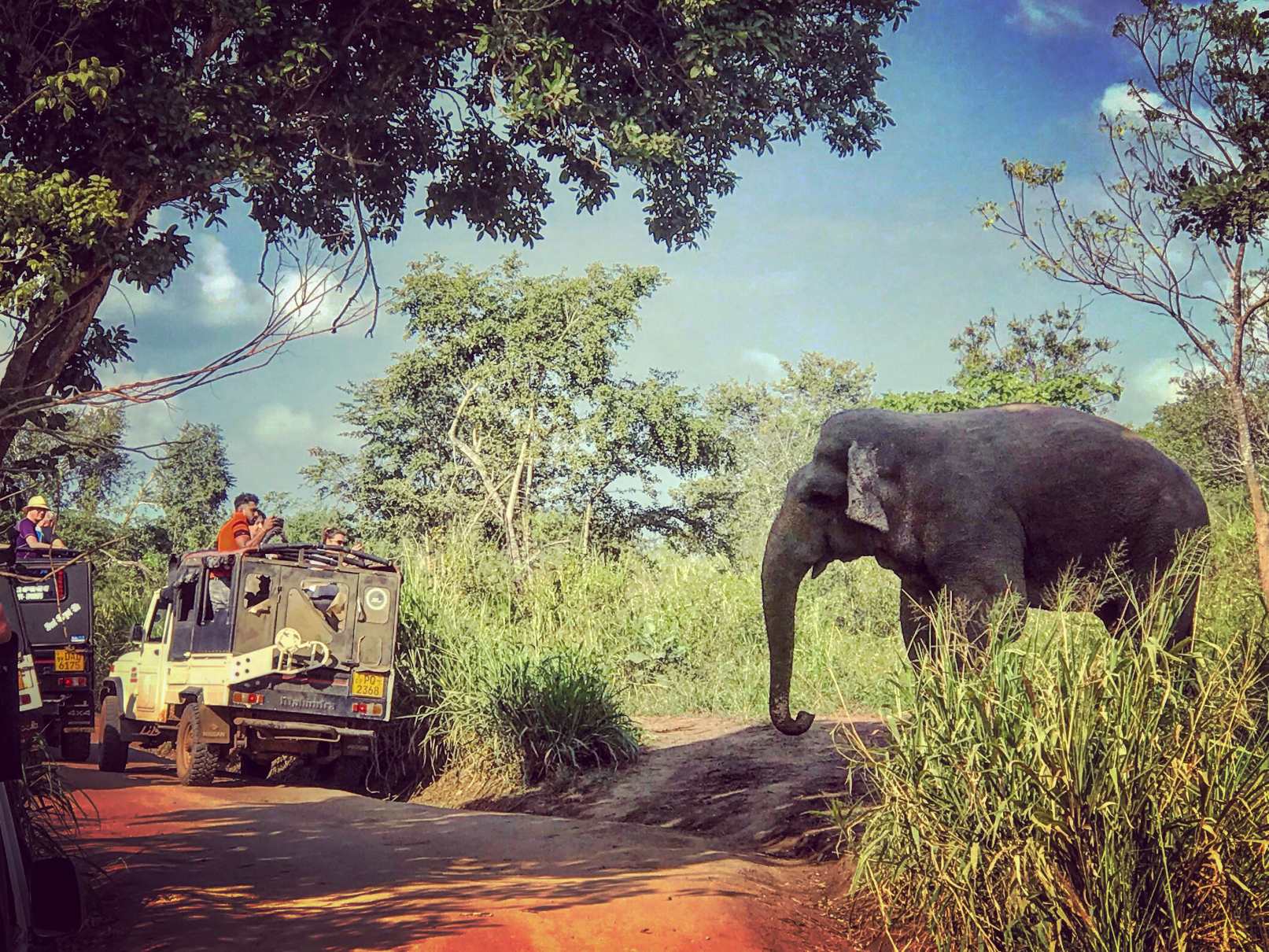
Udawalawe is the best park for elephant photography. Herds are visible year-round, and the open terrain makes for excellent compositions.
What to Photograph:
-
Elephants — the main attraction, often in large herds
-
Elephant Transit Home — orphaned calves being fed
-
Birdlife — eagles, storks, and kingfishers
-
Buffalo and deer — often seen in the open plains
Best Time:
-
Year-round — elephants are always present
Photography Tips:
-
The open plains offer clean backgrounds
-
Backlit elephants at sunset are stunning
-
The Elephant Transit Home offers unique opportunities (with proper permissions)
-
Bring a wide-angle lens for environmental portraits
Minneriya National Park
The Elephant Gathering
Minneriya is famous for “The Gathering” — the largest seasonal gathering of Asian elephants in the world. During the dry season, hundreds of elephants converge on the reservoir.
What to Photograph:
-
Elephants — in large numbers, often in the water
-
The Gathering — best from July to September
-
Birdlife — around the reservoir
Best Time:
-
July to September — The Gathering
Photography Tips:
-
Late afternoon light is magical
-
The elephants in water create beautiful reflections
-
Wide-angle lenses work well for the sheer scale
-
Be prepared for many vehicles
Gal Oya National Park
Swimming Elephants and Boat Safaris
Gal Oya offers a unique experience: boat safaris where you can photograph elephants swimming between islands. It’s one of Sri Lanka’s hidden gems.
What to Photograph:
-
Swimming elephants — unique to Gal Oya
-
Birdlife — including sea eagles
-
Crocodiles — often seen on the banks
-
Landscapes — the reservoir and hills
Best Time:
-
May to September — best water levels
Photography Tips:
-
A boat safari offers a completely different perspective
-
Use a fast shutter speed for swimming elephants
-
The light on the water is beautiful in the morning
-
Bring a waterproof bag for your gear
Horton Plains National Park
Landscapes and Endemic Species
Horton Plains is a cloud forest with dramatic landscapes and endemic species. It’s not a traditional safari park but offers unique photographic opportunities.
What to Photograph:
-
World’s End — dramatic cliff edge
-
Baker’s Falls — waterfall
-
Endemic birds — including the Sri Lanka whistling thrush
-
Sambar deer — often seen grazing
Best Time:
-
January to March — clearest skies
Photography Tips:
-
Start at 4 AM for sunrise at World’s End
-
The mist creates atmospheric conditions
-
Bring a tripod for landscapes
-
A macro lens for endemic flowers and insects
Bundala National Park
Bird Photography Paradise
Bundala is a RAMSAR wetland and one of Sri Lanka’s best bird photography destinations. It’s especially good for migratory species.
What to Photograph:
-
Flamingos — in large numbers (seasonal)
-
Migratory birds — from October to March
-
Water birds — herons, egrets, storks
-
Crocodiles — often seen on the banks
Best Time:
-
October to March — migratory season
Photography Tips:
-
A 500mm+ lens is ideal
-
Early morning light is best
-
The wetlands offer beautiful reflections
-
Be patient — birds are unpredictable
Kumana National Park
The Remote East
Kumana is one of Sri Lanka’s most remote parks, known for its birdlife and mangrove lagoons. It’s less visited than Yala but offers excellent photographic opportunities.
What to Photograph:
-
Birdlife — including pelicans and painted storks
-
Leopards — less habituated
-
Elephants — in the dry season
-
Mangroves — unique ecosystems
Best Time:
-
May to September — dry season
When to Visit: Seasonal Guide
Sri Lanka’s two monsoon systems mean different parks are best at different times.
| Park | Best Time | Notes |
|---|---|---|
| Yala | February – June | Dry season, best visibility |
| Wilpattu | February – October | Best water levels |
| Udawalawe | Year-round | Elephants always present |
| Minneriya | July – September | The Gathering |
| Gal Oya | May – September | Best water levels |
| Horton Plains | January – March | Clearest skies |
| Bundala | October – March | Migratory season |
| Kumana | May – September | Dry season |
For a comprehensive wildlife photography trip: Plan for February to March (Yala, Wilpattu) or July to September (Minneriya, Gal Oya, Kumana).
Camera Settings for Wildlife Photography
Essential Settings
| Situation | Shutter Speed | Aperture | ISO |
|---|---|---|---|
| Static animals | 1/250s+ | f/5.6–f/8 | 400–800 |
| Walking animals | 1/500s+ | f/4–f/5.6 | 800–1600 |
| Running animals | 1/1000s+ | f/4 | 1600–3200 |
| Birds in flight | 1/2000s+ | f/4–f/5.6 | 1600–6400 |
| Low light (dawn/dusk) | 1/250s+ | f/2.8–f/4 | 3200–12800 |
Recommended Gear
Camera Bodies:
-
Full-frame or APS-C with good high-ISO performance
-
Fast continuous shooting (7+ fps)
Lenses:
-
Telephoto zoom: 100–400mm or 200–500mm (essential)
-
Prime telephoto: 400mm f/2.8 or 500mm f/4 (ideal)
-
Wide-angle: 16–35mm (for landscapes and environmental shots)
-
Macro: 100mm (for insects and flowers)
Accessories:
-
Monopod or bean bag — for stability in vehicles
-
Extra batteries — you’ll shoot more than you expect
-
Memory cards — high-speed, large capacity
-
Lens cleaning kit — dust is inevitable
-
Rain cover — for monsoon showers
-
Camera bag — with dust protection
Tips for Vehicle-Based Photography
-
Use a bean bag — more stable than hand-holding
-
Turn off image stabilisation — when using a bean bag
-
Shoot in RAW — for maximum flexibility in editing
-
Use continuous autofocus — for moving subjects
-
Check your histogram — for correct exposure
Ethical Wildlife Photography in Sri Lanka
Ethical practice is essential for wildlife photography. Here’s how to photograph responsibly:
Do
-
Maintain safe distances — use your telephoto lens
-
Respect animal behaviour — if they react to you, you’re too close
-
Follow your guide’s instructions — they know the animals
-
Be patient — the best shots come to those who wait
-
Support ethical operators — who prioritise animal welfare
Don’t
-
Don’t feed wildlife — it changes behaviour and harms animals
-
Don’t use flash — it stresses animals, especially nocturnal species
-
Don’t block animals’ paths — let them move freely
-
Don’t make loud noises — to get a reaction
-
Don’t use drones — without permits, and never near wildlife
Choose Ethical Operators
Ask these questions:
-
Do you limit the number of vehicles at sightings?
-
Do you maintain safe distances?
-
Do you avoid baits or calls?
-
Do you support conservation?
Bird Photography in Sri Lanka
Sri Lanka is a birdwatcher’s paradise, with over 400 species including 26 endemics.
Best Parks for Bird Photography
-
Bundala — migratory species, flamingos
-
Kumana — pelicans, painted storks
-
Horton Plains — endemic species
-
Sinharaja — rainforest endemics
-
Yala — eagles, peacocks, hornbills
Tips for Bird Photography
-
Use a 500mm+ lens — most birds are small and distant
-
Learn bird calls — to anticipate behaviour
-
Shoot early morning — when birds are most active
-
Use a tripod — for sharp images
-
Focus on the eye — the most important part of any bird photo
Marine Wildlife Photography
Sri Lanka is one of the best places in the world to photograph blue whales — the largest animals on earth.
Best Time and Place
-
Mirissa — November to April
-
Trincomalee — May to September
Tips for Whale Photography
-
Use a fast shutter speed — 1/1000s+ for breaching whales
-
Anticipate the breach — watch for the blow
-
Use a polarising filter — to reduce glare
-
Keep your camera ready — whales appear without warning
-
Respect distance regulations — don’t chase whales
Post-Processing Tips
Essential Edits
-
Exposure correction — for harsh light
-
White balance — for accurate colours
-
Noise reduction — for high-ISO images
-
Sharpening — for detail
-
Cropping — for composition
Software Recommendations
-
Adobe Lightroom — for cataloguing and basic edits
-
Adobe Photoshop — for advanced edits
-
Capture One — for professional colour
-
Topaz Denoise — for noise reduction
Planning Your Wildlife Photography Trip
Best Duration
10–14 days allows you to cover the main parks and have time for multiple safaris.
Suggested Itinerary
| Days | Location | Focus |
|---|---|---|
| 1–2 | Negombo | Arrival, rest |
| 3–4 | Wilpattu | Leopards, sloth bears |
| 5–6 | Minneriya | Elephants |
| 7–8 | Kandy / Hill Country | Landscapes, birds |
| 9–11 | Yala | Leopards, elephants |
| 12–13 | Udawalawe | Elephants |
| 14 | Colombo | Departure |
What to Bring
-
Camera gear — as listed above
-
Clothing — neutral colours, layers for hill country
-
Sun protection — hat, sunscreen, sunglasses
-
Insect repellent — essential
-
Water — stay hydrated
-
Snacks — for long safari days
Frequently Asked Questions
What is the best national park in Sri Lanka for wildlife photography?
Yala National Park is the best for leopard photography, with the highest leopard density in the world. Udawalawe is best for elephants, and Minneriya is best for The Gathering (July–September).
What camera gear do I need for wildlife photography in Sri Lanka?
You’ll need a telephoto lens (100–400mm or 200–500mm minimum), a camera with good high-ISO performance, extra batteries, memory cards, and a bean bag for vehicle-based photography.
When is the best time for wildlife photography in Sri Lanka?
February to June is best for Yala and Wilpattu (leopards). July to September is best for Minneriya and Gal Oya (elephants). October to March is best for Bundala (birds).
Is wildlife photography in Sri Lanka ethical?
Yes — if you choose ethical operators who maintain safe distances, limit vehicle numbers, and prioritise animal welfare. Avoid operators who bait animals or use flash.
Can I photograph leopards in Sri Lanka?
Yes — Yala and Wilpattu are the best parks for leopard photography. Leopards are most active at dawn and dusk, so book full-day safaris.
Can I photograph blue whales in Sri Lanka?
Yes — Mirissa (November–April) and Trincomalee (May–September) are the best places. Use a fast shutter speed and respect distance regulations.
What are the best parks for bird photography in Sri Lanka?
Bundala, Kumana, Horton Plains, and Sinharaja are the best parks for bird photography, with over 400 species including 26 endemics.
How many days do I need for a wildlife photography trip to Sri Lanka?
10–14 days allows you to cover the main parks and have time for multiple safaris. Focus on 3–4 parks for the best experience.
Capture Sri Lanka’s Wildlife
Sri Lanka offers some of the world’s most rewarding wildlife photography opportunities — from leopards in Yala to swimming elephants in Gal Oya, from blue whales off Mirissa to endemic birds in Sinharaja. With the right preparation, gear, and ethical approach, you can come home with images that do justice to this extraordinary island.
Ready to plan your wildlife photography trip? Contact our local experts to design a bespoke itinerary that puts you in the right place at the right time.
-
🌐 Website: rediscoversrilanka.com
-
💬 WhatsApp: +94 77 791 1276
-
📧 Email: [email protected]
Book Your Dream Getaway to Sri Lanka Today!
Contact Us Today!
Ready to plan your dream group tour in Sri Lanka? Let us help you craft the perfect itinerary for a truly magical experience.
👉 Contact Rediscover Sri Lankanow to explore our Sri Lanka group tour packages, designed for families, solo travelers, and adventure seekers alike.
Reviews and Recommendations
Don’t just take our word for it! Check out these incredible reviews from past travelers:
- Tripadvisor: Read about other travelers’ experiences on Tripadvisor, where Rediscover Sri Lanka has garnered rave reviews for its safe and well-organized tours.
- Trustpilot: Visit Trustpilot for more real-life testimonials from travelers who have fallen in love with Sri Lanka’s beauty and hospitality.
Rediscover Journeys — Boutique Sri Lanka Tour Operator & Travel Agency
Trustpilot 4.9/5 (192 reviews) | TripAdvisor Travellers’ Choice 2025 | SLTDA-licensed
35+ years collective Sri Lanka expertise | Private chauffeur-guide | Tailor-made tours
Contact Us Today!
Ready to plan your dream journey in Sri Lanka? Let us help you craft the perfect itinerary for a truly memorable experience.
Contact Rediscover Sri Lanka to explore our tailor-made journeys, private tours and authentic Sri Lankan experiences.
Contact UsReviews and Recommendations.
Don't just take our word for it! Check out these incredible reviews from past travelers.
Read about other travelers' experiences with Rediscover Sri Lanka and explore reviews from guests who have travelled across the island.
Read ReviewsDiscover feedback from travelers who have experienced Rediscover Journeys and explored Sri Lanka with our team.
Read ReviewsBook Your Adventure.
Ready to experience Sri Lanka beyond the usual tourist trail? Let us create a private journey around your interests, pace and travel style.
Ready to Rediscover Sri Lanka?
Plan your trip with Rediscover Sri Lanka and create unforgettable memories at some of the island's most extraordinary places.
Visit Rediscover Sri Lanka to start planning your journey.
Plan Your JourneyEverything you need to know about traveling in Sri Lanka.
Sri Lanka is a year-round destination, but the best time depends on which part of the island you plan to explore. The west and south coasts are generally best from December to April, while the east coast is ideal from May to September.
Around 7 to 14 days is a good amount of time to experience Sri Lanka's highlights without rushing. A longer journey allows more time for wildlife, beaches, cultural sites, scenic train journeys and the hill country.
Most international travellers need travel authorisation or a visa to enter Sri Lanka, depending on their nationality and purpose of travel. Travellers should check the latest requirements through official Sri Lankan government channels before travelling.
Sri Lanka is a popular destination for international travellers. As with any destination, visitors should take normal precautions, look after their belongings, use reputable transport and follow local advice.
The official currency is the Sri Lankan Rupee (LKR). Your budget depends on accommodation, transportation, dining, activities and travel style. Sri Lanka offers everything from budget-friendly experiences to premium hotels and tailor-made luxury travel.