Everything You Need to Know About Sri Lanka Demographics 2026: Population, Ethnicity & Ageing
Sri Lanka Demographics: Population, Ethnicity, and the Demographic Shift (2026) Sri Lanka’s population is approximately 21.8 million, according to the final results of the 15th Population and Housing Census (2024), released in April 2026. The island is a multi-ethnic society where Sinhalese make up roughly three-quarters of the population, followed by Tamils and Muslims. But …
Sri Lanka Demographics: Population, Ethnicity, and the Demographic Shift (2026)
Sri Lanka’s population is approximately 21.8 million, according to the final results of the 15th Population and Housing Census (2024), released in April 2026. The island is a multi-ethnic society where Sinhalese make up roughly three-quarters of the population, followed by Tamils and Muslims. But the headline demographic story is not the size of the population — it is the shift: fertility has fallen to 1.3 (well below replacement), the median age has risen to 35, and Sri Lanka is approaching the point where its elderly population outnumbers its children for the first time in history .
Direct answer: Sri Lanka has ~21.8 million people. Sinhalese are ~75%, Tamils ~12%, Muslims ~10%. The population is ageing rapidly, fertility is below replacement, and the workforce is shrinking.
Quick Answer: Sri Lanka Demographics at a Glance
| Metric | Figure | Source |
|---|---|---|
| Total population | 21,781,800 (2024 Census, final) | Dept. of Census and Statistics |
| Population (2026 est.) | ~21.9 million | Britannica |
| Sinhalese | ~75% | Britannica |
| Tamil | ~12.3% | AFP Fact Check |
| Muslim | ~10.5% | AFP Fact Check |
| Buddhism | ~70% | Korea Exim |
| Hinduism | ~13% | Korea Exim |
| Islam | ~10% | Korea Exim |
| Median age | 35 | Census 2024 |
| Fertility rate | 1.3 (below replacement of 2.1) | Census 2024 |
| Literacy rate | 97.4% | Census 2024 |
| Digital literacy | 67.6% | Census 2024 |
What is the population of Sri Lanka? 21.78 million according to the 2024 Census, with Sinhalese (~75%), Tamils (~12%), and Muslims (~10%) as the main ethnic groups.
Population Size and Distribution
Sri Lanka’s population grew by 1,422,361 since the 2012 census, reaching 21,781,800. The growth rate has been below 1% for years, reflecting declining fertility .
District Distribution
| District | Population | Rank |
|---|---|---|
| Gampaha | 2,436,142 | 1st (most populous) |
| Colombo | 2,375,415 | 2nd |
| Kurunegala | 1,768,156 | 3rd |
| Mullaitivu | 122,619 | Least populous |
Notable: Gampaha surpassed Colombo as the most populous district. The census also recorded a migrant population of 3,167,263, with the largest group in Gampaha .
Female majority: Females outnumber males in every district nationwide, according to the census .
Ethnic Composition
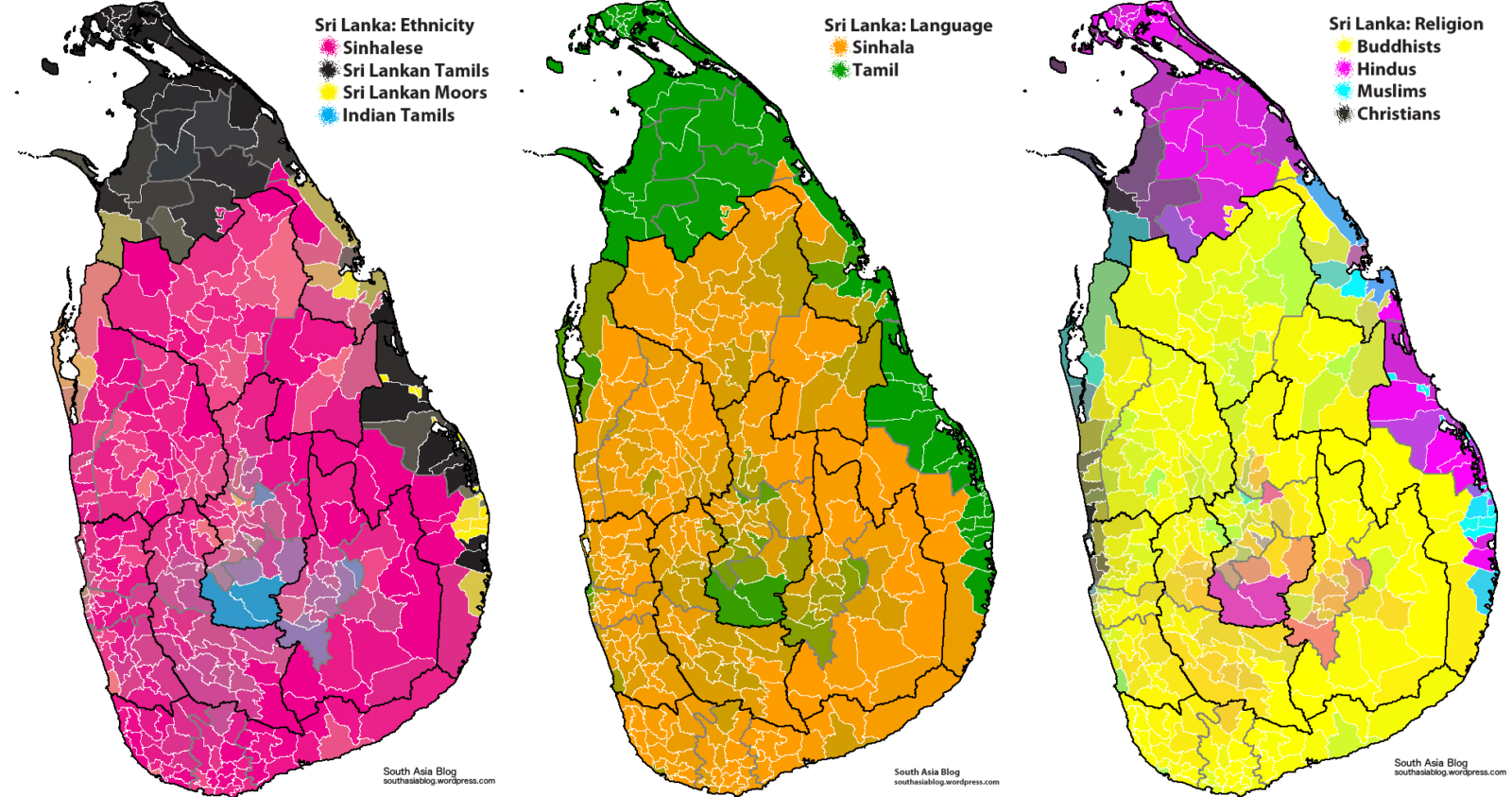
Sri Lanka’s three main ethnic groups — Sinhalese, Tamil, and Muslim — make up more than 99% of the population .
| Group | Share | Notes |
|---|---|---|
| Sinhalese | ~75% | Majority; predominantly Buddhist; concentrated in south, west, central, north-central |
| Tamil | ~12.3% | Two groups: Sri Lankan Tamils (long-settled) and Indian Tamils (plantation workers brought under British rule) |
| Muslim | ~10.5% | Descended from Arab traders of the 8th century; urban and east coast |
| Burghers, Parsis, Veddas | <1% | Mixed European descent, western Indian immigrants, indigenous inhabitants |
Where they live: Sinhalese dominate the Wet Zone lowlands and much of the interior. Indian Tamils are concentrated in the Central Highlands plantations. Muslims form important urban segments in Colombo, Kandy, Puttalam, and Gampaha .
What are the main ethnic groups in Sri Lanka? Sinhalese (~75%), Tamils (~12.3%), and Muslims (~10.5%).
Religious Composition
Buddhism is the majority religion, practiced by about 70% of the population — primarily the Sinhalese community.
| Religion | Share | Community |
|---|---|---|
| Buddhism | ~70% | Sinhalese majority |
| Hinduism | ~13% | Tamil communities |
| Islam | ~10% | Muslim communities |
| Christianity | ~6% | Burgher and some Sinhalese/Tamil |
Source note: These figures are from Korea Exim Bank’s country profile. The Department of Census and Statistics publishes official religion data in its Statistical Pocket Book 2026 .
The Demographic Shift: Ageing, Fertility, and Workforce
This is the most important demographic story in Sri Lanka — and it has implications for travellers, businesses, and policymakers alike.
Fertility Collapse
Sri Lanka’s total fertility rate has fallen to 1.3, far below the replacement level of 2.1. This means the population will begin to shrink in the coming decades without immigration .
Ageing Population
| Indicator | Figure |
|---|---|
| Median age | 35 (up 5 years from 2012) |
| Population aged 60+ | 18% of total |
| Elderly vs children | Elderly expected to outnumber children for the first time |
Workforce Challenges
52.7% of the working-age population is economically inactive, largely due to a significant gender gap — many women remain outside the formal workforce due to domestic care responsibilities .
Widowhood gap: 44.2% of women over 65 are widowed, compared to 10.5% of men — contributing to rising single-person households .
Is Sri Lanka’s population ageing? Yes — fertility is 1.3 (below replacement), median age is 35, and the elderly are about to outnumber children for the first time.
Education and Literacy
Sri Lanka has one of South Asia’s highest literacy rates, and the gender gap in education has nearly closed.
| Metric | Figure |
|---|---|
| Literacy rate | 97.4% |
| Digital literacy | 67.6% |
| Laptop ownership | 19.7% (nearly quadrupled) |
| Gender parity in education | Near complete balance at school and university level |
Life expectancy: 81 years for women, 74 years for men .
What This Means for Travellers
Demographics shape the travel experience in subtle ways.
| Demographic Reality | What It Means for You |
|---|---|
| High English literacy | Easy communication across tourism |
| Ageing population | Growing wellness/retirement travel segment |
| Shrinking workforce | Service quality depends on training — choose operators who invest in guides |
| Urban concentration | Colombo and Gampaha are the most populous; rural areas are quieter |
| Multi-ethnic society | Expect Sinhala, Tamil, and Muslim cultural influences in different regions |
Frequently Asked Questions
What is the population of Sri Lanka in 2026?
Approximately 21.8 million, based on the 2024 Census final results .
What are the main ethnic groups?
Sinhalese (~75%), Tamil (~12.3%), and Muslim (~10.5%) .
What is the majority religion?
Buddhism (~70%), followed by Hinduism (~13%), Islam (~10%), and Christianity (~6%) .
Is Sri Lanka’s population growing?
It grew by 1.4 million since 2012, but fertility is below replacement (1.3) and the population is ageing .
What is the median age in Sri Lanka?
35 years, up 5 years from 2012 .
What is the literacy rate?
97.4%, with near gender parity in education .
Which district is most populous?
Gampaha (2,436,142), followed by Colombo (2,375,415) .
Who are the Veddas?
Sri Lanka’s indigenous inhabitants, now less than 1% of the population .
What languages are spoken?
Sinhala and Tamil (official), with English as the link language.
Why is the workforce shrinking?
Low fertility, an ageing population, and 52.7% economic inactivity — largely women outside the formal workforce .
Explore Sri Lanka With Context
Understanding Sri Lanka’s people and demographics makes for a richer trip. Contact Rediscover Journeys — our guides explain the island’s cultural mosaic as you travel.
Speak to our team: +94 77 791 1276 (Rasith Gunaratna) · +94 77 887 8723 (Lakshan Surekha) · +94 11 226 0407 (Office) · [email protected]
Explore more:
-
Sri Lanka People — the communities behind the numbers
-
Sri Lanka Hospitality — the warmth behind the welcome
-
Sri Lanka Travel Etiquette — cultural norms
-
Sri Lanka Community Tourism — projects that benefit locals
Trusted by travellers — see our reviews on TripAdvisor and Trustpilot.
Contact Us Today!
Ready to plan your dream journey in Sri Lanka? Let us help you craft the perfect itinerary for a truly memorable experience.
Contact Rediscover Sri Lanka to explore our tailor-made journeys, private tours and authentic Sri Lankan experiences.
Contact UsReviews and Recommendations.
Don't just take our word for it! Check out these incredible reviews from past travellers.
Read about other travellers' experiences and explore reviews of our parent company.
Read ReviewsDiscover feedback from travellers who have experienced Rediscover Journeys and explored Sri Lanka with our team.
Read ReviewsBook Your Adventure.
Ready to experience Sri Lanka beyond the usual tourist trail? Let us create a private journey around your interests, pace and travel style.
Ready to Rediscover Sri Lanka?
Plan your trip with Rediscover Sri Lanka and create unforgettable memories at some of the island's most extraordinary places.
Visit Rediscover Sri Lanka to start planning your journey.
Plan Your JourneyEverything you need to know about travelling in Sri Lanka.
Sri Lanka is a year-round destination, with the best time to visit depending on the regions you plan to explore. The west and south coasts are generally best from December to April, while the east coast is ideal from May to September. The central highlands offer cooler weather and scenic landscapes throughout much of the year.
A journey of 7 to 14 days allows you to experience many of Sri Lanka’s highlights at a comfortable pace. You can combine ancient cultural sites, wildlife safaris, scenic train journeys, tea country, and tropical beaches. A longer stay gives you more time to discover hidden gems and enjoy meaningful local experiences.
Sri Lanka offers a remarkable variety of destinations, from the ancient cities of Sigiriya and Polonnaruwa to the misty hills of Ella and Nuwara Eliya. Wildlife enthusiasts can explore Yala and Udawalawe National Parks, while the southern coast offers beautiful beaches and historic Galle Fort. The best places to visit depend on your interests, travel dates, and preferred pace.
Absolutely. Sri Lanka is home to diverse ecosystems, national parks, rainforests, wetlands, and mountain landscapes. Visitors can look for elephants, leopards, and a wide variety of birdlife on guided wildlife safaris, explore lush nature trails, or discover marine life along the coast. Responsible travel and following local wildlife guidelines help protect these natural environments.
Travellers can discover centuries-old temples, ancient kingdoms, traditional arts and crafts, vibrant festivals, and the island’s rich culinary heritage. Experiences may include visiting local markets, learning about traditional cooking, exploring historic landmarks, or meeting local communities. These encounters offer a deeper understanding of Sri Lanka’s traditions, people, and way of life.
Before travelling, consider the seasonal weather, regional travel times, local customs, appropriate clothing for religious sites, and entry requirements for your nationality. Sri Lanka’s landscapes and road conditions can make journeys longer than expected, so allowing time between destinations is worthwhile. Planning ahead helps you enjoy a more comfortable and rewarding experience.
The official currency is the Sri Lankan Rupee (LKR). Cards are accepted at many hotels, restaurants, and larger businesses, while cash is useful for local shops, markets, and smaller establishments. It is helpful to carry some local currency and check current exchange rates before your trip.
Yes. Sri Lanka offers experiences for a wide range of travellers, including families, couples, solo explorers, and groups of friends. Families can enjoy wildlife safaris, cultural discoveries, and relaxed beach stays, while couples may prefer scenic retreats, boutique hotels, and private experiences. An itinerary tailored to your interests can help create a more enjoyable journey.